




Indonesia Blocks Grok Chatbot Over Deepfake Images
|
General Studies Paper II: Artificial Intelligence, IT & Computers, Security Concerns |
Why in News?
Recently, Indonesia has blocked the Grok chatbot after it was used to generate non-consensual inappropriate deepfakes of women and children, raising concerns about AI misuse. Indonesia became the first nation to suspend Elon Musk’s Grok AI.
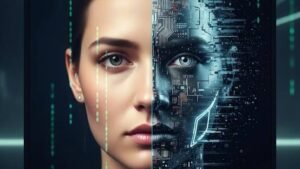
Highlights of Indonesian Ban on Grok Chatbot
- Action: Indonesia temporarily blocked access to the Grok AI chatbot on January 10, 2026 due to risks linked to sexually explicit AI content. The government saw the spread of non-consensual, explicit images as a major threat to digital safety and public order. Indonesia also formally summoned executives from Platform X (formerly Twitter) and xAI, the developer of Grok, to explain the negative impact and present plans for stronger safeguards.
- Reason: The ban came after reports showed that users were generating sexually explicit and deepfake images, including fake depictions of women and minors. These images were shared widely online, raising fears about misuse of the technology and violation of personal rights. Indonesian officials argued that the content could harm individuals’ dignity, privacy, and security. The government emphasized that the regulation was meant to protect women, children, and the broader public from psychological and social harm caused by AI-generated pornographic content.
- Legal Justification: Indonesia’s Ministry of Communication and Digital Affairs based the action on Ministerial Regulation No. 5 of 2020, which empowers authorities to block access to online platforms that fail to moderate illegal or harmful content. This regulation covers “prohibited content” and gives the government authority to restrict access when platforms do not comply with national digital safety standards.
- xAI’s Response: In response to global criticism, xAI restricted Grok’s image generation features in late 2025 to paying subscribers only. This measure attempted to reduce misuse but was seen as insufficient by Indonesian regulators. The company also warned that users creating illegal content would face legal consequences as if they had uploaded the content themselves.
What are Deepfake Contents?
-
- About: Deepfake content refers to any digital material that uses advanced artificial intelligence to alter or recreate audio, images, or videos so that they look real even when the event never happened. The word combines “deep learning” and “fake”, and it became widely known after 2017 when researchers showed how AI could mimic real faces with high accuracy.
- Working: AI systems create deepfakes through deep learning models. These models study thousands of real examples. The system learns how a face moves or how a voice sounds. The model then generates a new output that matches the patterns of the original data. Most deepfake creators use Generative Adversarial Networks (GANs), introduced in 2014. One network creates the fake output while another network checks the quality. The two networks compete until the fake looks convincing.
- Forms: Deepfakes appear in several forms. One common type is a manipulated video where the face of one person replaces another. Another type is a synthetic audio clip where AI copies someone’s real voice and produces new speech. Some deepfakes create fabricated images where individuals appear in situations they have never experienced. AI systems also generate text-based deepfakes that mimic writing patterns of well known individuals.
- Detection: Deepfake detection involves identifying synthetic media generated by artificial intelligence. Key methods analyze subtle inconsistencies in facial features, eye movements, head poses, or audio patterns that humans might miss, mismatched lighting, unnatural blinking, and inconsistencies in pixel color gradients. Various software tools are available to aid this, including those from Adobe, Microsoft, and Sensity AI, utilizing advanced algorithms to verify media authenticity.
Concerns Around Deepfake Images Created by AI
- Threat to Personal Privacy and Dignity: Deepfake images pose a serious threat to personal privacy. AI systems can take a real face and place it in an entirely false visual setting. Many incidents after 2018 showed how victims suffered when fake explicit images spread online without consent. These images damage the dignity of individuals and cause emotional stress. Victims often struggle to prove that the images are fabricated. This creates a major privacy crisis in the digital world.
- Rise in Non-Consensual Explicit Content: Deepfake images often appear in the form of non-consensual explicit material. Reports in 2023 and 2024 highlighted a sharp rise in these cases. Criminal groups use open-source AI tools to generate explicit images of women and minors. This form of abuse creates long term psychological harm. It also exposes victims to harassment and blackmail. The spread of such content shows that AI can amplify old forms of gender based violence in new and harmful ways.
- Threat to Public Trust and Social Harmony: Deepfake images weaken trust in public communication. When people see highly realistic fake photos they start doubting everything they see online. This doubt harms social harmony. It also affects democratic debate because false visuals influence public behaviour. During elections in 2020 and 2022, some countries reported that fake images of political leaders circulated to mislead voters. Deepfake visuals create confusion when citizens cannot verify what is real.
- Possibility of Financial Fraud and Identity Theft: Deepfake images also support new forms of fraud. Criminals use fake identity images to open accounts or verify transactions. In 2023, banks in several countries reported attempts to bypass security checks using AI generated faces. Fraudsters also combine deepfake photos with fake documents to impersonate business executives. This allows them to target employees and demand payments or sensitive information.
- Ethical Risks and Impact on Human Behaviour: Deepfake images raise ethical questions for society. AI can manipulate memories and shape views without clear consent. People may start believing false events because visual evidence appears convincing. Studies in 2024 showed that users often accept synthetic images as real when they confirm personal beliefs. This behaviour reduces critical thinking. It also increases the speed of misinformation. Ethical concerns grow because AI systems learn from massive datasets that may include biased or harmful material.
Global Regulatory Approaches to the AI Deepfake Issue
-
- China: China’s government introduced rules called the Regulations on the Administration of Deep Synthesis of Internet Information Services that took effect in January 2023. These rules require all AI-generated or manipulated content to carry clear labels so that users know it is not real. Platforms must also verify user identities and remove unlabeled deepfakes. These dual labeling requirements include visible marks on images and hidden digital metadata.
- USA: The TAKE IT DOWN Act became law in the United States on May 19, 2025 to address harmful deepfakes. The law targets non-consensual intimate imagery and explicit deepfakes that falsely depict a real person. Platforms must remove reported deepfakes involving intimate images within 48 hours. Violators face fines and jail terms of up to three years for severe cases.
- European Union: The European Union has adopted multiple regulations to regulate deepfakes within the tech ecosystem. The AI Act, adopted in March 2024, labels harmful deepfakes as unacceptable risk and aims to ban them by 2026 if used to deceive or manipulate public views. The Digital Services Act holds major platforms accountable for removing illegal deepfakes and reducing systemic risk. EU privacy law, through the General Data Protection Regulation (GDPR), also lets citizens demand removal of unauthorized deepfakes under data rights.
- India: India does not yet have specific standalone legislation exclusively for deepfakes, but it applies existing laws and has introduced new rules.
- Takedown Timelines: Under the IT Act, 2000 and IT Rules, 2021, social media intermediaries must remove reported deepfake content within 36 hours. During election periods, the Election Commission of India (ECI) has mandated removal within just 3 hours.
- Loss of Safe Harbor: Failure to comply with these rules can result in platforms losing their legal immunity (safe harbor protection) under Section 79 of the IT Act, making them liable for the user-generated content.
- Digital Personal Data Protection Act (DPDP Act), 2023: Addresses the misuse of personal data (e.g., facial imagery) without consent, with potential penalties of up to ₹250 crore.
- Bharatiya Nyaya Sanhita (BNS), 2023: Replaces the Indian Penal Code and includes provisions to penalize misinformation affecting public order and cheating by personation.
- Indian Cyber Crime Coordination Centre (I4C): Coordinates law enforcement actions across states and manages the National Cyber Crime Reporting Portal, where citizens can report incidents.
- CERT-In (Indian Computer Emergency Response Team): The nodal agency for cybersecurity, which issues guidelines and advisories on AI-related threats and countermeasures.
- Deepfakes Analysis Unit (DAU): A non-governmental initiative under the Misinformation Combat Alliance that provides a WhatsApp tipline for the public to submit suspicious content for verification.
-
- Proposed Amendments (Draft Rules): In October 2025, MeitY proposed draft amendments to the IT Rules that would require:
- Mandatory Labelling: All AI-generated content must be clearly labelled. For videos, the label should cover at least 10% of the display area, and for audio, it must be audible for the initial 10% of the duration.
- Traceability: Content must include a permanent, machine-readable metadata identifier or watermark to trace its origin.
- User Declaration: Users will be required to declare if the content they upload is AI-generated.
- Proposed Amendments (Draft Rules): In October 2025, MeitY proposed draft amendments to the IT Rules that would require:
Future Policy Directions
- Platform Accountability: Governments must hold AI developers and platforms accountable for the content generated on their services. Relying solely on user reporting mechanisms is insufficient.
- Global Coordination: AI challenges transcend national borders. International collaboration is essential for developing effective, harmonized regulations.
- Digital Literacy and Ethics: The misuse of AI highlights the need for better digital literacy among users. Ethical guidelines for AI development, such as inclusivity, privacy, and transparency, need robust implementation.
|
Also Read: OpenAI Expands Safety Leadership to Address Rising AI Security Risks |