




Agniveer Retention Policy 2026: Armed Forces Seeks Higher Agniveer Retention
| General Studies Paper III: Security Challenges and Management, Defense Reforms |
Why in News?
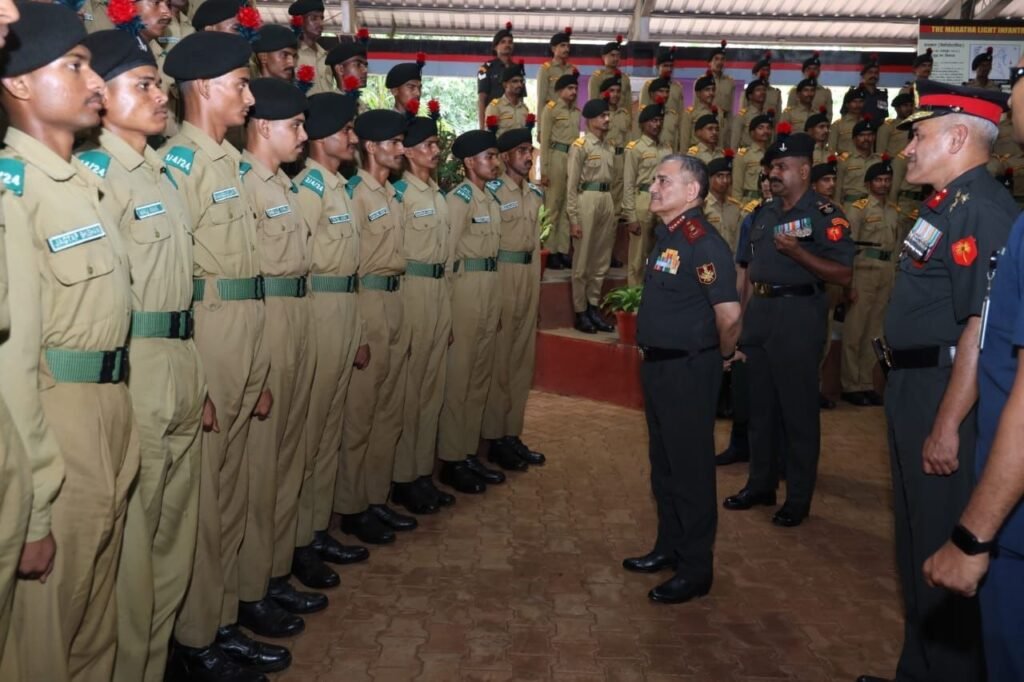
Indian Armed Forces seek to raise Agniveer retention beyond the 25% ceiling as the first batch’s four-year tenure concludes.
- Indian Armed Forces will evaluate the Agniveer program over the next few months after the first batches complete their four-year tenure next month.
- Any decision to increase their retention percentage will only be discussed after assessing this reabsorption process.
What is the Agnipath Scheme?
- About: The Agnipath Scheme is a military reform approved by the Union Cabinet on 14th June 2022 and implemented in September 2022.
- It serves as the sole window for recruiting personnel below officer rank across the Indian Army, Navy, and Air Force.
- Candidates selected through this short-service model are officially designated as Agniveers.
- Objective: The structural objective is to reduce the average age profile of frontline Indian combat troops from 32 to 26 years, creating a younger, tech-savvy force.
- The government aims to curb soaring defense pension liabilities.
- Nationally, it strives to inject highly disciplined, skilled youth back into the civilian workforce.
- Recruitment Framework: Enrolment is conducted on an “All India All Class” basis via a centralized online portal, specialized rallies, and campus drives.
- The scheme welcomes both male and female aspirants.
- The mandatory eligibility age range is 17.5 to 21 years, with matriculation or 10+2 educational qualifications varying by trade.
- Service Structure: Agniveers contractually enlist for a fixed tenure of four years.
- This includes six months of intensive basic military training and three and a half years of operational deployment.
- They hold a unique military rank and distinct service numbers separate from regular cadres.
- Salary & Pay Progression: Agniveers receive an attractive customized package.
- The first-year monthly salary begins at ₹30,000, steadily escalating to ₹40,000 by the fourth year.
- Recruits receive additional applicable risk and hardship allowances, while 30% of their base salary is diverted to individual corp savings.
- Seva Nidhi Exit Package: Upon completing four years, non-retained personnel receive the tax-free Seva Nidhi package worth ₹11.71 lakh plus accumulated interest.
- This corpus is jointly accumulated through the soldier’s 30% monthly salary deduction matched by an equal contribution from the Government of India.
- Social Security Benefits: The scheme provides a non-contributory life insurance cover of ₹48 lakh during deployment.
- If a soldier dies in the line of duty, the family receives a lump sum payout exceeding ₹1 crore, including remaining tenure pay.
- Severe service disability yields compensation up to ₹44 lakh.
- Retention & Cadre Progression: After four years, all Agniveers exit the standard contract.
- Up to 25% of each batch can be permanently absorbed into the regular cadre for 15 additional years based on performance and organizational merit.
- The existing 75% receive no pension, gratuity, or ex-serviceman status.
- Retention Proposal: The Indian Armed Forces have proposed increasing the permanent retention quota for Agniveers beyond the current 25% ceiling.
- The Indian Armed Forces have submitted a major proposal to the Department of Military Affairs (DMA) to scale up permanent recruitment.
- The Indian Navy could seek a 75% retention rate due to highly specialized technical operations.
- The Indian Army and Indian Air Force may push to double their retention to around 50%.
Rationale Behind Agniveer Retention Policy 2026
- Preserving Technical Expertise: Operating advanced military assets like modern avionics, submarines, and specialized weaponry requires technical mastery.
- Releasing skilled personnel after just four years forces the military into a repetitive cycle of rookie training, draining technical aptitude.
- Mitigating Manpower Shortfalls: A strict retention cap paired with regular annual retirements risks creating a manpower vacuum.
- The Indian Army faces a personnel deficit of roughly 1.8 lakh troops, requiring a larger retention pool to bridge structural vacancies.
- Optimizing Training Investments: The military spends significant fiscal resources and time training each recruit.
- Retaining a larger percentage maximizes the return on these advanced defense investments rather than releasing assets back into the civilian sector.
- Ensuring Operational Continuity: Recent operational reviews, including Operation Sindoor, highlight that while youth brings agility, experienced personnel remain indispensable for rapid, field-tested decision-making during complex tactical crises.
- Strengthening Unit Cohesion: Frequent troop turnover can degrade the core regimental ethos and camaraderie vital for infantry formations.
- Higher retention ensures continuous, stable leadership and deeper trust within frontline units.
Initiatives for Agniveer Career Rehabilitation
- The Ministry of Home Affairs (MHA) significantly enhanced its exit plan by scaling up to a 50% vacancy reservation for constable roles inside the Central Armed Police Forces (CAPFs) and Assam Rifles, alongside complete exemption from the Physical Standard Test (PST).
- Uttar Pradesh has approved a 20% horizontal reservation for former Agniveers in the Uttar Pradesh Police Recruitment framework.
- This quota covers active positions including constables, Provincial Armed Constabulary (PAC), and firemen, accompanied by a critical 3-year age relaxation.
- Taking a legislative lead, Haryana introduced a 10% horizontal quota for direct entry into specialized state jobs like jail wardens, forest guards, and mining guards.
- It provides up to a 5-year age relaxation specifically optimized for the first batch of returning troops.
- Maharashtra approved a 10% horizontal reservation within its Group-C uniformed services.
- The state has completely waived the written examination for qualified ex-Agniveers, requiring only a modified, highly relaxed Physical Efficiency Test (PET).
- Under the Agniveer Horizontal Reservation Rules 2025, Uttarakhand implemented a mandatory 10% quota.
- The legal structure explicitly accommodates permanent residents into excise, secretariat services, and fire brigades alongside standard physical standard relaxations.
- Odisha established a strict 10% job quota inside all uniform services.
- Recognizing the physical readiness of these veterans, the state offers an extended 5-year upper age relaxation to facilitate direct group-level entry.
Way Forward
- Extend the Service Tenure: The standard four-year short-service period is deemed insufficient for complex deployments.
- Extending the contractual service duration to 7 or 8 years would ensure the military fully utilizes the intensive training provided to the recruits.
- Implement an Evidence-Based Operational Review: Evaluate the scheme continuously using direct feedback from the Army, Navy, and Air Force.
- Replace the one-size-fits-all model with flexible, customized retention caps tailored to the specific operational and technical demands of each individual service.
- Mandate Institutional and Parliamentary Oversight: Institutionalize biennial reviews by the Parliamentary Standing Committee on Defence, modeled after the structural audits of the Shekatkar Committee (2015). This guarantees independent oversight of combat readiness, fiscal balance, and overall force morale.
- Reframe Tenure as an Extended Probation: Restructure the initial 4-year service period into an “Extended Probationary Commission.” This shift in nomenclature and framing integrates recruits into core regimental traditions from day one, reducing the performance anxiety associated with short-term contracts.
- Optimize Balance Between Youth and Experience: Adjust the overall recruitment matrix to maintain a healthy ratio between tech-savvy, energetic youth and seasoned, experienced personnel. This ensures that unit cohesion, leadership continuity, and tactical mentorship are not compromised.
- Strengthen Resettlement and Skill Recognition: Connect exiting personnel directly to the domestic defense ecosystem.
- Create dedicated placement pipelines into the Uttar Pradesh and Tamil Nadu Defence Industrial Corridors, Defense PSUs (like BrahMos Aerospace), and private defense R&D firms.
Frequently Asked Questions (FAQs):
1. Why are the Indian Armed Forces seeking higher Agniveer retention?
To retain experienced personnel, preserve training investments, address manpower shortages and strengthen operational readiness.
2. What is the Agniveer recruitment scheme?
The Agnipath Scheme, launched in 2022, recruits personnel below officer rank for four years across the Army, Navy and Air Force.
3. What percentage of Agniveers can currently be retained for permanent service?
Up to 25% of each batch can enter the regular cadre through merit-based selection, subject to organisational requirements.
4. Could the government increase the Agniveer retention rate?
Yes. The services are seeking revisions, but no increase has been officially confirmed; the existing ceiling remains 25%.
5. Why is retaining trained Agniveers important for the military?
It preserves operational experience, specialist skills, equipment familiarity and investments in military training.
6. How does higher retention affect military operational readiness?
It can improve unit continuity, technical proficiency and combat preparedness, while potentially increasing long-term personnel expenditure.
Disclaimer: Information in this article is based on official announcements and public records. Details may evolve over time.
| Also Read: Gujarat’s 20% Reservation for Ex-Agniveers |