



Deepavali added to UNESCO Intangible Cultural Heritage List
|
General Studies Paper II: Important International Institutions, Important Heritage |
Why in News?
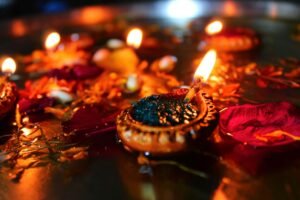
Recently, Deepavali has been officially added to UNESCO’s Representative List of the Intangible Cultural Heritage of Humanity. This honour was conferred during the 20th Session of the Intergovernmental Committee at the Red Fort in New Delhi, in the presence of international experts and delegates from 194 member states.
|
Highlights of the 20th Session of the Intergovernmental Committee
|
Deepavali: The Festival of Light and Legacy
Deepavali (Diwali) is an ancient Indian festival symbolizing the victory of light over darkness, good over evil, and knowledge over ignorance, rooted in diverse traditions for Hindus (Lord Rama’s return, Goddess Lakshmi), Jains (Mahavira’s Nirvana), and Sikhs (Guru Hargobind’s release).
- Origin: Deepavali holds a deep place in Indian cultural memory because communities across the subcontinent have celebrated it for more than two millennia. Ancient texts such as the Padma Purana and Skanda Purana, composed between the 4th and 7th century CE, mention the festival as a period when people welcomed light after the retreat of darkness. Indian society used seasonal markers to plan agriculture and social life, and Deepavali emerged within this cycle as a time of renewal after the monsoon.
- Association with Lord Rama: One major narrative that shaped the identity of Deepavali appears in the Ramayana, a text with its earliest layers dated to around 500 BCE. The epic describes how people in Ayodhya welcomed Lord Rama, Sita, and Lakshmana after fourteen years of exile. Communities lit rows of clay lamps to express hope and collective joy. The celebration of Rama’s return became an enduring symbol of the victory of righteousness.
- Jain Tradition: Deepavali also carries historic importance in Jain philosophy, which honours the attainment of nirvana by Lord Mahavira in 527 BCE. Jain texts record how followers illuminated their surroundings to commemorate the moment when Mahavira attained spiritual liberation. This event signalled the triumph of inner discipline over worldly attachments. Jain communities continue to view Deepavali as a day that marks introspection and ethical conduct.
- Sikh Tradition: Deepavali gained another layer of meaning in Sikh history during the 17th century. Sikh records recount that Guru Hargobind Sahib was released from imprisonment at Gwalior Fort in 1619, along with several political detainees. Communities in Amritsar illuminated the Golden Temple to express gratitude and reaffirm the importance of freedom. Sikhs observe this event as Bandi Chhor Divas, which blends with the broader Deepavali tradition.
- Harvest and Seasonal Festival: Agrarian communities regarded Deepavali as a marker of the end of the monsoon and the beginning of a new agricultural cycle. Regions that relied on rain-fed farming used this period to prepare for winter crops. Such practices appear in inscriptions from the 9th and 10th centuries CE in western and southern India. These customs show how Deepavali functioned as a seasonal festival that strengthened rural economies and social cooperation.
- Evolution of Rituals: Deepavali grew into a multiple-day celebration. Communities in northern India light diyas and honour Lakshmi as the deity of prosperity. Households in southern India celebrate Naraka Chaturdashi, a tradition linked to the victory of Krishna over the asura Narakasura. Western India remembers King Bali on Bali Pratipada, which honours generosity and duty. Eastern India associates Deepavali with the worship of Kali, reflecting regional beliefs that emerged around the 12th century CE.
- Symbol of Indian Culture: Deepavali expresses the continuity of Indian civilization. Historical records from the Gupta era (4th–6th century CE) mention lamp-lighting gatherings that resemble present-day customs. Foreign travellers such as Al-Biruni in the 11th century observed similar practices and noted the social cohesion such events created. Deepavali therefore serves as a cultural bridge that connects ancient traditions with modern society and reinforces India’s timeless heritage.
UNESCO’s Intangible Cultural Heritage Framework
-
- About: UNESCO’s Intangible Cultural Heritage (ICH) refers to the “living heritage” of communities—practices, expressions, knowledge, and skills passed down across generations that form part of their cultural identity. It differs from tangible heritage (like monuments) by focusing on non-physical traditions.
- Origin: Intangible Cultural Heritage is defined by the 2003 UNESCO Convention for the Safeguarding of the Intangible Cultural Heritage. UNESCO adopted the Convention on 17 October 2003. The Convention entered into force on 20 April 2006 after the required ratifications.
- Domain: It is characterized as traditional yet living, inclusive, representative, and community-based. ICH is manifested in domains such as oral traditions, performing arts, social practices, rituals, knowledge about nature, and traditional craftsmanship.
- Purpose: The aim is to protect forms of knowledge that are passed down orally and by practice. The Convention places communities at the centre of safeguarding. It also links living heritage to education and sustainable development.
- Lists: UNESCO uses three main instruments to give international recognition and support. The Representative List of the Intangible Cultural Heritage of Humanity raises global awareness of cultural practices. The List in Need of Urgent Safeguarding targets elements under threat. The Register of Good Safeguarding Practices highlights successful policies and projects.
- Governance: The Convention’s sovereign body is the General Assembly of the States Parties. The Assembly elects the Intergovernmental Committee to oversee implementation. The Committee currently comprises members elected for fixed terms and functions with a Bureau. The Committee meets at least once a year.
- Eligibility: State Party who prepares a nomination file for an element in consultation with the concerned community, must show that the element is intangible cultural heritage as defined in Article 2 of the Convention. States must demonstrate that the element is transmitted within a community. Files must include safeguarding measures and a plan for viability. Practical proof of community involvement is a decisive factor.
- Selection Process: After a state party process for nomination file, the Secretariat checks the completeness of this file. A technical subsidiary body examines nominations and prepares evaluations. The Intergovernmental Committee reviews the evaluations at its annual session. The Committee then adopts a decision to inscribe, defer or refer a file, or to request further information.
India’s UNESCO Intangible Cultural Heritage
- India now has 16 elements inscribed on UNESCO’s Representative List of the Intangible Cultural Heritage of Humanity. The list contains practices that communities recognize as part of their identity.
- Kutiyattam — 2008: Kutiyattam is an ancient Sanskrit theatre tradition rooted in Kerala. It uses stylised acting and complex gestures to tell classical stories. Practitioners perform in temple theatres. Kutiyattam preserves theatrical techniques that span many centuries.
- Tradition of Vedic Chanting — 2008: Vedic chanting is the oral recitation of the Vedas across India. Communities transmit precise intonation and pronunciation by strict oral methods. The practice sustains linguistic skills and ritual continuity. Vedic chanting links modern ritual life to ancient learning traditions.
- Ramlila — 2008: Ramlila is a living enactment of the Ramayana epic found mainly in North India. Communities stage episodic performances during the autumn festival season. The performance blends drama music and local participation. Ramlila fosters communal identity and moral education.
- Ramman of the Garhwal Himalayas — 2009: Ramman is a religious festival and ritual theatre from Saloor Dungra in Uttarakhand. Local performers combine music, dance and ritual to narrate myths. Villagers organise the entire event as a communal duty.
- Chhau Dance — 2010: Chhau is a masked dance tradition practised in parts of Odisha, Jharkhand and West Bengal. Dancers use stylised movements and martial motifs to represent epic stories. The dance connects folk forms to regional martial culture. Chhau remains a living school for physical discipline and storytelling.
- Kalbelia Folk Songs and Dances — 2010: Kalbelia is a performing tradition of a nomadic community in Rajasthan. Musicians and dancers use sinuous movement and folk songs that reflect desert life. The art supports community livelihood and cultural transmission. Kalbelia performance preserves intangible skills of dance music and costume.
- Mudiyettu — 2010: Mudiyettu is a ritual theatre from Kerala that depicts the battle between the goddess Kali and the demon Darika. Local troupes perform in temple courtyards during annual festivals. The ritual links agrarian cycles with mythic renewal. Mudiyettu reinforces village solidarity and ritual knowledge.
- Buddhist Chanting of Ladakh — 2012: Buddhist chanting in Ladakh involves recitation of sacred texts by monastic communities. Monks from various traditions preserve melodic and mnemonic systems. The practice sustains religious learning in trans-Himalayan cultures.
- Sankirtana of Manipur — 2013: Sankirtana is ritual singing, drumming and dancing linked to Vaishnavism in Manipur. Communities perform the art during life-cycle events and public rituals. Sankirtana integrates music, dance and narrative to maintain spiritual traditions.
- Traditional brass and copper craft of the Thatheras of Jandiala Guru — 2014: This craft concerns artisan methods for making utensils in Punjab. Thatheras use age-old smithing techniques for shaping and finishing metalware. Revival measures protect skills threatened by industrial substitutes.
- Navroz (Nowruz) — 2016: Navroz is the Persian New Year celebrated by Parsi and other communities in India. The festival marks seasonal renewal with shared rituals and foods. The element is transnational and links India to wider cultural zones.
- Yoga — 2016: Yoga is a widely practised physical, spiritual and mental discipline with roots in ancient India. The tradition covers diverse schools of practice and philosophical frameworks. Yoga contributes to health education and cultural diplomacy.
- Kumbh Mela — 2017: Kumbh Mela is a large cyclical pilgrimage held at four riverine sites in India. Pilgrims gather for ritual bathing and religious discourses at intervals up to twelve years. The event organises mass movement, cultural exchange and logistical knowledge.
- Durga Puja in Kolkata — 2021: Durga Puja is an annual religious and cultural festival centred in Kolkata. Communities create elaborate idols, pandals and artistic processions. The festival sustains artisan networks and public participation. Durga Puja demonstrates urban ritual creativity and community governance.
- Garba of Gujarat — 2023: Garba is a folk dance performed during Navratri that unites devotional music and circular dance. The main festival is Navratri, a nine-night Hindu celebration of the divine feminine.
- Deepavali — 2025: Deepavali is the pan-Indian festival of lights with diverse regional expressions. Core themes of light triumphing over darkness, good over evil, and knowledge over ignorance remain constant across the country.
|
Also Read: Salkhan Fossils Park Added to UNESCO’s Tentative Heritage List |