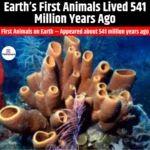




Earth First Animals Lived 541 Million Years Ago
|
General Studies Paper I: Scientific Discoveries, Animal Kingdom |
Why in News?
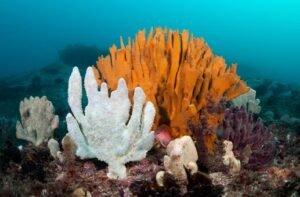
Recently, MIT researchers discovered “chemical fossils” in rocks over 541 million years old, suggesting Earth’s earliest animals were ancestors of modern sea sponges.
Highlights of MIT’s Research about Earth’s First Animals
- Discovery: Massachusetts Institute of Technology (MIT) researchers found compelling chemical evidence in rocks older than 541 million years that suggests some of Earth’s first animals were ancient sea sponges, extending the known timeline of animal life.
- Research Institution: The study was led by scientists from MIT, including researchers from institutions such as Caltech, UC Riverside, Cornell, Uppsala University, and GeoMark Research.
- Chemical Fossils: The team identified organic molecular “fingerprints” called steranes, which are stable remnants of sterols from cell membranes. These match those produced by modern demosponges, a major group of sea sponges.
- Geological Evidence: These sterane biomarkers were extracted from Precambrian sedimentary rocks more than 541 million years old, from locations including Oman, western India, and Siberia, indicating ancient biological activity.
- Biological Link: The specific steranes identified (including both C30 and rarer C31 variants) closely match molecules found in modern demosponges, providing a biological link.
-
-
- Researchers synthesized possible precursor sterols in the lab and showed that only specific ones match the ancient steranes.
-
- Soft-Body: The discovery reinforces that these early animals were soft-bodied sponges, which explains why they left chemical signatures instead of fossilized skeletons typical of later animals.
Who Were Earth’s First Animals?
- About: Earth’s first animals refer to the earliest members of the kingdom Animalia (Metazoa) — multicellular, eukaryotic, heterotrophic organisms with specialized cells and developmental stages.
- Unlike microbes, they possessed cell differentiation and embryonic development, marking a major biological transition.
- Molecular Clock Estimates: Independent molecular clock analyses suggest animal lineages may have originated 700–800 million years ago, earlier than most fossil evidence, indicating a long cryptic evolutionary phase before visible fossils.
- Genetic Innovations: Early animals developed critical gene families such as Hox genes, which regulate body patterning. The presence of these genes allowed organized tissue development.
- Absence: The earliest animals likely lacked true nervous systems, circulatory systems, and organs. Their simple body organization relied on diffusion for nutrient and gas exchange, reflecting primitive biological architecture.
- Reproductive Strategies: Evidence suggests early animals reproduced both sexually and asexually. Sexual reproduction increased genetic variation, accelerating adaptation and long-term evolutionary success.
- Ecological Role: These organisms lived exclusively in marine environments, particularly shallow continental shelves. They contributed to nutrient recycling and microbial mat grazing.
- Low but rising oxygen concentrations (estimated 1–10% of present atmospheric levels) constrained body size. Gradual oxygen increase enabled slightly larger and metabolically active organisms.
- Evolution: Genetic studies indicate animals evolved from choanoflagellate-like protists, single-celled organisms with collar-shaped feeding structures.
- This evolutionary link is supported by shared genes for cell adhesion and signaling, essential for multicellularity.
- It is supported by Ediacaran–Cambrian Transition.
- Impact: Early animals influenced carbon and nitrogen cycles by filtering water and disturbing sediments, increasing nutrient mixing and promoting ecological complexity.
Major Discoveries Related to Earth’s First Animals
- Ediacaran Fossils in Australia (1946): The first major breakthrough came with fossils discovered in the Ediacara Hills of South Australia, revealing large soft-bodied organisms dating 575–541 million years ago. This proved that complex multicellular life existed before the Cambrian period.
- Lantian Biota of China: Fossils from the Lantian Formation, Anhui Province, China (~600 million years old) revealed carbonaceous compressions of multicellular organisms, suggesting early tissue-level organization in pre-Cambrian marine ecosystems.
- Small Shelly Fossils (SSF): At the dawn of the Cambrian (~541 Ma), scientists found microscopic mineralized skeletal fragments, known as Small Shelly Fossils, marking the earliest evidence of biomineralization in animals.
- Discovery of Cloudina: The tubular fossil Cloudina (~550 million years old) from Namibia and China represents one of the earliest organisms with a calcium carbonate skeleton, possibly showing the first signs of predation through drill holes.
- Doushantuo Embryo Fossils: Exceptionally preserved microfossils from the Doushantuo Formation, China (~609–570 Ma) show possible animal embryos, providing insights into early developmental biology.
|
Ediacaran–Cambrian Transition
|
|
Also Read: The Extinct Dire Wolf |