



Economic Survey 2026
|
General Studies Paper II: Health, Government Policies and Interventions |
Why in News?
The Economic Survey 2026 warns that hidden food risks from rising consumption of ultra-processed foods and shifting diets are threatening children’s health in India, with obesity in kids increasing and projected to rise by 2035, highlighting a public health concern with long-term economic costs.
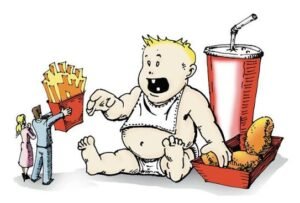
Nutritional Transition in India
- India is undergoing a profound nutritional transition, marked by a shift from traditional diets rich in whole foods to modern diets dominated by ultra-processed foods (UPFs), driven by globalization, urbanization, and lifestyle changes.
- The 2025-26 Economic Survey of India highlights that UPF sales have expanded more than 150 % between 2009 and 2023, with retail sales skyrocketing from about USD 0.9 billion in 2006 to nearly USD 38 billion in 2019, reflecting rapid dietary shifts nationwide.
- Ultra-Processed Foods, defined as industrial formulations high in sugars, salts, fats, additives, and low in nutrients, now form a substantial share of Indian diets, displacing nutrient-dense traditional staples like whole grains, pulses, vegetables, and fruits.
- These UPFs include instant noodles, packaged snacks, sugary beverages, biscuits, breakfast cereals, and ready-to-eat meals, which are aggressively marketed and readily available in urban and rural markets alike.
- This dietary transition correlates with the rise of sedentary lifestyles, especially in urban India, where screen time and desk-based work have reduced physical activity significantly. Combined with high UPF consumption, these lifestyle shifts have contributed to increased calorie intake and poor diet quality.
- Data from the National Family Health Survey (NFHS-5, 2019-21) show that 24 % of women and 23 % of men aged 15–49 are overweight or obese, while the prevalence of excess weight among children under five has risen from 2.1 % in 2015-16 to 3.4 % in 2019-21, indicating that unhealthy dietary patterns are affecting even the youngest age groups.
- Aggressive marketing strategies targeting children and adolescents — through television, digital media, and in-school promotions — have normalized UPFs as everyday foods, further entrenching their role in dietary intake. This commercialization of unhealthy diets complicates efforts to preserve traditional culinary practices.
Impact on Child Health
- The health landscape for Indian children reflects a concerning double burden of disease, where undernutrition coexists with rising overweight and obesity, creating complex health challenges. According to the National Family Health Survey (NFHS-5, 2019-21), traditional forms of malnutrition are still widespread: 36 % of children under five are stunted, 19 % are wasted, and 32 % are underweight, indicating chronic and acute undernutrition.
- UNICEF reports that the prevalence of overweight and obesity among under-five children has more than doubled in just over a decade, pointing to escalating exposure to unhealthy diets and sedentary behaviours. The 2025-26 Economic Survey also estimates that over 3.3 crore children were obese in 2020, with projections reaching about 8.3 crore by 2035 if current patterns persist.
- The double burden of malnutrition—simultaneous undernutrition and overnutrition—is increasingly visible within communities and households. Evidence shows that undernutrition indicators like stunting, underweight, and anemia frequently overlap, with anemia alone affecting about 23 % of children aged 6-59 months, and combinations such as stunting and underweight being present in around 13 %.
- Undernourished children face heightened vulnerability to infections, impaired cognitive and physical development, and long-term productivity losses, whereas overweight and obese children are at increased risk of non-communicable diseases (NCDs) such as type-2 diabetes, hypertension, heart disease, and psychosocial issues later in life.
- Global health organizations acknowledge that many low- and middle-income countries, including India, are now confronting this double burden, where undernutrition persists amid rising overweight and obesity across the same populations.
Economic and Demographic Implications
- The Economic Survey warns that rising obesity and NCDs (responsible for 65% of deaths) are compromising the “quality” of India’s demographic dividend. With roughly one-fourth of NCD deaths occurring in the 30–70 age group, India is losing its prime productive workforce. This “productivity leak” is compounded by digital addiction, which creates a “sleep debt” and cognitive fatigue among youth, directly diminishing long-term employability.
- Research indicates that in 2019, obesity‑related healthcare and productivity losses in India were about USD 28.95 billion (≈₹2.8 lakh crore), equivalent to over 1 % of GDP, and projections suggest this could increase sharply, reaching USD 81.53 billion by 2030 if current trends persist, driven by direct medical care costs and lost income.
- Obesity-related economic impacts are projected to hit 1.57% of GDP by 2030, potentially rising to 2.5% by 2060. High Out-of-Pocket Expenditure (OOPE) for chronic conditions acts as a “poverty trap,” pushing millions of families back into debt. While social sector spending is at 7.9% of GDP, the long-term fiscal burden of treating lifestyle diseases could balloon.
- Productivity losses are also substantial. Employees with chronic health conditions typically exhibit higher absenteeism, presenteeism (reduced output while at work), and greater disability leave, which collectively reduce economic output. When scaled across millions of workers, these impacts translate into measurable losses in GDP growth potential.
Policy Response and Government Interventions
- India’s government has responded to the nutrition and obesity crisis through a multi‑sectoral policy framework. Central to this is POSHAN Abhiyaan National Nutrition Mission launched in March 2018 and later expanded into Mission POSHAN 2.0 to unify several nutrition initiatives. This flagship programme aims to reduce stunting, under‑nutrition, anaemia, and low birth weight, particularly among children (0–6 years), adolescent girls, pregnant and lactating women. It involves technology‑driven monitoring tools like the POSHAN Tracker App, enabling real‑time tracking of nutritional status across districts and improving service delivery. POSHAN works with Anganwadi centres, Integrated Child Development Services (ICDS), education systems, and local self‑help groups to improve supplementary nutrition coverage and growth monitoring, and community outreach.
- To raise public awareness, the Rashtriya Poshan Maah (National Nutrition Month) is celebrated annually—most recently 17 September–16 October 2025—with themes like “Swasth Nari, Sashakt Parivar” focusing on women’s and children’s nutrition, early childhood feeding practices, and reductions in sugar and oil consumption. This campaign leverages community engagement, social media challenges, and local nutrient‑rich recipe sharing to embed healthy eating habits culturally and socially.
- At the national policy level, the Economic Survey 2025–26 explicitly recommends stringent regulatory actions to combat unhealthy diets driving obesity and NCDs. Proposals include front‑of‑pack nutrition labelling with warnings for high‑fat, sugar, and salt (HFSS) foods, marketing restrictions on ultra‑processed foods (UPFs) to protect children—potentially banning such ads between 6 am and 11 pm across all media—and exploring restrictions on marketing of infant and toddler milk and beverages. The Survey emphasizes regulating trade agreements to ensure they do not undermine public health goals.
- In addition to educational and regulatory measures, policy makers have discussed economic instruments like a “health tax” on UPFs to discourage consumption and make unhealthy options less attractive compared to nutritious foods, alongside stricter Food Safety and Standards Authority of India (FSSAI) labelling norms and higher GST on detrimental products. These fiscal measures would use taxation both to reduce unhealthy food intake and generate revenue for health promotion.
|
Also Read: First Chronic Kidney Disease Registry to Begin in Odisha |