




India’s Cab Rental Framework: Draft Rent-a-Cab Scheme 2026, 5-Car Minimum Fleet Proposal
| General Studies Paper II: Government Policies & Interventions |
Why in News?
Recently, India’s Ministry of Road Transport and Highways (MoRTH) proposed India’s Cab Rental Framework, unveiled the Draft Rent-a-Cab Scheme 2026, slashing minimum fleet mandates from 50 to 5 cars.
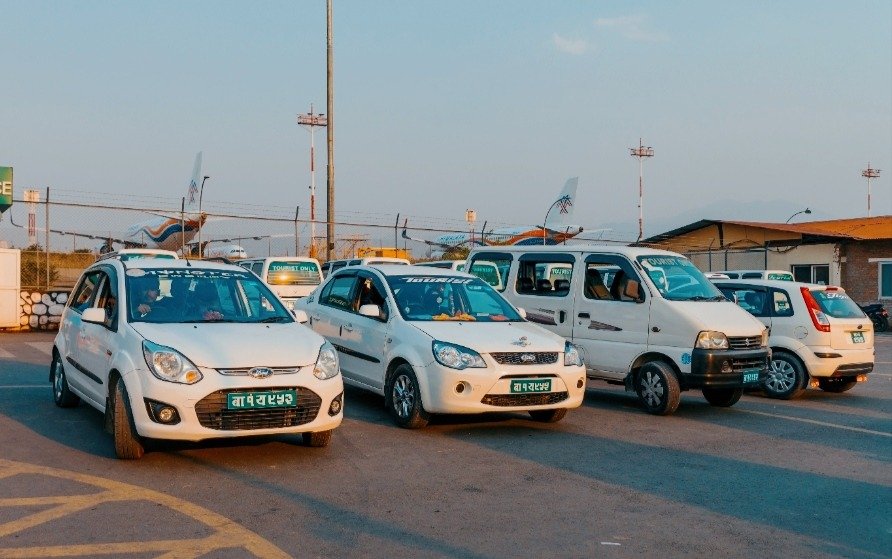
India’s Rent-a-Cab Regulatory Framework
- About: Cab rental refers to the commercial hiring of a motor cab to a customer for personal mobility over a specified duration.
- Licensed operators lease vehicles bearing valid tourist permits or exempted clean-fuel exemptions directly to renters.
- Customers book vehicles through digital platforms or physical hubs at airports, railway stations, and bus terminals.
- Regulation:
- The Central Government introduced the Rent-a-Cab Scheme, 1989, through notification S.O. 437(E), dated 12 June 1989.
- It became effective on 1 July 1989 and initially focused on licensed operators renting motor cabs to individuals wishing to drive them themselves.
- The framework imposed high entry barriers requiring 50 cabs and branches across five tourist cities.
- Operators must obtain a five-year licence, maintain comprehensive occupant insurance, and equip vehicles with location-tracking devices and first-aid kits.
- The framework was amended in 2021, which extended its application to battery-operated motor cabs and vehicles using methanol and ethanol.
- The sector operates under Section 75 of the Motor Vehicles Act, 1988, enforced alongside the Central Motor Vehicles Rules, 1989.
- The Central Government introduced the Rent-a-Cab Scheme, 1989, through notification S.O. 437(E), dated 12 June 1989.
- Institution: Policy formulation rests with the Ministry of Road Transport and Highways, while state-level execution is managed by the State Transport Authority (STA).
- Governance relies on the VAHAN electronic registry for automated compliance, police verification for chauffeurs.
- The State Transport Appellate Tribunal for dispute appeals.
Draft Rent-a-Cab Scheme 2026
- Proposal: On 12 November 2026, MoRTH announced proposed reforms through the Draft Rent-a-Cab Scheme 2026.
- It was introduced to replace the outdated 1989 framework.
- The initiative aims to simplify rental-business regulations, widen market participation and strengthen passenger services.
- The proposal seeks to achieve Ease of Doing Business, reduce administrative barriers, and encourage small entrepreneurs.
- Implementation: It is scheduled for implementation in January 2027 following public comments until December 5, 2026.
- Provisions:
- It formally defines and permits licensed operators to rent motor cabs with or without drivers, modernizing self-drive models.
- To dismantle high capital barriers, the draft slashes the minimum fleet requirement from 50 vehicles down to 5 cabs, mandating at least 2 cabs per place of operation.
- It also eliminates the restrictive mandate requiring branches across five tourist cities.
- Every vehicle must hold a valid registration, fitness and pollution certificates, zero pending challans, paid taxes, and comprehensive insurance covering all occupants up to passenger capacity.
- The framework replaces separate main and branch permits with a single electronic licence valid for five years across an entire State or Union Territory for a uniform ₹25,000 fee.
- Licence grants and renewals are proposed to be processed within 60 days.
- Applications for adding or removing vehicles or operating locations would receive deemed approval if not processed within 30 days, subject to the draft’s conditions.
- Electronic registers through VAHAN, the national vehicle-registration database, and automatic retrieval of vehicle information are proposed to reduce paperwork and improve regulatory efficiency.
- Safety and accountability mandates include:
- Vehicle and Support Standards: Mandatory GPS location tracking, first-aid kits, optional child restraint systems, a dedicated website, 24-hour grievance support, and emergency repair or towing services.
- Driver Welfare and Penalties: Compulsory police verification for operator-provided drivers, social security benefits under the Code on Social Security, 2020, reduced licence validity for specified serious offences, cure periods for non-material violations, and an electronic appellate mechanism.
- Operators would receive an opportunity to rectify non-material violations before suspension or revocation is considered. An appellate mechanism with electronic hearings is also proposed.
Significance of the Rent-a-Cab Proposal
- Impact on Mobility Startups: Reducing the entry requirement can enable mobility startups to establish operations with substantially lower initial fleet commitments.
- It may encourage technology-driven rental platforms, local aggregators and innovative vehicle-sharing models.
- Opportunities for Small Entrepreneurs: Small businesses, individual vehicle owners and local rental agencies may find formal market entry easier. It can also help operators concentrate resources in their existing markets.
- Employment Generation: Expansion of rental businesses could create opportunities for drivers, vehicle-maintenance technicians, customer-support executives, fleet managers and digital-platform professionals.
- Tourism Development: Easier vehicle availability at airports, railway stations and bus terminals can strengthen last-mile connectivity, facilitate intercity travel and support domestic tourism.
- Competition and Consumer Choice: Lower entry barriers may increase the number of organised operators, encouraging competition in pricing, vehicle categories and service quality.
- Ease of Doing Business: Single electronic licensing, uniform State/UT licensing fees, digital records and time-bound approvals can reduce administrative complexity, compliance costs and delays.
- This supports the broader objectives of Digital India and technology-enabled public administration.
- Green Mobility Potential: A more accessible rental market could support wider adoption of electric and other cleaner-fuel vehicles, particularly where operators invest in shared mobility and efficient fleet utilisation.
- Formalisation of the Mobility Economy: Simplified licensing can encourage informal operators to enter the regulated sector, potentially improving documentation, accountability, service standards and regulatory visibility.
Frequently Asked Questions (FAQs):
1. What changes has the Centre proposed in the Rent-a-Cab Scheme 2026?
The Centre proposes simplified licensing, reduced fleet requirements, digital approvals, wider rental coverage and stronger passenger-safety measures.
2. What is the new minimum fleet requirement for starting a cab rental business?
The proposed minimum fleet requirement is five vehicles, reduced from the existing 50, with at least two vehicles per operating location.
3. Will the proposed cab rental rules apply to both self-drive and chauffeur-driven vehicles?
Yes. The draft explicitly covers rental vehicles offered with or without drivers, expanding beyond the earlier self-drive-oriented framework.
4. What are the proposed licensing rules for cab rental operators?
A single electronic State/UT-wide licence, uniform fees, 60-day processing, five-year validity and simplified digital compliance are proposed.
5. How will the proposed changes benefit small businesses and new entrepreneurs?
Lower entry barriers, reduced fleet requirements and simplified licensing could encourage startups, local operators, competition and employment generation.
Disclaimer: Information in this article is based on official announcements and public records. Details may evolve over time.