




Karnataka Hate Speech and Hate Crime Prevention Bill 2025
|
General Studies Paper II: Government Policies & Interventions |
Why in News?
Recently, the Karnataka government introduced the Karnataka Hate Speech and Hate Crime (Prevention) Bill, 2025 in the Assembly. The Bill, cleared by the cabinet on 4 December, proposes strict jail terms and fines to curb hate speech through stronger legal deterrence.
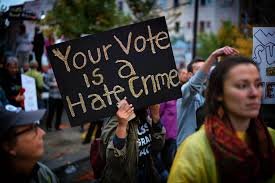
Provisions of the Karnataka Hate Speech and Hate Crime (Prevention) Bill, 2025
-
- Definition of Hate Speech: The Bill offers clear definitions for hate speech. It defines hate speech as any expression made or shared in public view, whether spoken or written, or through print, signs, visual media, or electronic communication, that is intended to create injury, disharmony, enmity, hatred, ill-will or prejudice against a person, group, class, or community.
- Definition of Hate Crime: “Hate crime” is defined as the communication of hate speech (making, publishing, circulating, promoting, inciting, or attempting such speech) in a way that causes disharmony, enmity, hatred, or ill-will against individuals or groups based on their protected characteristics.
- Protected Grounds: The Bill lists a comprehensive set of protected grounds on which hate speech can be based. These are religion, race, caste, community, gender, sex, sexual orientation, place of birth, residence, language, tribe, and disability. Speech that fosters disharmony or hatred against these groups qualifies as hate speech under the law.
- Penalties: The Bill prescribes graded punishments depending on the severity and recurrence of the offence: For a first offence, the convict may receive imprisonment from one year up to seven years and a fine up to ₹50,000. For subsequent or repeat offences, the punishment increases to imprisonment for not less than two years which may extend to up to ten years and a fine up to ₹1,00,000. All offences under the Bill are designated as cognisable and non-bailable and will be tried by a Judicial Magistrate First Class.
- Bail Conditions: Under the Bill, police have the authority to register a case without court order. This makes the offence cognizable. The law also classifies the offence as non-bailable, meaning the accused cannot claim bail as a matter of right.
- Preventive Powers: The Bill permits certain officials to initiate action when credible information is received or there is reasonable belief that hate speech will occur. These officials include an Executive Magistrate, Special Executive Magistrate, or a Police Officer not below the rank of Deputy Superintendent. They can take preventive measures to stop the offence before actual harm occurs to maintain public peace.
- Organisational Liability: The Bill extends criminal liability to institutions and organisations linked to hate speech. If a hate speech offence is committed by or within an organisation, then every person responsible for the organisation’s operations at the time of the offence will be deemed guilty unless they can prove lack of knowledge or lack of control. The organisation itself may also be charged and held liable alongside its office-bearers.
- Exemptions: The Bill provides important exemptions for speech or materials that are not intended to incite hatred or harm. The law does not apply to books, pamphlets, papers, writings, drawings, paintings or similar forms of expression that are justified in the interest of science, literature, art, learning, culture, or used for bona fide heritage or religious purposes.
Significance of this Bill
- Law and Order: In 2024, India recorded 1,165 hate speech events, marking a 74.4% increase from 2023’s 668 incidents, with most of these incidents targeting religious minorities and occurring across 20 states and Union Territories. This sharp rise showed a clear threat to law and order nationally. The Bill’s provisions for cognizable offences and imprisonment aim to empower law enforcement to act swiftly against those who incite hatred and threaten public safety.
- Social Harmony: Hate speech has historically triggered communal violence in India, such as the 1999 anti-Christian violence in Ranalai, Odisha, which began after provocative speech led to arson and mass destruction of homes. The new law attempts to prevent such patterns by making hate speech an offence that can be punished effectively under state law.
- Public Discourse: The Bill is designed to distinguish between lawful expression and speech that intentionally incites injury or enmity against groups. Previous debates on hate speech laws in India have shown that unrestricted inflammatory speech can polarise society and erode trust among groups. By setting clear definitions and penalties, the Bill seeks to balance freedom of expression with the need to avoid societal disruption.
- Community Safety: The Bill empowers courts to provide compensation to victims of hate speech and hate crime, in addition to punitive measures. This is important because it recognises that hate incidents can cause psychological trauma, fear, and economic loss to individuals and communities. A statutory compensation mechanism encourages victims to seek justice and helps rebuild trust in the legal system.
Constitutional and Legal Foundations of Hate Speech Regulation in India
- Free Speech under Article 19(1)(a): The Constitution guarantees freedom of speech and expression under Article 19(1)(a). This right affirms the central role of open dialogue in a democratic society. Free speech protects political dissent, cultural expression and criticism of authority. The right does not create an absolute zone because the Constitution accepts that speech can harm when used irresponsibly.
- Restrictions under Article 19(2): Article 19(2) allows the State to place reasonable restrictions on speech in the interests of public order, decency, morality, the sovereignty and integrity of India, the security of the State, friendly relations with foreign states, contempt of court, defamation and incitement to an offence. The Supreme Court clarified that restrictions must be reasonable in nature and proportional to the harm they aim to prevent.
- Penal Law: India uses various provisions of the Indian Penal Code (IPC) to regulate hate speech. Sections 153A (BNS Sections 196), 153B (BNS Sections 197), 295A, 505(1) and 505(2) address promotion of enmity, acts prejudicial to national integration, insult to religion, and statements that create fear or hatred. These sections were introduced between 1927 and 1972 to protect communal peace and prevent targeted hostility.
- Promotion of Enmity: Section 153A was originally enacted in colonial India in 1898 but gained its present form after amendments in 1961 and 1972. The section punishes speech or acts that promote enmity between religious, racial, regional, caste or linguistic groups. This section forms the backbone of criminal prosecution against hate speech in India.
- Insult to Religion: Section 295A was introduced in 1927 after the publication of a controversial pamphlet triggered communal tension. The law punishes deliberate and malicious acts intended to outrage the religious feelings of any class of citizens. The Supreme Court upheld this section in the 1957 Ramji Lal Modi case and held that it is a valid restriction under Article 19(2).
- Statements Leading to Misconduct: Section 505 covers statements, publications or rumours that cause fear or disturb public tranquillity. Sub-section 505(2) punishes speech that promotes hatred or ill-will between groups. This provision acknowledges that mass panic or hostility can be created through rumours, speeches or messages.
- Supreme Court’s Verdicts
-
-
- Pravasi Bhalai Sangathan (2014): In 2014, the Supreme Court examined the issue of hate speech in the Pravasi Bhalai Sangathan v Union of India case. The Court acknowledged a rise in harmful speech that targeted communities and individuals. The Court stated that existing penal laws were adequate but required strong enforcement.
-
- Shreya Singhal (2015): The 2015 Shreya Singhal judgment created an important distinction between advocacy, discussion and incitement. The Court held that only speech that reaches the level of incitement to violence or harm can be restricted. The Court struck down Section 66A of the IT Act because it allowed punishment for vague and subjective offences.
- Law Commission Reports: The 267th Report of the Law Commission of India in 2017 studied hate speech regulation. The Commission stated that hate speech destroys dignity, triggers discrimination and destabilises communities. The report proposed new legal provisions to criminalise incitement to hostility and to protect vulnerable groups, recommending amendments to the Indian Penal Code (IPC) to introduce specific provisions like Section 153-C and 505-A.
Challenges in Regulating Hate Speech in India
- Absence of a Clear Legal Definition: India’s primary challenge is the lack of a specific, standalone statutory definition of “hate speech”. Current laws, such as Sections 153A and 295A of the BNS address such acts but not “hate speech” as a distinct offense. This ambiguity leads to subjective interpretation by law enforcement and courts, resulting in inconsistent application of the law and low conviction rates.
- Rapid Spread in the Digital Age: The rise of social media platforms has exacerbated the challenge, as hate content can go viral within seconds to a massive audience. The internet offers users a degree of anonymity, making it difficult for authorities to identify the originators of hateful messages (e.g., via VPNs or fake profiles). This rapid dissemination and anonymity outpace the capacity of law enforcement agencies.
- Political and Social Factors: Hate speech in India is often intertwined with complex political and religious dynamics. Political leaders and groups sometimes use inflammatory rhetoric to galvanize support, which complicates regulation and raises concerns about selective enforcement. The existing laws are sometimes misused by authorities to suppress political dissent, criticism of the government.
- Judicial Delays: Despite Supreme Court directives for police to take prompt suo motu (on their own motion) action against hate speech incidents, implementation at the ground level remains weak and inconsistent. Procedural neglect and a lack of specific training for law enforcement agencies contribute to delays in investigations and prosecutions. The slow pace of the judicial process undermines the deterrent effect of the law and delays justice for victims.
|
Also Read: Misuse of Section 498A of the Indian Penal Code (IPC) |