




SpaceX Plans 2026 IPO to Raise Over $30 Billion
|
General Studies Paper III: Capital Market |
Why in News?
Recently, Bloomberg News reported that Elon Musk’s SpaceX is preparing for an initial public offering that could raise more than $30 billion, potentially becoming the largest IPO ever, surpassing Saudi Aramco.
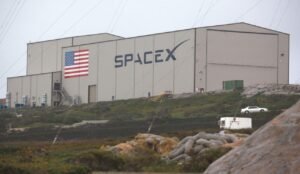
Key Details of SpaceX’s Proposed IPO
- IPO Timing: SpaceX is reportedly preparing to go public in 2026 with an Initial Public Offering (IPO). The company is aiming for a listing in mid-to-late 2026 on the stock market. This timeline could change based on market conditions and investor demand. The primary purpose of the IPO is to raise capital to fund SpaceX’s ambitious projects.
- Expected Fundraising & Valuation: Reports suggest SpaceX aims to raise significantly more than $30 billion from its IPO. This would make it one of the largest IPOs ever recorded. For comparison, the record has been held by Saudi Aramco, which raised about $29 billion in 2019. SpaceX is targeting a valuation of around $1.5 trillion for the company at the time of the IPO.
- Revenue Growth: SpaceX’s business consists of multiple major parts, including rocket launches, Starlink satellite internet, and emerging technology projects. The company is forecast to earn about $15 billion in revenue in 2025. Revenue is then expected to grow further in 2026, possibly reaching between $22 billion and $24 billion.
- Secondary Share Sales: Before a public IPO, SpaceX has been offering secondary share sales to private investors and employees. In these sales, the company set a price near $420 per share, which implied a valuation above $800 billion for the private company. Some of the secondary offering also allows employees to sell up to about $2 billion worth of shares.
Strategic Significance of SpaceX’s IPO in the Global Space Economy
- SpaceX’s planned IPO in 2026 could redirect major capital toward commercial space activity. Investors may treat the listing as a signal that the space economy has reached a mature phase. The offering could inspire greater private investment in satellites, launch vehicles, and in-orbit services. SpaceX has already influenced global funding trends since 2015, and a public listing could strengthen this shift.
- A valuation target of about $1.5 trillion places SpaceX far ahead of most aerospace players. The public listing could encourage major competitors in the United States, Europe, and Asia to speed up innovation. Companies like Blue Origin and emerging Asian space-tech firms may increase their spending on reusable launch technology.
- SpaceX continues to test Starship, which completed important flights in 2023 and 2024. Additional funding from a public listing could support missions planned for the late 2020s, including NASA’s Artemis program. This scale of investment could help international partners and strengthen global cooperation in lunar and Mars exploration.
Technological Drivers Behind SpaceX’s Rapid Growth
- Reusability of Launch Vehicles: SpaceX developed reusable rockets to cut launch costs and raise flight tempo. Falcon 9 boosters now land and fly again many times. The company recorded over 500 successful booster landings by late 2025. Reuse lets SpaceX spread hardware costs across many missions. This model reduces per launch price and helps win commercial and government contracts.
- Advanced Engine Design: SpaceX built the Raptor engine using a full-flow staged combustion cycle. The Raptor uses methane and liquid oxygen to improve performance. The engine design gives higher efficiency than earlier kerosene engines. SpaceX produced hundreds of Raptors by 2025 and logged extensive test run time. The engine enables heavy lift and reusability goals for Starship.
- Vertical Integration: SpaceX vertically integrated manufacturing to shorten development cycles. The company makes engines, structures, avionics, and software in house. This control speeds design changes and lowers external supplier delays. SpaceX follows a rapid test, this approach reduced time from prototype to flight compared with traditional aerospace.
- Mass Satellite Production: SpaceX built a high volume satellite production line for Starlink. The company began large scale satellite launches in 2019. Starlink reached millions of users by 2025 and it generated most of SpaceX revenue that year. High cadence of satellite production and launches gave SpaceX recurring service revenue.
- Next Generation R&D Services: SpaceX shifted R&D to in-orbit services like space-based data centers and direct to handset connectivity. The firm tested new payload interfaces and high throughput terminals. R&D plans since 2024 placed emphasis on converging launch, satellite, and computing technologies. These projects may unlock new revenue streams in the late 2020s.
Historical Comparisons of Major IPOs
- Saudi Aramco (2019): Saudi Aramco completed an initial public offering that raised about $29.4 billion in December 2019. The company sold a massive block of shares as part of a national strategy to fund economic change. The Aramco listing remains the largest single IPO by funds raised.
- Alibaba (2014): Alibaba raised roughly $25 billion in its September 2014 IPO in New York. The offering at that time set a global record for a technology company. The Alibaba debut reshaped investor views on large consumer tech listings.
- Agricultural Bank of China (2010): A major Chinese bank raised roughly $22.1 billion in 2010 in one of the largest global listings that year. The deal highlighted the scale possible when governments and large state entities move to public markets. That offering shows how national strategy and state backing can produce very large IPOs.
- Visa (2008): Visa raised about $17.9 billion in March 2008. The Visa listing set a U.S. record for that period. The offering took place during volatile markets just before a deep global downturn. The Visa IPO shows how financial firms can secure large capital even in uneasy conditions.
- Facebook / Meta (2012): Facebook raised around $16 billion in May 2012. The deal became a reference for large social and platform companies entering public markets. Facebook’s debut also exposed how execution problems and trading frictions can affect first-day outcomes.
|
Also Read: Elon Musk gets $29 Billion Stock Award from Tesla |