

Apni Pathshala

US Proposes Fresh Tariffs on 60 Countries

US Proposes Fresh Tariffs on 60 Countries

General Studies Paper II: Effect of Policies & Politics of Countries on India’s Interests, Bilateral Groupings & Agreements

Why in News?

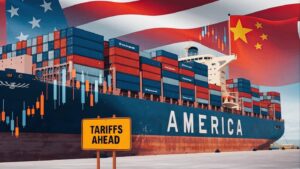
Recently, the United States proposed fresh 10 to 12.5% tariffs on imports from 60 economies, including India, under Section 301 investigations.
US Proposes Fresh Tariffs on 60 Countries

Points to Know About US Fresh Tariffs Proposal on 60 Countries

  • Proposal: On 2 June 2026, the Office of the United States Trade Representative (USTR) proposed fresh trade action against 60 economies, including India. 
    • The proposal emerged after a U.S. investigation into global trade practices related to forced-labour-linked goods
    • The action is based on Section 301 of the U.S. Trade Act of 1974.
  • Investigation: The USTR formally launched 60 separate Section 301 investigations on 12 March 2026
    • The list of investigated economies includes India, China, the European Union, the United Kingdom, Japan, South Korea, Canada, Mexico, Vietnam, Bangladesh, Thailand and several Gulf countries.
    • These investigations examined whether trading partners adequately prohibited and enforced restrictions on imports produced through forced labour. 
    • The primary objective is to prevent products linked to forced labour from gaining a cost advantage in international markets. 
    • Washington argues that such goods distort competition and disadvantage American workers and businesses. 
  • Countries Covered: The proposal covers 60 economies
    • According to USTR findings, 54 economies including India, China, Japan, South Korea, the United Kingdom and Vietnam allegedly failed to impose and enforce effective import prohibitions on forced-labour goods.
    • The USTR report claims India has not sufficiently enforced restrictions on goods linked to forced labour and identified concerns regarding certain global cotton supply chains.
    • Six economies Canada, Ecuador, the European Union, Indonesia, Mexico and Pakistan were found deficient mainly in enforcement.
  • Tariff Structure: The USTR proposed 10% additional tariffs for economies that have adopted full or partial forced-labour controls and 12.5% tariffs for economies considered to have weaker compliance frameworks. 
  • Exemptions: Certain sectors, including energy products, pharmaceuticals, and aircraft parts, are proposed for exemption. 
    • A special textile-access mechanism has also been suggested for limited imports at lower tariff rates.
  • Consultation Process: The proposal is not yet final
    • Written comments may be submitted until 6 July 2026, while public hearings are scheduled for 7 July 2026 before any final determination. 

What is Section 301?

  • Section 301 is a provision of the U.S. Trade Act of 1974 that empowers the Office of the United States Trade Representative (USTR) to investigate and respond to foreign trade practices that are considered unjustifiable, unreasonable, or discriminatory and that burden U.S. commerce.
    • Section 301 forms part of Title III (Sections 301–310) of the Trade Act of 1974, officially titled “Relief from Unfair Trade Practices.” It remains one of the most powerful instruments in U.S. trade law.
  • The law was created to protect U.S. economic interests, enforce trade agreements, remove foreign trade barriers, and secure fair access for American goods and intellectual property.
  • Section 301 can be invoked against foreign measures that violate trade agreements or are deemed unreasonable, discriminatory, unfair, market-distorting, or harmful to U.S. commercial interests.
  • If violations are established, the U.S. may impose additional tariffs, suspend trade concessions, restrict imports, withdraw benefits, or negotiate corrective agreements with the concerned country. 
  • Section 301 is a domestic U.S. law, but its use often intersects with World Trade Organization (WTO) obligations, creating debates over unilateral trade enforcement and multilateral dispute settlement. 
  • The most prominent use of this act occurred during the U.S.–China trade dispute, when Section 301 investigations led to extensive tariffs targeting Chinese goods over intellectual property, technology-transfer, and industrial policy concerns.

IMPACT: Global and India 

  • Global:
    • Slower Global Trade Growth: The proposed U.S. tariffs add to rising trade protectionism and could weaken global merchandise trade growth. The WTO has already noted that higher tariffs reduce import demand and disrupt trade flows, particularly in export-dependent economies.
    • Strain on Multilateral Trade System: The proposal has revived debates over unilateral trade measures and their compatibility with the World Trade Organization (WTO) framework. Repeated tariff actions may weaken confidence in rules-based global trade governance. 
    • Supply Chain Reconfiguration: Multinational firms may increasingly restructure supply chains to avoid tariff exposure. This creates higher compliance, logistics and certification costs, accelerating the trend toward friend-shoring, regionalization and supply-chain diversification.
    • Increased Trade Uncertainty: The proposal affects 60 economies, including major U.S. trading partners. Such uncertainty can discourage investment decisions, delay contracts and reduce business confidence in international markets.
    • Pressure on Developing Economies: Many developing countries depend heavily on labour-intensive exports. Studies indicate that U.S. tariff actions can reduce export earnings and negatively affect countries whose exports constitute a significant share of GDP
  • India:
    • Reduced Export Competitiveness: A proposed 12.5% additional tariff could make several Indian products costlier in the U.S. market, potentially reducing competitiveness against suppliers from countries facing lower duties or exemptions.
    • Pressure on Labour-Intensive Sectors: Sectors such as textiles, garments, cotton products and selected manufacturing exports face increased scrutiny because compliance concerns are linked to supply-chain verification requirements.
    • Opportunity for Reforms: The proposal could accelerate reforms in labour governance, ethical sourcing, and export compliance. Improved standards may strengthen India’s long-term position in global value chains.
    • Higher Compliance Costs: Indian exporters may need stronger traceability systems, labour audits and supply-chain documentation. These requirements increase operational costs, particularly for MSMEs. 
    • India–US Trade Negotiations: The tariff proposal emerges while both countries are pursuing a broader trade arrangement. It introduces an additional negotiating challenge and could complicate discussions on market access and tariff concessions. 

India’s Anti-Forced Labour Initiatives

  • Legal Framework: India has long prohibited forced labour through the Bonded Labour System (Abolition) Act, 1976. It abolished bonded labour, cancelled bonded debts, and criminalised coercive labour practices.  
    • Child Labour (Prohibition and Regulation) Amendment Act, 2016 imposes a complete ban on the employment of children below 14 years in all occupations and restricts adolescents from hazardous work.
  • Labour Code Reforms: India consolidated 29 central labour laws into four Labour Codes covering wages, industrial relations, social security, and occupational safety. 
    • Code on Wages, 2019: Subsumes 4 laws (Minimum Wages Act, Payment of Wages Act, Payment of Bonus Act, and Equal Remuneration Act) to ensure universal minimum wages, timely payment, and equal remuneration without gender discrimination.
    • Industrial Relations Code, 2020: Amalgamates 3 laws (Trade Unions Act, Industrial Employment (Standing Orders) Act, and Industrial Disputes Act) to streamline dispute resolution and facilitate the ease of doing business.
    • Code on Social Security, 2020: Integrates 9 laws (including EPF, ESI, Maternity Benefit, and Gratuity Acts) to provide social security benefits to all employees and unorganised workers, expanding coverage to gig and platform workers.
    • Occupational Safety, Health & Working Conditions (OSHWC) Code, 2020: Merges 13 laws (like the Factories Act, Mines Act, and Contract Labour Act) to establish uniform safety standards, health checks, and better working conditions across all sectors.
  • Worker Database: The government launched the e-Shram Portal to create a national database of unorganised workers. 
    • By improving worker identification and welfare delivery, the platform reduces vulnerabilities associated with labour exploitation. 
  • Disclosure Framework: India has introduced the Business Responsibility and Sustainability Reporting (BRSR) framework and the National Guidelines on Responsible Business Conduct (NGRBC)
    • These encourage companies to disclose labour, human-rights, and supply-chain practices. 
  • Anti-Human Trafficking Units (AHTUs): zit is established across various districts with funding and support from the Ministry of Home Affairs to conduct proactive raids, rescues, and investigations.
  • Central Sector Scheme for Rehabilitation of Bonded Labourers: It provides financial assistance (up to ₹30,000 to ₹1,000,000 depending on the category of victim) to rescued individuals, along with asset creation and skill development.
  • Global Standards: Indian exporters are increasingly adapting to international due-diligence requirements as major markets move toward stricter forced-labour regulations and supply-chain verification mechanisms.
    • Authorities and industry groups are examining high-exposure sectors such as textiles, apparel, electronics, and cotton-linked supply chains.
  • NGO Collaboration: Organizations like Bachpan Bachao Andolan (BBA) and Anti-Slavery International frequently work with government task forces to conduct rescue raids, operate shelter homes, and track down missing children.


Also Read: India‑US Trade Deal Regarding GM Crops


Share Now ➤

Do you need any information related to Apni Pathshala Courses, RNA PDF, Current Affairs, Test Series and Books? Our expert counselor team will not only help you solve your problems but will also guide you in creating a personalized study plan, managing time and reducing exam stress.

Strengthen your preparation and achieve your dreams with Apni Pathshala. Contact our expert team today and start your journey to success.

📞 +91 7878158882

Related Posts

Scroll to Top