




US–Iran Two-Week Ceasefire Deal
|
General Studies Paper II: Groups and Agreements Involving and/or Affecting India’s Interests |
Why in News?
Recently, the United States and Iran agreed to a Pakistan-brokered two-week ceasefire to pause a dangerous conflict, allowing reopening of the Strait of Hormuz and creating space for diplomacy.
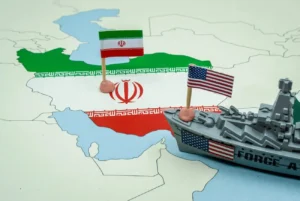
Highlights of US–Iran Two-Week Ceasefire Agreement
- Nature: The two-week conditional ceasefire was agreed on 8 April 2026, marking a temporary halt in hostilities between the United States and Iran.
- The agreement is a temporary, conditional, and “double-sided ceasefire”, meaning both sides have mutually agreed to halt offensive operations.
- It is designed as a short-term de-escalation window to prevent full-scale war and create space for diplomacy.
- Background: The US–Iran two-week ceasefire emerged after nearly 39 days of intense military conflict involving US and Israeli strikes on Iranian targets and Iran’s retaliatory actions.
- The crisis escalated due to Iran’s control over the Strait of Hormuz, threatening global oil supply and pushing the region toward a wider war.
- Pakistan’s Role: Pakistan played a central diplomatic role, acting as a communication bridge between Washington and Tehran. Leaders like Shehbaz Sharif and military officials facilitated dialogue and proposed the ceasefire, positioning Pakistan as a strategic mediator in West Asian geopolitics.
- Two-Phase Framework: Pakistan initially proposed a two-phase ceasefire framework, involving (i) immediate cessation of hostilities, and (ii) structured negotiations for a broader peace deal.
- Core Condition: A critical condition of the ceasefire is the “complete, immediate, and safe reopening” of the Strait of Hormuz, through which nearly 20% of global oil supply passes. Iran agreed to coordinate safe maritime transit, making this a geo-economic centerpiece of the deal.
- United States’ Stance: The United States, under President Donald Trump, described the ceasefire as a strategic success, claiming military objectives were achieved.
- The US accepted Iran’s 10-point proposal as a “workable basis” for negotiations, while making it clear that compliance—especially on Hormuz—is essential.
- Iran’s Stance: Iran officially stated that it would halt its “defensive operations” only if attacks stop from the US and its allies.
- Tehran emphasized conditional reciprocity, asserting sovereignty while agreeing to enable safe shipping passage during the ceasefire period.
- Key Disputes: Despite the ceasefire, major disputes remain unresolved, including Iran’s nuclear program, uranium enrichment, missile capabilities, sanctions relief, and US military presence.
- Strategic Impact: The announcement led to sharp declines in oil prices and a surge in global stock markets, reflecting reduced geopolitical risk. Stability in the Strait of Hormuz directly impacts energy security, inflation, and trade flows, making the ceasefire globally significant.
Iran’s 10-Point Peace Plan
- Demand for Complete Sanctions Removal: A central pillar is the lifting of all primary and secondary US sanctions, including financial and oil restrictions. This reflects Iran’s priority to revive its economy, which has been severely constrained by sanctions targeting banking, energy exports, and global trade access.
- Recognition of Nuclear Enrichment Rights: Iran insists on international acceptance of its uranium enrichment program, highlighting sovereignty over its nuclear policy. Notably, this clause appeared clearly in Farsi versions but was less explicit in English, indicating strategic ambiguity in diplomacy.
- Control Over the Strait of Hormuz: The proposal emphasizes continued Iranian control over the Strait of Hormuz, a chokepoint carrying nearly 20% of global oil trade. Iran seeks not only security control but also economic leverage, including potential transit fees on shipping.
- US Non-Aggression Guarantee: Iran demands a formal US commitment to end aggression and avoid future military strikes. This reflects Tehran’s concern over regime security and aims to create a binding security assurance framework against future conflicts.
- Withdrawal of US Forces from the Region: Another key demand is the complete withdrawal of US combat forces from West Asia, particularly from Gulf bases. This aligns with Iran’s broader geopolitical goal of reducing American military influence in the region.
- Compensation for War Damages: Iran has sought financial compensation for war-related damages, including infrastructure and economic losses. This reflects an attempt to shift negotiation dynamics, placing responsibility on the US for escalation costs.
- Termination of UN and IAEA Actions: The proposal includes ending all UN Security Council and IAEA resolutions against Iran, effectively seeking removal of international legal pressure on its nuclear activities. This would mark a major rollback of global non-proliferation oversight.
- Release of Frozen Assets and Economic Relief: Iran demands the release of frozen overseas assets and restoration of financial access. This is crucial for stabilizing its currency and funding post-war reconstruction and domestic welfare programs.
- Comprehensive Regional Ceasefire Clause: The plan calls for a complete cessation of hostilities across all fronts, including Lebanon, Iraq, and Yemen, indicating Iran’s intent to integrate its regional allies into the peace framework and reshape West Asian security architecture.
|
Also Read: Iran-Israel Conflict |