




WHO Declares Ebola Global Emergency
|
General Studies Paper II: Disease, International Organisations |
Why in News?
Recently, the World Health Organization declared Ebola outbreaks in Congo and Uganda a global emergency after rising deaths.
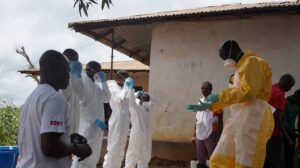
Ebola Virus Outbreak
- Origin: The current outbreak is caused by the rare Bundibugyo strain of the Ebola virus, first identified in Uganda in 2007.
- The outbreak began in Ituri Province of the Democratic Republic of Congo (DRC), especially around mining zones such as Mongwalu and Rwampara. Dense movement of miners accelerated transmission.
- Strain Complexity: Genomic sequencing reveals a non-Zaire Ebola strain, complicating countermeasures.
- Existing vaccines and therapeutics were specifically engineered to target only the Zaire ebolavirus strain, rendering current treatments less effective.
- Current Case: As of May 2026, WHO reported over 300 suspected cases, nearly 88 deaths, and multiple laboratory-confirmed infections across Congo and Uganda.
- DR Congo has experienced at least 17 Ebola outbreaks since 1976. The 2018–2020 Kivu outbreak alone killed nearly 2,300 people, making Congo globally vulnerable to recurrent Ebola crises.
- Healthcare workers have been heavily impacted, making up a notable cluster of early infections.
- Spread: The virus spread from eastern Congo into Uganda, including cases linked to Kampala.
- WHO fears wider regional transmission because of porous borders and frequent population movement across East Africa.
- Declaration: WHO declared a Public Health Emergency of International Concern (PHEIC), its highest global alert before pandemic classification.
- The declaration aims to mobilize funding, medical aid, surveillance, and international coordination rapidly.
- WHO considers the outbreak an “extraordinary event” because of urban spread, uncertain epidemiology, lack of vaccines, and regional instability.
- However, WHO clarified it is not yet classified as a pandemic.
- Global Health Response: The WHO has deployed an emergency field team and released USD 500,000 from its Contingency Fund for Emergencies (CFE) to finance rapid contact tracing, cross-border surveillance, and laboratory testing.
- Following the WHO PHEIC declaration, the Africa Centers for Disease Control and Prevention (Africa CDC) has established regional coordination.
|
Ebola Virus Disease:
|
Significance of WHO Global Emergency Declaration
- Legal Binding under IHR: A Public Health Emergency of International Concern (PHEIC) activates the International Health Regulations (IHR 2005), a legally binding agreement across 196 Member States.
- This legal framework mandates that countries rapidly detect, assess, and notify the WHO within 24 hours of potential outbreaks.
- International Alarm System: The declaration acts as an accelerated alarm mechanism designed to cut through bureaucratic inertia.
- It is an official call to action for governments, non-governmental organizations, and global communities to respond immediately.
- Coordinated Global Response: A PHEIC triggers centralized, multinational mobilization.
- Instead of isolated national efforts, the WHO guides a synchronized strategy to stop the cross-border transmission of pathogens, chemicals, or radioactive hazards.
- Rapid Funding and Aid: The declaration directly influences the flow of international financial resources.
- It catalyses emergency funding from major global bodies like the World Bank, enabling low-resource nations to scale up healthcare capacities.
- R&D Acceleration: It fast-tracks medical research through frameworks like the WHO R&D Blueprint.
- This allows scientists, pharmaceutical companies, and regulators to prioritize and accelerate the development of critical vaccines, tests, and medicines.
- Data and Surveillance: Following a PHEIC, countries are expected to implement continuous epidemiological surveillance.
- Systematic monitoring and data sharing are utilized to track the escalation of infections and inform targeted public health actions.
- Supply Chain Logistics: The emergency status facilitates the coordination of global supply chains.
- It helps prevent export blockages and secures critical protective equipment, therapeutics, and medical supplies for the most vulnerable populations.
- Travel and Trade Guidance: The WHO issues temporary recommendations that guide international travel and trade.
- The objective is to mitigate the international spread of disease while simultaneously preventing unnecessary, disproportionate disruptions to global traffic and commerce.
- Expert Emergency Committee: The declaration is based on the technical advice of the IHR Emergency Committee.
- These ad hoc panels of international experts evaluate data to determine if the crisis meets the three criteria: extraordinary event, international risk, and need for coordinated action.
- Resource Allocation Priorities: It redirects global health priorities to protecting vulnerable populations.
- This ensures that resources—such as early vaccine batches and antiviral drugs—are distributed equitably to high-risk groups and frontline healthcare workers.
- Public Communication: A PHEIC standardizes risk communication, providing authoritative, verified information to the public.
- This helps combat misinformation, manage public panic, and promote preventive health behaviors like hygiene and masking.
- Preventive Preparedness: The declaration ensures countries review and adjust their national emergency preparedness plans.
- States use the guidance provided to strengthen local clinical capacities, improve healthcare infrastructure, and prepare for future importations of the pathogen.
|
Also Read: WHO Approves First Malaria Drug for Newborns |