India-Maldives Free Trade Agreement Negotiations
| General Studies Paper II: Bilateral Groupings & Agreements, Groupings & Agreements Involving India and/or Affecting India’s Interests |
Why in News?
India and the Maldives commenced the first formal round of negotiations for a bilateral Free Trade Agreement (FTA). The discussions are currently taking place virtually, scheduled from June 29 to July 7, 2026.
Highlights of India–Maldives Free Trade Agreement
- Background: India and the Maldives have maintained trade relations since the 1981 Trade Agreement, primarily covering the supply of essential commodities.
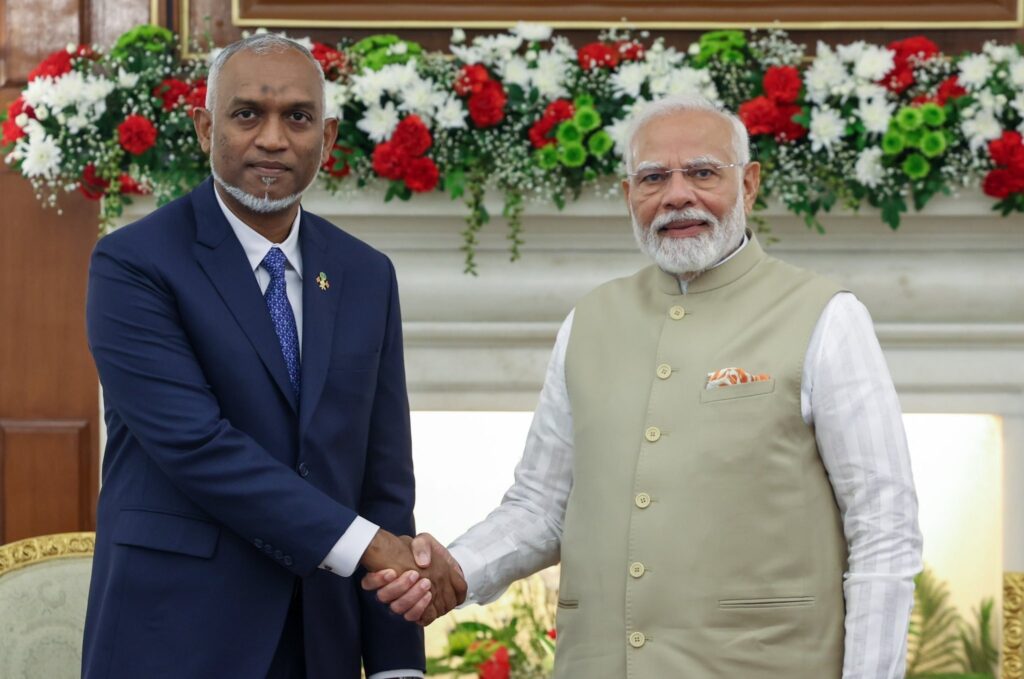
- During Narendra Modi’s July 2025 visit to Malé, both countries announced their intent to negotiate a bilateral Free Trade Agreement (FTA) and agreed on the Terms of Reference (ToR).
- The ToR was formally signed in March 2026, creating the legal framework for comprehensive negotiations beyond traditional goods trade.
- On 29 June 2026 the first formal negotiation round commenced, The discussions are currently taking place virtually, scheduled from June 29 to July 7, 2026.
- Objectives: The proposed FTA seeks to eliminate or reduce tariffs, improve market access, facilitate services trade, encourage bilateral investment, simplify customs procedures, and deepen long-term economic integration under India’s Neighbourhood First Policy.
- Major Areas: The major discussion areas under negotiation may cover:
- Tariff Elimination on Goods: Phasing out import duties on essential items to boost bilateral commerce past USD 771 million.
- Fisheries Market Access: Facilitating duty-free entry for Maldivian tuna and aquaculture exports into India.
- Agricultural Supply Security: Guaranteeing a smooth, low-tariff pipeline for Indian food staples, poultry, and spices.
- Construction Infrastructure Support: Lowering trade barriers on Indian rock boulders, aggregates, and cement for island projects.
- Pharmaceuticals Harmonisation: Promoting healthcare affordability by integrating Indian pharmacopoeia standards and generic drugs.
- Digital Financial Connectivity: Codifying frameworks to operationalize local currency settlements and UPI networks.
- Maritime and Service Mobility: Easing travel, tourism corridors, and technical expertise exchange across the Indian Ocean.
- Compilation: No official deadline has been jointly announced.
- Maldives has expressed its intention to conclude and sign the agreement by the end of 2026, subject to successful completion of multiple negotiation rounds and legal review.
- The phased tariff reductions are projected to roll out progressively through early 2027.
India–Maldives FTA: Strategic and Economic Importance
- Strengthening Bilateral Economic Integration: Bilateral merchandise trade between two countries reached USD 771.76 million in FY 2025–26, a 13.5% increase over FY 2024–25.
- An FTA would significantly boost these numbers by eliminating tariffs on key goods, thereby directly lowering consumer prices and increasing import-export volumes.
- Guaranteed Essential Commodities: The Maldives relies heavily on India for essential commodities like rice, spices, pharmaceuticals, and construction materials.
- Maldives is highly keen on expanding its seafood exports—specifically duty-free tuna. An FTA may formalize this supply chain.
- Importance in the Indian Ocean: The Maldives occupies a critical position near the Eight Degree Channel and major Indian Ocean Sea Lines of Communication (SLOCs).
- Stronger economic ties reinforce India’s maritime presence while supporting the Maldives’ economic resilience in one of the world’s busiest shipping regions.
- Advancing India’s Neighbourhood First Policy: The FTA complements India’s Neighbourhood First Policy and SAGAR (Security and Growth for All in the Region) vision.
- By using trade as a tool for regional stability, connectivity and trusted partnerships rather than relying solely on security cooperation.
- Countering Geopolitical Competition: Greater economic engagement enhances India’s strategic influence amid increasing competition from external powers in the Indian Ocean Region (IOR).
- The Maldives functions as a geographic “toll gate” between western Indian Ocean chokepoints (Strait of Hormuz) and eastern passages (Strait of Malacca).
- Infrastructure and Connectivity: India is actively funding transformative projects in the Maldives, such as Greater Male Connectivity Project (GMCP). Enhanced trade ties ensure these mega-developments progress smoothly, boosting regional connectivity.
- Over 50% of India’s external trade and 80% of its energy imports transit near the Maldives.
- Tourism and Hospitality Growth: India is one of the largest source markets for Maldivian tourism. The FTA, coupled with existing visa-free policies for business travelers, encourages Indian hospitality investments and spurs high-value tourism on the islands.
IMPORTANT POINTS TO KNOW:
- FTA: A Free Trade Agreement (FTA) is a legally binding pact between two or more countries to reduce or eliminate customs tariffs, remove non-tariff barriers, simplify customs procedures and facilitate trade.
- Modern FTAs also cover services, investment, digital trade, intellectual property, government procurement, dispute settlement and movement of professionals, creating predictable market access for businesses.
- India’s FTA: India follows a multi-layered trade agreement framework.
- Depending on the depth of commitments, agreements are classified as FTA, CEPA (Comprehensive Economic Partnership Agreement), CECA (Comprehensive Economic Cooperation Agreement), ECTA (Economic Cooperation and Trade Agreement) and TEPA (Trade and Economic Partnership Agreement).
- According to the Ministry of Commerce, India enjoys preferential market access with 53 FTA partner economies, including all 27 European Union member states counted individually.
- As of 2026, India has 18 trade agreements (including FTAs, CEPAs, CECAs, ECTAs and TEPA) either operational or concluded under the official classification.
- India has secured 9 massive trade pacts in a span of just 6 years, covering 38 developed countries and encompassing nearly two-thirds of the global GDP.
- Recently concluded agreements include the United Kingdom CETA, Oman CEPA, European Union FTA, and New Zealand FTA, with some awaiting ratification before entry into force.
- India concluded landmark agreements with the United Kingdom (July 2025), Oman (December 2025), European Union (January 2026) and New Zealand (2026).
- India’s principal operational agreements include ASEAN FTA, India–UAE CEPA, India–Australia ECTA, India–Japan CEPA, India–Singapore CECA, India–South Korea CEPA, SAFTA, TEPA (EFTA countries) and several regional preferential arrangements.
- India is negotiating or preparing agreements with the USA, Chile, Peru, Australia (review), ASEAN (review), South Korea (review), Sri Lanka, Eurasian Economic Union (EAEU), Israel, Maldives, Philippines, Gulf Cooperation Council (GCC) and others.
- India’s FTA policy complements the Act East Policy, Neighbourhood First Policy and Indo-Pacific strategy by strengthening economic partnerships with trusted countries.
FAQs:
-
What is the India-Maldives Free Trade Agreement?
A bilateral trade pact to reduce tariffs, boost investment, services and trade, strengthening long-term economic cooperation.
-
Why are India and Maldives negotiating an FTA?
To expand bilateral trade, improve market access, attract investment and deepen strategic economic partnership.
-
What are the expected benefits of the India-Maldives FTA?
Lower tariffs, increased exports, stronger investments, easier business, better supply chains and enhanced economic growth.
-
Which sectors are likely to benefit from the agreement?
Tourism, fisheries, infrastructure, healthcare, digital trade, logistics and professional services are expected to benefit most.
-
How will the FTA strengthen India-Maldives relations?
It will deepen economic integration, reinforce strategic trust and support India’s Neighbourhood First Policy.
-
How long will the trade negotiations continue?
The first negotiation round is scheduled from 29 June to 7 July 2026 in virtual mode.
-
What is the current trade volume between India and Maldives?
Bilateral trade reached approximately US$771.7 million during FY 2025–26.
-
Why is Maldives strategically important to India?
Its location along key Indian Ocean sea lanes is vital for maritime security, trade and regional stability.
Disclaimer: Information in this article is based on official announcements and public records. Regulations and implementation details may evolve over time.