China Conducts Submarine-Launched Ballistic Missile Test
| General Studies Paper III: Defence Technology |
Why in News?
Recently, China conducted a rare submarine-launched ballistic missile test into the Pacific, demonstrating a more credible sea-based nuclear deterrent.
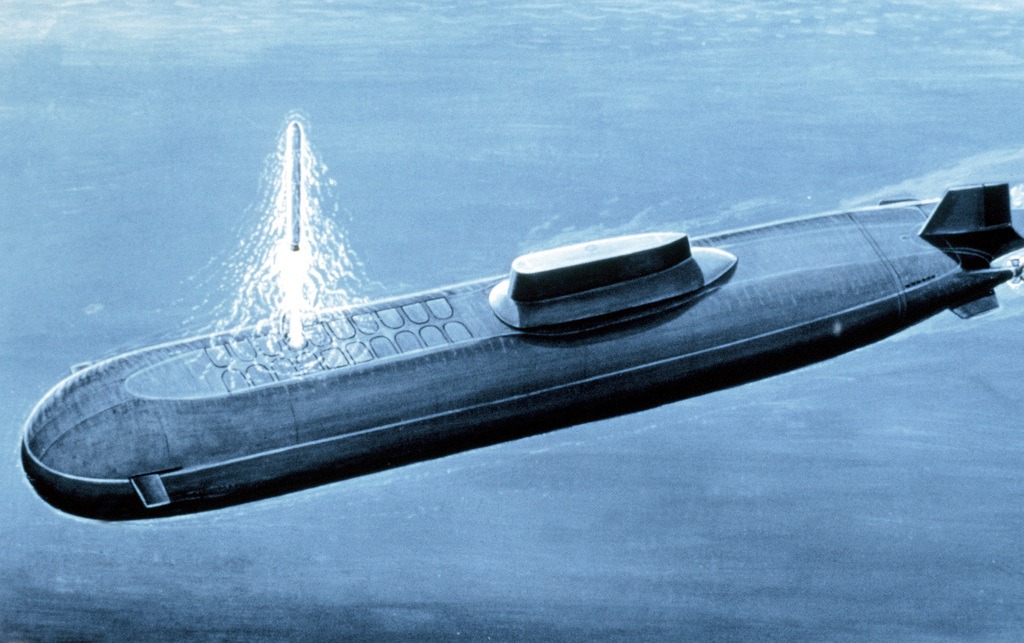
What is China’s Submarine-Launched Ballistic Missile (SLBM) Test?
- About: China’s Submarine-Launched Ballistic Missile (SLBM) test was a strategic military exercise in which the Chinese Navy launched a long-range ballistic missile carrying a dummy warhead from a nuclear-powered ballistic missile submarine (SSBN).
- It was China’s second strategic intercontinental ballistic missile test since September 2024.
- Analysts believe a Type-094 Jin-class SSBN conducted the test.
- Developed By: The missile system was developed by China’s defence industry for the People’s Liberation Army Navy (PLAN).
- Launch: The missile was launched on 6 July 2026 during the PLAN’s annual strategic training programme.
- The missile was fired from a Chinese nuclear-powered submarine operating in waters leading to the Pacific Ocean.
- It landed accurately in a designated high-seas impact zone in the South Pacific Nuclear Free Zone.
- It was established under the Treaty of Rarotonga in 1985.
- It covers the South Pacific region.
- It restricts the stationing, testing, and acquisition of nuclear explosive devices in the zone.
- China described the event as a routine military exercise conducted under international practice.
- Sea-Based Nuclear Deterrence: The SLBM provides a survivable nuclear force because submarines remain hidden underwater, making them difficult to detect or destroy.
- Long Operational Range: Analysts estimate the JL-3 possesses a range exceeding 10,000 km, enabling strikes against distant strategic targets.
- Second-Strike Capability: The successful underwater launch validated China’s ability to retaliate after absorbing a nuclear attack, enhancing the credibility of its minimum nuclear deterrence doctrine.
- Operational Readiness: The exercise tested the complete chain of submerged launch, missile ejection, command-and-control, navigation, and precision targeting, proving operational maturity of China’s strategic submarine force.
- Significance: The rare public disclosure signalled China’s expanding military confidence.
- This test was China’s first known submarine-based missile test from a nuclear-powered submarine since 1982.
- The test strengthens China’s nuclear triad, improves strategic deterrence, enhances global power projection, supports military modernization goals.
Countries with SLBM Capability
- Global Powers: Currently, six countries possess operational Submarine-Launched Ballistic Missile (SLBM) capability: the United States, Russia, China, the United Kingdom, France, and India.
- United States: The United States Navy operates Ohio-class SSBNs armed with Trident II (D5) SLBMs.
- With ranges exceeding 12,000 km, they provide continuous global second-strike capability and remain the backbone of U.S. strategic deterrence.
- Russia: Russia deploys Borei-class and Delta-class SSBNs equipped with RSM-56 Bulava and Sineva SLBMs.
- These submarines ensure survivable nuclear retaliation and constitute a major pillar of Russia’s strategic forces.
- China: China fields Type-094 Jin-class SSBNs carrying JL-2 and the newer JL-3 SLBMs.
- The recent Pacific test demonstrated China’s longer operational reach, and enhanced second-strike capability.
- United Kingdom: The United Kingdom operates Vanguard-class SSBNs armed with Trident II D5 missiles under its policy of Continuous At-Sea Deterrence (CASD), ensuring at least one nuclear submarine remains on patrol at all times.
- France: France maintains Triomphant-class SSBNs carrying M51 SLBMs. These submarines form the principal component of France’s independent nuclear deterrent, ensuring strategic autonomy.
- India: India operates Arihant-class SSBNs equipped with K-15 and K-4 SLBMs.
- The K-4, with an estimated range of 3,500 km, significantly strengthens India’s credible second-strike capability.
- India follows a policy of Credible Minimum Deterrence and No First Use (NFU).
- SLBMs provide an assured retaliatory capability even if land- and air-based nuclear assets are compromised.
- The commissioning of INS Aridhaman in April 2026 strengthened India’s nuclear triad and moved it closer to continuous at-sea deterrence, improving survivability.
Impact of China’s Test
- Indo-Pacific Strategic Competition: China’s SLBM test marks a new phase in Indo-Pacific strategic competition, signalling its ability to conduct full-range sea-based nuclear operations beyond coastal waters.
- The demonstration strengthens Beijing’s strategic reach, and intensifies military rivalry with the United States and its allies.
- Regional Security Concerns: The launch has heightened security anxieties among Japan, Australia, New Zealand, Taiwan, and Pacific Island nations.
- Governments criticised the limited advance notification and lack of transparency, arguing that such strategic missile demonstrations increase uncertainty, and elevate risks of military miscalculation.
- Acceleration of Defence Partnerships: The test is expected to deepen minilateral and alliance-based security cooperation across the Indo-Pacific.
- Countries are likely to strengthen intelligence-sharing, and defence agreements under frameworks involving the Quad, AUKUS, and bilateral partnerships.
- Indian Security: China’s SLBM test increases strategic pressure on India’s eastern maritime theatre, particularly in the Indian Ocean Region (IOR) and adjoining Indo-Pacific waters.
- It reinforces the need for stronger anti-submarine warfare (ASW) capabilities, enhanced underwater domain awareness, long-range maritime surveillance, and accelerated induction of Arihant-class SSBNs, K-4/K-5 SLBMs, and P-8I patrol aircraft.
FAQs:
1. What is a Submarine-Launched Ballistic Missile (SLBM)?
An SLBM is a ballistic missile launched from a submarine, providing a survivable sea-based nuclear deterrent.
2. Why did China conduct an SLBM test?
China tested an SLBM to validate operational readiness and strengthen its sea-based second-strike nuclear capability.
3. What is the strategic importance of submarine-launched ballistic missiles?
SLBMs ensure credible nuclear deterrence by enabling retaliation even after an enemy’s first strike.
4. Which submarine is believed to have carried out the missile test?
Analysts believe a Type-094 Jin-class nuclear-powered ballistic missile submarine (SSBN) conducted the test.
5. How does an SLBM differ from a land-based ballistic missile?
SLBMs launch from submarines, offering greater stealth and survivability than fixed land-based missile systems.
6. What does the missile test indicate about China’s military capabilities?
It demonstrates China’s improving strategic deterrence, long-range strike capability, and advanced undersea nuclear operations.
7. How could the test impact regional security in the Indo-Pacific?
The test may intensify strategic competition, defence preparedness, and maritime security concerns across the Indo-Pacific.
Disclaimer: Information in this article is based on official announcements and public records. Regulations and implementation details may evolve over time.