| General Studies Paper III: Growth & Development, Government Policies & Interventions |
Why in News?
Recently, India approved high-nitrogen anhydrous ammonia for agricultural manufacturing to optimize domestic nutrient efficiency, and mitigate global supply-chain shocks.
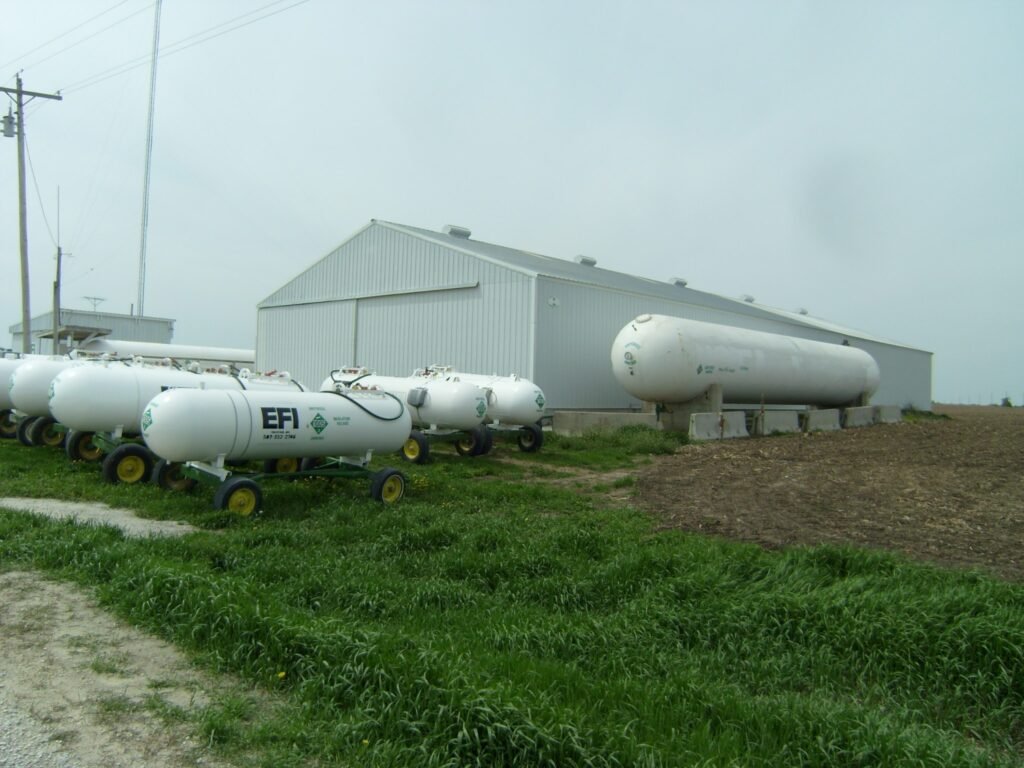
What is Anhydrous Ammonia?
- About: Anhydrous Ammonia is a water-free, colourless, pungent gas containing about 82% nitrogen, the highest nitrogen concentration among commonly used fertilisers.
- Properties: The term “anhydrous” means without water.
- Its chemical formula is NH₃. Due to its 82% nitrogen content, it provides almost double the nitrogen of urea (46% nitrogen).
- It is stored as a liquid under pressure and becomes gas when released.
- It is a direct nitrogen fertiliser used to improve crop growth.
- It has a high pH, which can temporarily sterilize soil biology directly in the injection zone.
- This makes transportation and nutrient delivery more efficient per tonne of fertiliser.
- Features: Its major features include high nitrogen concentration, rapid nutrient availability, lower transport volume, reduced packaging requirement, and better nitrogen-use efficiency.
- It requires pressurised storage tanks, sealed pipelines, trained operators and specialised injection equipment because it is corrosive and hazardous.
- Applications: Unlike urea, anhydrous ammonia is injected 10–20 cm below the soil using specialised applicators.
- After application, it reacts with soil moisture to form ammonium (NH₄⁺), which plants gradually absorb.
- It is mainly suitable for field crops such as wheat, maize and cotton under controlled conditions.
- Government Approval: On 23 July 2026, the Government approved the manufacture and agricultural use of anhydrous ammonia for three years under the Fertiliser (Control) Order, 1985.
- The approval allows direct agricultural application, encourages domestic manufacturing, establishes quality standards, and permits field-level demonstrations.
Why India Approved Anhydrous Ammonia?
- Reducing India’s Urea Import Dependence: India produces about 30 million tonnes of urea annually but still imports nearly 10 million tonnes to meet domestic demand.
- Introducing anhydrous ammonia diversifies nitrogen fertilisers and reduces dependence on imported urea, strengthening fertiliser security.
- Improving Nitrogen-Use Efficiency (NUE): India’s agricultural sector faces low nitrogen-use efficiency, leading to nutrient wastage and lower crop productivity.
- Anhydrous ammonia is applied directly into the soil, enabling better nitrogen availability to crops and improving fertilizer-use efficiency.
- Efficient nitrogen availability supports healthy plant growth, stronger root development and better crop performance.
- Supporting Balanced Fertiliser Consumption: Indian agriculture is heavily dependent on urea, causing an imbalanced NPK (Nitrogen-Phosphorus-Potassium) ratio in several states.
- Introducing another nitrogen source encourages scientific nutrient management and supports balanced fertiliser application based on soil requirements.
- Enhancing Fertiliser Supply Resilience: Global events such as geopolitical conflicts and energy price volatility have disrupted fertiliser markets.
- Expanding India’s fertiliser basket through anhydrous ammonia improves supply-chain resilience, ensuring uninterrupted nutrient availability.
- Lower dependence on imported nitrogen fertilisers reduces pressure on foreign exchange reserves.
- Promoting Domestic Fertiliser Manufacturing: The notification provides a legal framework for eligible industries to manufacture and market anhydrous ammonia fertiliser in India.
- This supports industrial investment, technology adoption, and expansion of domestic fertiliser production capacity under regulatory oversight.
- Preparing for Green Ammonia Transition: The approval complements India’s National Green Hydrogen Mission, which aims to promote green ammonia production for future fertiliser manufacturing.
- It creates a pathway for cleaner nitrogen fertilisers with lower carbon emissions in the long term.
- Advancing Long-Term Agricultural Competitiveness: Diversifying fertiliser technologies helps Indian agriculture become more resource-efficient, technology-driven and globally competitive.
- The policy supports Atmanirbhar Bharat, sustainable nutrient management and long-term food security, while encouraging innovation in the fertiliser sector.
Government Initiatives for Sustainable Fertiliser Use
- New Urea Policy (NUP), 2015: It promotes higher domestic urea production, energy efficiency, and lower subsidy burden. It incentivises modern technology, and improves competitiveness of Indian urea plants.
- 100% Neem-Coated Urea Policy: The Government made 100% neem coating of domestically produced urea mandatory.
- Neem coating slows nitrogen release, improves nitrogen-use efficiency, reduces nutrient losses, and enhances crop productivity while protecting soil quality.
- Nutrient Based Subsidy (NBS) Scheme: The NBS Scheme (implemented since 2010) provides subsidies on Phosphatic and Potassic (P&K) fertilisers based on nutrient content rather than product price.
- It encourages balanced fertiliser use, maintains affordability, and ensures regular availability of DAP, MOP and NPK fertilisers.
- The Cabinet periodically revises subsidy rates.
- PM-PRANAM Scheme (2023): PM-PRANAM (PM Programme for Restoration, Awareness Generation, Nourishment and Amelioration of Mother Earth) incentivises States and Union Territories to reduce excessive chemical fertiliser consumption.
- States receive incentives from 50% of the subsidy savings, promoting sustainable nutrient management, organic farming and alternative fertilisers.
- Nano Urea and Nano DAP Promotion: The Government supports adoption of Nano Urea and Nano DAP developed by IFFCO.
- By December 2025, over 11.85 crore Nano Urea bottles and 3.53 crore Nano DAP bottles had been sold.
- Studies indicate that combining conventional basal urea with Nano Urea foliar spray increased crop yields by 1.65–14.82%.
- National Green Hydrogen Mission: Launched in 2023, it promotes production of green hydrogen and green ammonia using renewable energy.
- It aims to make India a global hub for producing 5 million metric tonnes of green hydrogen and green ammonia annually by 2030, backed by ₹19,744 crores in initial funding.
- Green ammonia will gradually replace fossil fuel-based ammonia in fertiliser manufacturing, supporting India’s clean-energy transition.
- Green Ammonia Procurement Initiative: Under the Green Hydrogen Mission, the Government plans annual procurement of about 7.24 lakh metric tonnes of green ammonia for fertiliser production.
- The Department of Fertilizers issued an Expression of Interest to establish green urea plants. The pre-EOI meeting took place in Noida.
- Revival of Closed Urea Plants: The Government has revived major fertiliser plants such as Gorakhpur, Barauni, Ramagundam and Talcher through public sector joint ventures. The objective is to expand indigenous urea capacity.
- Substitute Fertilisers: The government proposed a differential subsidy mechanism for Green Ammonia, where the Solar Energy Corporation of India supplies it at market-linked Grey Ammonia prices.
- In May 2026, the Indian Council for Agricultural Research recommended substituting urea with ammonium sulphate in rice cultivation.
Frequently Asked Questions (FAQs):
1. What is anhydrous ammonia?
Anhydrous ammonia is a water-free nitrogen fertiliser (NH₃) containing 82% nitrogen, the highest among common fertilisers.
2. Why has India allowed the use of anhydrous ammonia in agriculture?
India approved it to improve nitrogen efficiency, reduce urea dependence, and strengthen fertiliser security.
3. How does anhydrous ammonia benefit crop production?
It supplies concentrated nitrogen, improves plant growth, enhances nutrient uptake, and increases crop productivity with proper management.
4. Which crops can use anhydrous ammonia fertiliser?
It is mainly suitable for wheat, maize, cotton, sugarcane, and other field crops requiring high nitrogen.
5. Is anhydrous ammonia safe for farmers and the environment?
Yes, when properly injected into soil and handled with safety equipment by trained personnel.
6. How is anhydrous ammonia applied to agricultural fields?
It is injected 10–20 cm below the soil using specialised applicators to minimise nitrogen loss.
Disclaimer: Information in this article is based on official announcements and public records. Regulations and implementation details may evolve over time.
| Also Read: Bharat-VISTAAR AI Platform for Farmers |