


Fiji Declares Nationwide State of Disaster
| General Studies Paper III: Geography, Environment and Disaster Management |
Why in News?
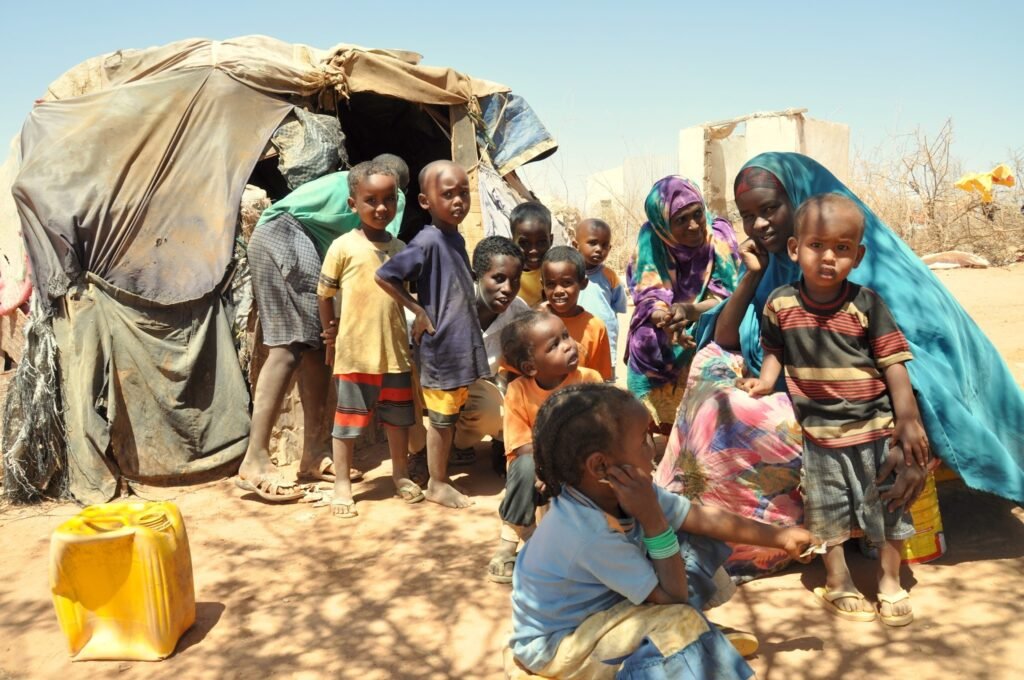
Recently, Fiji declared a nationwide state of disaster as intensifying El Niño drought crossed crisis thresholds, threatening agriculture, livestock and livelihoods.
Fiji’s National Disaster Declaration Highlights
- Announcement: Fiji Prime Minister Sitiveni Rabuka issued a formal National State of Disaster on November 18, 2026, under Section 91 of the National Disaster Risk Management Act 2024.
- Cabinet approved the 30-day emergency measure after assessments.
- Reasons: The crisis stems from a strengthening El Niño climate pattern, which warms central Pacific waters and suppresses rainfall across Fiji until at least April 2027.
- As a Small Island Developing State (SIDS), Fiji’s isolated geography, reliance on rain-fed catchments, and amplified global warming heighten its vulnerability to prolonged dry spells.
- The National Disaster Risk Management Council confirmed that national drought conditions had crossed official crisis thresholds.
- Fiji endured over three months of severe below-average rainfall. Depleting major reservoirs and forcing overnight water rationing across the Western Division and Greater Suva.
- The Fiji Meteorological Service forecast below-normal rainfall from November 2026 to April 2027 and above-normal daytime temperatures across much of the country through January 2027.
- By November, 19 of the Water Authority of Fiji’s 44 water sources hit critical levels, with the vital Vaturu Dam dropping dangerously low and threatening supplies for over 223,000 residents.
- Severe hydrological and agricultural drought has parched farmland, sparked daily wildfires, and decimated crop yields and livestock feed.
- Falling dam levels have also threatened hydroelectric power generation.
- Rising food prices, damaged sugar cane harvests, and rural water scarcity threaten household incomes and food security.
- UNICEF warned of heightened malnutrition and sanitation risks for children.
- Government Response: Cabinet redeployed FJ$20 million (roughly US$8.5–8.9 million) from existing ministry budgets to fund emergency water carting, having already delivered over two million liters to outer islands.
- The Ministry of Agriculture launched six relief initiatives covering irrigation, livestock feed, climate-resilient seeds, and sugar sector protection.
- To ease inflation pressures on vulnerable groups, the government increased monthly eTransport top-ups for the elderly and persons with disabilities.
- Operating under the National El Niño Preparedness and Response Plan, authorities mobilized the military, police, and 67 water trucks to prioritize schools, health centers, and maritime communities.
- Fiji is leveraging global forums like COP31 and partnering with UN agencies and humanitarian clusters to secure technical aid and climate resilience financing.
About Fiji:
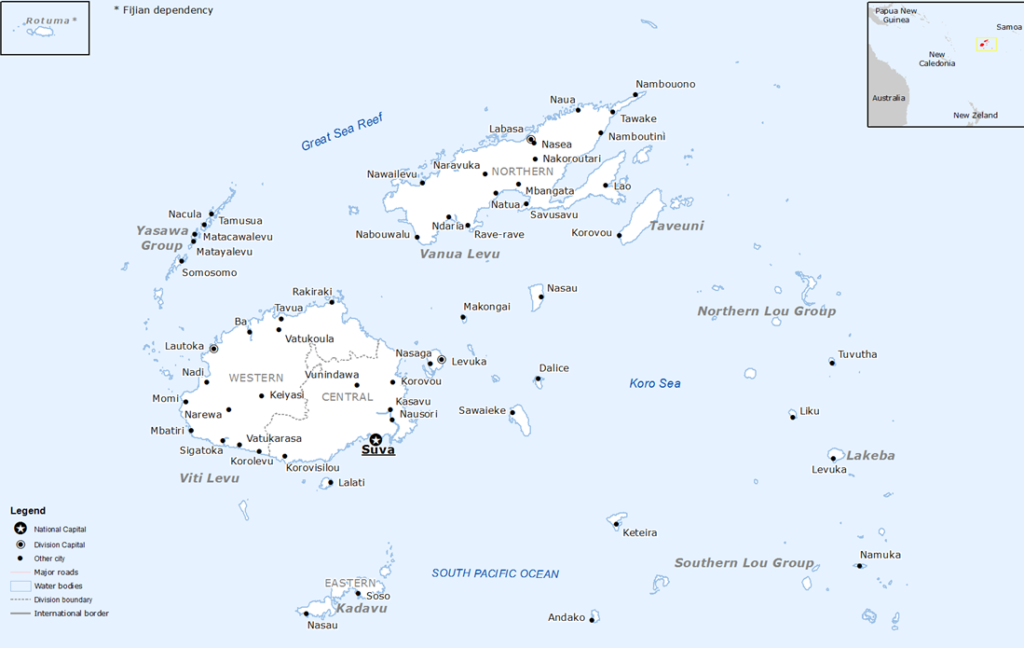
- Fiji is a strategic South Pacific archipelago in Melanesia (Oceania).
- It is located in the Southern Hemisphere surrounding the Koro Sea. It comprises over 300 volcanic and coral islands.
- Viti Levu (housing capital Suva and highest peak Mount Tomanivi) and Vanua Levu are the largest islands.
- It lies south of the Equator and north of the Tropic of Capricorn, near the International Date Line.
- It was a British colony from 1874 until independence in 1970. Fiji received Indian indentured laborers (Girmitiyas) starting in 1879.
- Indo-Fijians form roughly 37% of the population, making Fiji Hindi an official language alongside English and iTaukei.
- A unitary parliamentary republic using the Fijian Dollar (FJD), reliant on tourism and sugarcane.
What Is El Niño?
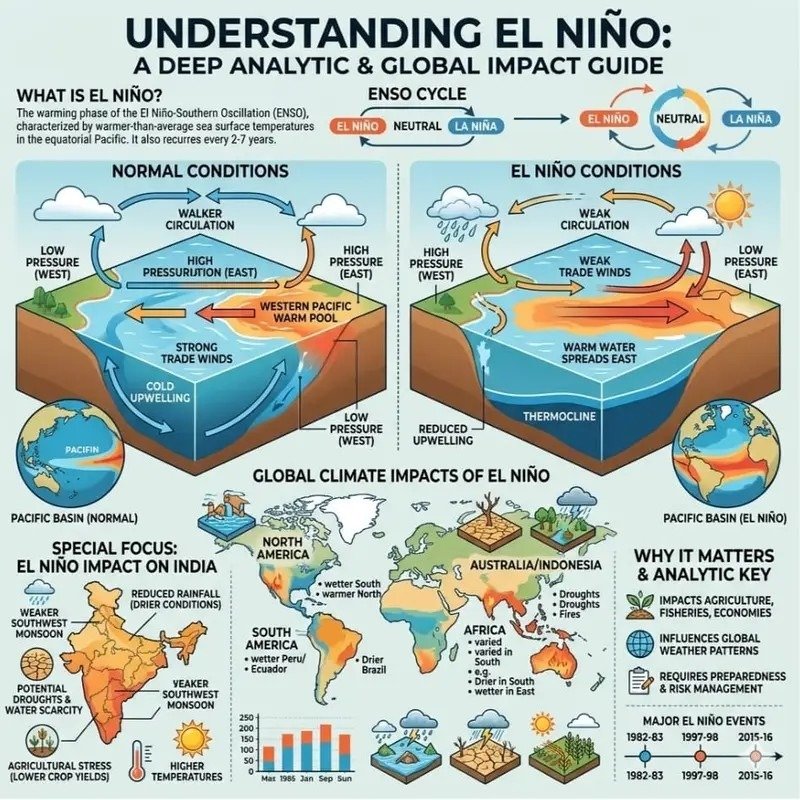
- About: El Niño is a large-scale climate phenomenon characterized by the abnormal warming of surface waters in the central and eastern tropical Pacific Ocean.
- Itt represents the warm phase of the El Niño-Southern Oscillation (ENSO) cycle, occurring irregularly every two to seven years and disrupting global weather patterns.
- Origin and Mechanism: Under normal conditions, strong trade winds blow westward across the tropical Pacific, pushing warm surface water toward Asia and Australia.
- This allows cold, nutrient-rich water to rise near South America via upwelling.
- During an El Niño event, these trade winds weaken or reverse.
- Consequently, warm water sloshes eastward toward the coasts of Peru and Ecuador, suppressing upwelling and creating a deep layer of warm ocean water.
- Walker Circulation Disruption: Normally, the Walker Circulation drives rising moist air and heavy rainfall over the western Pacific (Indonesia/Australia) and sinking dry air over the eastern Pacific.
- El Niño shifts this convection cell eastward. Warm, moist air rises over the central and eastern Pacific, causing intense rainfall in South America while leaving the western Pacific unusually dry.
- Types: El Niño events are classified as weak, moderate, strong and very strong, depending on the magnitude of Pacific Ocean temperature anomalies.
- Super El Niño is a popular descriptive expression for an exceptionally intense El Niño event.
- Impact: The suppression of cold, nutrient-rich upwelling devastates marine ecosystems off South America.
- It causes a sharp decline in anchovy populations and impacts the fishing industry.
- It triggers severe droughts and wildfires in Australia and Southeast Asia, while causing destructive floods and landslides in Peru and California.
- In India, weak monsoons reduce Kharif crop output, stoking food inflation and slowing rural economic growth.
- El Niño is generally associated with weaker Southwest Monsoon rainfall in India.
- Positive phases of the Indian Ocean Dipole (IOD) or Madden-Julian Oscillation (MJO) can occasionally offset El Niño’s drying impact on India.
- Measurement: Meteorologists monitor El Niño using the Oceanic Niño Index (ONI).
- International organisations declare an El Niño event when sea surface temperatures in the Niño 3.4 region exceed +0.5°C for five consecutive overlapping three-month seasons.
Frequently Asked Questions (FAQs):
Q1. Why did Fiji declare a National State of Disaster?
Due to an El Niño-driven drought reaching crisis thresholds and causing severe water shortages.
Q2. Who announced the disaster declaration in Fiji?
Prime Minister Sitiveni Rabuka announced it on 18 November 2026.
Q3. Which law empowers Fiji to declare a National State of Disaster?
Section 91 of the National Disaster Risk Management Act, 2024.
Q4. How much financial assistance has Fiji allocated?
FJ$20 million, redirected from existing ministerial funds for emergency relief.
Q5. What is the maximum duration of Fiji’s disaster declaration?
30 days, subject to extension or revocation by Cabinet.
Disclaimer: Information in this article is based on official announcements and public records. Details may evolve over time.
| Also Read: Emerging Super El Niño Risk |