




Emerging Super El Niño Risk
|
General Studies Paper III: Climate Change, Environmental Pollution & Degradation |
Why in News?
Recently, the National Oceanic and Atmospheric Administration (NOAA) reported a 61% chance of El Niño emerging by July 2026. Experts warn of a rare “Super El Niño” risk, with a 25% probability of extreme Pacific warming exceeding 2°C.
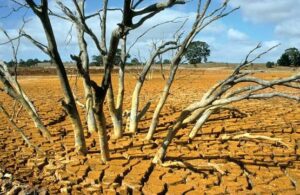
What is Super El Niño?
- About: A Super El Niño is an extreme phase of the El Niño–Southern Oscillation (ENSO) marked by sea surface temperature (SST) anomalies ≥ 2°C in the central–eastern equatorial Pacific.
- This threshold exceeds the +1.5°C for strong El Niño, making it rare and significantly more impactful.
- Historical Occurrence: Super El Niño events are extremely rare, with only 5 major occurrences since 1950 (notably 1982–83, 1997–98, 2015–16).
- In 2015-16 event, anomalies peaked at +2.6°C. Recent monitoring in late 2023 to early 2024 also saw the ONI reach the 2.0°C threshold.
- Physical Drivers: Key drivers include subsurface ocean heat buildup, westerly wind bursts, and transition from La Niña to warm phase.
- These processes amplify positive SST anomalies, allowing rapid intensification toward “super” conditions under favorable ocean-atmosphere feedbacks.
- Mechanism: It originates within the ENSO system, where weakening trade winds and eastward movement of warm water disrupt normal Pacific circulation.
- This alters pressure gradients (Southern Oscillation) and atmospheric convection, fundamentally reshaping global climate systems.
- Measurement: Its intensity is measured using indices like the Oceanic Niño Index (ONI) and the updated Relative Oceanic Niño Index (RONI), which track 3-month average SST anomalies in the Niño-3.4 region.
- It is monitored using satellite data, buoys (like the TAO/TRITON array), and climate models. Agencies such as NOAA issue forecasts based on indicators.
- Duration: It lasts 9–12 months, though some persist up to 18 months. They usually peak during boreal winter (December–February) and decay by the following spring.
|
El Niño:
ENSO (El Niño–Southern Oscillation):
|
Key Drivers of Emerging Super El Niño 2026
- Ocean Warming: Record-high Sea Surface Temperatures (SST) are the primary catalyst. In March 2026, temperatures reached the second-highest levels on record, significantly increasing heat energy in the central and eastern Pacific. This thermal buildup provides the massive energy required to push a standard event toward “Super” status.
- Wind Reversal: The weakening or complete reversal of trade winds is a critical atmospheric trigger. Powerful westerly wind bursts are currently pushing warm surface water from the western Pacific toward the Americas. This shift creates Kelvin waves, which are deep pulses of warm water moving eastward along the equator.
- Subsurface Heat: Deep-ocean monitoring shows a massive subsurface warming trend. Data from early 2026 confirms that heat is accumulating rapidly below the surface. This hidden energy reservoir fuels the upward surfacing of warm anomalies, which prevents the usual upwelling of cold, nutrient-rich water off the South American coast.
- Positive Feedback: The Bjerknes feedback loop is amplifying the warming process. As the ocean warms, it further weakens the atmospheric Walker Circulation, which in turn causes more warming. This self-reinforcing cycle is essential for sustaining the extreme temperature anomalies needed to reach the 2.0°C “super” threshold.
- Positive Feedback: The rapid collapse of the La Niña phase has created significant climate instability. Most models show a 62% probability of El Niño emerging by June–August 2026. This fast transition from cooling to intense warming acts as a “spring-loaded” mechanism for rapid intensification.
- Climate Synergy: Rising greenhouse gas concentrations have increased the overall ocean heat content. This human-induced baseline warming makes it easier for natural ENSO cycles to surpass historical records. Experts warn that this synergy could drive the 2026-27 event to unprecedented global temperature peaks.
Impact of Super El Niño
- Global:
-
- Extreme Heat: Super El Niño significantly raises global mean temperatures by transferring ocean heat to the atmosphere. During 1997–98 and 2015–16 events, global temperatures surged, with 2016 becoming one of the warmest years recorded, amplifying heatwaves across North America, Europe, and Asia.
- Flood-Drought Pattern: It creates sharp hydrological contrasts—heavy rainfall and floods in the eastern Pacific and South America (Peru, Ecuador), while causing severe droughts in Australia, Indonesia, and parts of Africa. The 1997–98 event triggered devastating floods in Peru and drought-induced wildfires in Indonesia.
- Cyclone Variability: El Niño alters tropical cyclone distribution, typically increasing Pacific hurricanes while suppressing Atlantic hurricanes due to enhanced vertical wind shear. For example, 1997 saw an active Pacific hurricane season, reflecting strong ocean-atmosphere coupling.
- Marine Ecosystem Collapse: Warm SSTs suppress nutrient-rich upwelling, severely impacting fisheries. The Peruvian anchovy industry collapsed in 1997–98, leading to massive economic losses and disrupting global fish supply chains.
- Economic Losses: Global damages from Super El Niño events are enormous. The 1997–98 event caused losses exceeding $35 billion globally, affecting agriculture, infrastructure, and health systems, with long-term economic consequences across developing regions.
- India:
- Weak Monsoon: El Niño is strongly linked with weakened Indian Summer Monsoon Rainfall (ISMR). In 2015, India recorded a 14% rainfall deficit, causing widespread agricultural stress.
- Agricultural Loss: Reduced rainfall leads to lower crop yields, especially for rice, pulses, and oilseeds. The 2002 El Niño year saw a 19% monsoon deficit, resulting in sharp declines in foodgrain production and rural distress.
- Drought & Water Stress: Super El Niño intensifies drought frequency, lowering reservoir levels and groundwater recharge. During 2015–16, several Indian states faced severe water scarcity, affecting drinking water and irrigation systems.
- Heatwaves; El Niño years amplify extreme heat conditions in India. In 2015, India experienced deadly heatwaves with temperatures exceeding 48°C, causing over 2,000 deaths, highlighting public health vulnerability.
- Economic Impact: Weaker monsoons and crop losses reduce GDP growth, increase food inflation, and strain government finances. The 2015 El Niño contributed to agricultural slowdown and rising food prices, impacting both rural livelihoods and urban consumers.
Government Response and Preparedness
- Monitoring Systems: National agencies like the India Meteorological Department (IMD) and NOAA have deployed advanced Early Warning Systems (EWS) to track the probability of El Niño.
- Governments are leveraging AI-driven models and satellite platforms to provide district-level forecasts, allowing for “anticipatory action” before the peak warming phase begins.
- Contingency Planning: Central and state governments have activated District Agriculture Contingency Plans to mitigate potential monsoon failure.
- These plans include promoting short-duration crop varieties and delayed sowing strategies to minimize yield loss if rainfall drops to the predicted 92% of the average.
- Water Management: Authorities are prioritizing reservoir conservation, with current Indian storage at a healthy 127% of normal levels.
- Strategic measures involve repairing canal systems and utilizing MGNREGA labor to restore rural ponds and check dams, ensuring groundwater recharge for irrigation during the dry spells.
- Public Health: Governments are implementing Heat Action Plans (HAPs) in collaboration with the NDMA to combat extreme heatwaves.
- Preparedness includes establishing cooling centers, issuing color-coded alerts, and upgrading healthcare infrastructure to manage a surge in heat-related illnesses among vulnerable populations.
- Financial Support: To protect rural livelihoods, governments are strengthening social safety nets and increasing allocations for crop insurance.
- Some regions are offering subsidies on seeds and fertilizers to help farmers transition to climate-resilient crops like millets and pulses, which require less water.
- Supply Resilience: To curb food inflation, governments are securing buffer stocks of essential commodities like rice and pulses.
- Emergency measures include export restrictions and diversifying international sourcing for fertilizers to bypass maritime supply chain disruptions exacerbated by extreme weather.
- Global Coordination: The UN and FAO are coordinating international response plans to prevent a global food security crisis.
- These efforts focus on resource mobilization and technical support for developing nations, aiming to protect over 100 million people currently projected to face food insecurity.
|
Also Read: Scientists Warn of Super El Niño Risk |