



China’s Economic Reformer Zhu Rongji Dies at 97
| General Studies Paper II: Important Personalities, India’s Neighbourhood |
Why in News?
Recently, former Chinese Premier Zhu Rongji passed away at 97 following an undisclosed illness, marking the end of China’s economic structural reforms era.
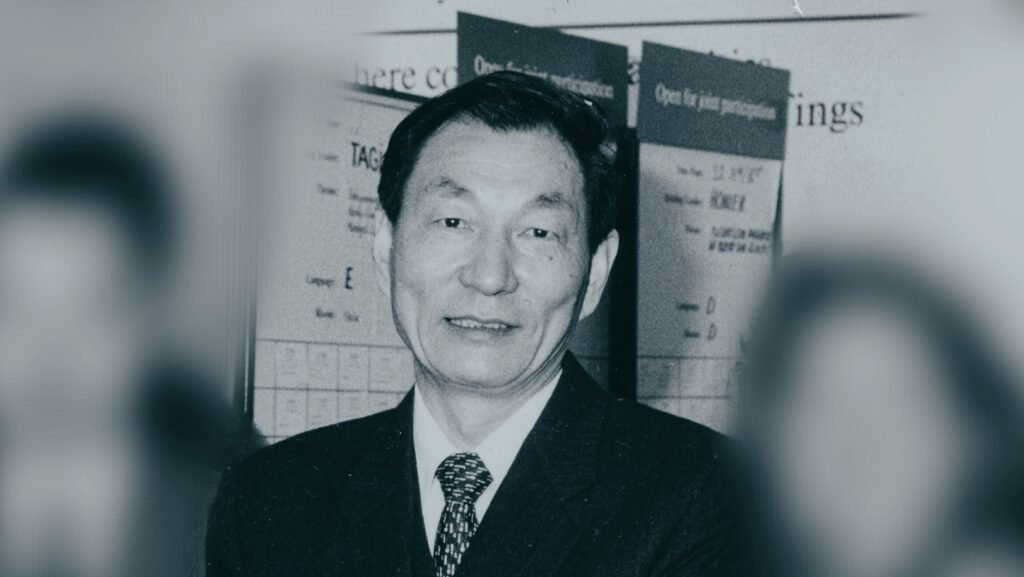
About Zhu Rongji?
- Early Life: Zhu was born on October 23, 1928, in Changsha, Hunan province.
- His family descended from Zhu Yuanzhang, the founding emperor of the historic Ming dynasty.
- His father died before his birth, and his mother passed away when he was just nine years old.
- He was subsequently raised and supported by his uncle, Zhu Xuefang.
- Education: Zhu received his foundational education locally in Hunan province. He graduated from high school in 1947.
- In 1947, Zhu enrolled at the prestigious Tsinghua University in Beijing.
- He completed his higher studies in 1951, graduating with a Bachelor of Science degree in Electrical Engineering.
- During his years at Tsinghua University, Zhu actively participated in underground student activities organized by the Communist Party.
- Early Career: Zhu officially joined the Chinese Communist Party (CCP) in 1949.
- This coincided with the same year that leader Mao Zedong proclaimed the official founding of the People’s Republic of China.
- Labelled a “rightist” for criticizing Mao Zedong’s irrational policies, he was purged twice and spent years doing forced rural manual labor.
- Following his graduation in 1951, Zhu entered public service in the State Planning Commission. He worked as a deputy division chief.
- Administrative Roles: In 1987, he was appointed Deputy Party Secretary of Shanghai.
- Later elevated to Mayor of Shanghai in 1988, transforming the city by pioneering the Pudong New Area commercial hub
- Impressed by his civic management, paramount leader Deng Xiaoping brought Zhu to Beijing in 1991. He was appointed Vice Premier of China.
- In July 1993, Zhu was appointed Governor of the People’s Bank of China. He maintained direct control over the central banking apparatus.
- Zhu served as China’s fifth Premier from 1998 to 2003, under President Jiang Zemin.
- China’s annual real GDP growth had fallen from double-digit rates in the early 1990s to about 9.3% in 1997 and 7.9% in 1998. For him the challenge was to preserve growth while changing its underlying structure.
- His tenure combined administrative centralisation with greater market competition.
- Zhu earned nicknames like “Iron-Face Zhu“.
- His no-nonsense, pragmatic approach targeted deeply entrenched bureaucracy and cronyism.
- Stepping down in 2003, Zhu maintained total public silence.
Zhu Rongji’s Major Economic Reforms and China’s Globalisation
- State-Owned Enterprise (SOE) Streamlining: He launched the Three-Year SOE Reform Programme (1998–2000).
- He launched the aggressive slogan “Grasp the Large, Let Go of the Small”.
- He preserved a core group of massive, strategic, centrally managed corporations.
- Simultaneously permitted thousands of inefficient, smaller local factories to go completely bankrupt or face privatization.
- SOEs fell from 262,000 in 1997 to 116,000 by 2007, substantially changing industrial organisation.
- Massive Public Sector Layoffs: The dramatic restructuring of uncompetitive factories resulted in the exit of roughly 35 million state workers from their traditional positions between 1995 and 2001.
- Known locally as Xiagang, this strategy shattered the lifelong guaranteed employment policy commonly called the “iron rice bowl.”
- 1994 Tax Sharing Reform: Government revenue had fallen dramatically as a share of GDP—from 34.4% in 1978 to 11.1% in 1995 under the older fiscal arrangements.
- Zhu completely overhauled the chaotic local tax collection system by introducing a unified Tax-Sharing System in 1994.
- He established distinct, separate branches for central and regional collections, ensuring that the central government retained the single largest portion of national revenues.
- Revenue Polarization Shift: The state reconfigured the lucrative Value-Added Tax (VAT), automatically channeling 75% directly to Beijing while leaving only 25% for local municipalities.
- This crucial fiscal intervention rapidly increased the central government’s total share of nationwide tax revenue from a low 22% up to over 50%.
- Cleaning Non-Performing Loans: To salvage heavily indebted national financial networks, the Premier carved out massive volumes of non-performing loans (NPLs) from balance sheets.
- He established four dedicated Asset Management Companies (AMCs) to absorb and clear bad debts generated by decades of indiscriminate state lending.
- Central Bank Autonomy: Zhu directly assumed control as the Governor of the People’s Bank of China (PBOC) to enforce strict financial discipline.
- He minimized regional political interference in monetary planning, restricted cheap local credit, and single-handedly lowered runaway inflation down to single digits.
- Private Housing Commercialization: In 1998, Zhu officially terminated the ancient welfare tradition of free, state-allocated public housing.
- He allowed city residents to purchase their existing flats at heavily subsidized rates, establishing the foundation for China’s modern, trillion-dollar private real estate market.
- Landmark WTO Accession: Following years of intense negotiations, Zhu finalized China’s formal accession to the World Trade Organization (WTO) in December 2001.
- To secure entry, he made substantial domestic concessions, including the structural reduction of import tariffs and foreign market restrictions.
- Export-Led Economic Engine: Global trade integration transformed the manufacturing base into the “factory of the world.”
- Unrestricted access to international consumers triggered an immediate export boom, with gross domestic product (GDP) per capita accelerating by an impressive 49% between 2002 and 2006.
- Foreign Direct Investment Influx: WTO rules guaranteed a transparent, stable environment that successfully attracted global businesses.
- Despite a severe worldwide contraction in venture funding during 2002, foreign direct investment (FDI) into the mainland bucked global trends and surged by 22.6%.
- Private investment rose from less than 2% of the economy in 1992 to roughly 15% by 2003, illustrating the expanding role of non-state capital.
Frequently Asked Questions (FAQs):
1. Who was Zhu Rongji?
Zhu Rongji was China’s fifth Premier, a technocratic reformer who reshaped state enterprises, finance, taxation and economic governance.
2. At what age did former Chinese Premier Zhu Rongji die?
Zhu Rongji died on 12 August 2026, aged 97, according to Reuters and Xinhua reporting.
3. When did Zhu Rongji serve as Premier of China?
He served as China’s Premier from 17 March 1998 to 16 March 2003, under President Jiang Zemin.
4. What was Zhu Rongji known for?
He was known for tough economic reforms, SOE restructuring, anti-corruption efforts, fiscal reform and blunt, pragmatic leadership.
5. What role did Zhu Rongji play in China’s economic reforms?
He spearheaded market-oriented restructuring, including SOE reform, banking-sector cleanup, housing reform, fiscal centralisation and administrative restructuring.
6. What was Zhu Rongji’s role in China’s WTO accession?
Zhu was a key negotiator and political driver of China’s WTO accession, using membership to accelerate domestic reforms and global economic integration.
Disclaimer: Information in this article is based on official announcements and public records. Regulations and implementation details may evolve over time.