National Pine Needle Utilisation Policy- Key Details and Benefits
| General Studies Paper III: Agricultural Resources, Inclusive Growth, Government Policies & Interventions |
Why in News?
Recently, the Parliamentary Standing Committee on Science and Technology, Environment, Forests and Climate Change (PCSTEFC) has recommended the formulation of a National Pine-Needle Utilisation (NPNU) Policy to curb Himalayan forest fires and boost rural jobs.
What is National Pine-Needle Utilisation Policy?
- About: The National Pine-Needle Utilisation (NPNU) Policy is a framework proposed by PCSTEFC to address devastating forest fires and support rural livelihoods across the Himalayan region.
- The policy is recommended in the report titled “Forest Fires in the Himalayan Region, its Adverse Effects and Mitigation Measures”.
- Framework: The Parliamentary Panel on Science, Technology, and Environment directed the Ministry of Environment, Forest and Climate Change (MoEFCC) to design this policy with State Governments.
- It establishes a prevention-led Himalayan Biomass Management Framework to formally recognize pine needle removal as a critical mitigation activity.
- Financial Incentives: To turn collection into a sustainable rural economy, the committee recommended a mandatory minimum procurement rate of ₹3–4 per kg for dry needles.
- It will introduce targeted fiscal subsidies and market-access incentives for local communities and self-help groups involved in the collection process.
- Management Board: The report advocates for the establishment of a National or Regional Pine Needle Management Board for institutional oversight.
- Technological Integration: To enhance monitoring, the committee urged the Department of Space to deploy a dedicated geostationary satellite for round-the-clock forest-fire tracking.
- It further proposed integrating FAST 3.0 fire alerts with cell-broadcast systems to instantly deliver geo-targeted warnings to residents and travelers.
- Disaster Infrastructure: Addressing critical structural gaps, the panel recommended establishing at least two regional National Disaster Response Force (NDRF) centers explicitly dedicated to Himalayan forest fires.
- It also mandated dedicated firefighting vehicle fleets for mountain states and regular ecological studies by the Forest Research Institute.
Need for Pine Needle Utilisation Policy
- Wildfire Statistics: The report identifies the immense accumulation of dry chir pine needles in the Western Himalayas as a major contributor to high-intensity forest fires.
- Chir Pine forests cause about 57% of Western Himalayan forest fires. Their dry, resin-rich needle litter—locally called pirul—piles up on forest floors as high-risk fuel that ignites easily.
- These materials, known as surface fuel loads, create high-risk tinderboxes, particularly during dry seasons, accelerating fire spread.
- In Uttarakhand alone, a single fire season registered over 2,069 fire incidents, destroying more than 4,423 hectares of pristine forest land.
- The committee flagged that forest fires are not classified as a notified natural disaster under the Disaster Management Act, 2005.
- The report distinguishes intense West-East regional differences in fire behaviour.
- West experiencing high pine-needle fuel loads and the East heavily impacted by Jhum (shifting) cultivation.
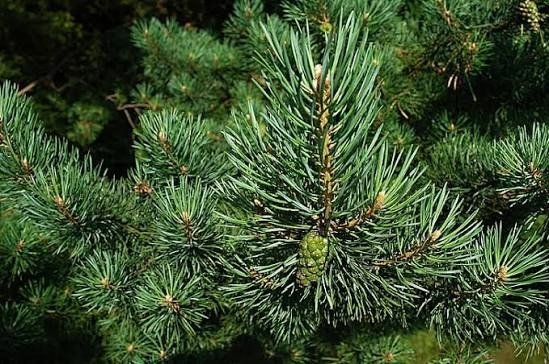
- Biomass Hazard: Chir Pine (Pinus roxburghii) forests shed vast quantities of resin-rich needles between February and May every year.
- This creates a thick, combustible carpet over 7,847 grams per square sample. A single spark turns this surface fuel into devastating wildfires.
- The current efforts are entirely dependent on executive schemes rather than dedicated, long-term legislation.
- Ecological Destruction: Unchecked infernos alter the delicate Himalayan biodiversity and soil health.
- Intense surface fires heat the soil to depths of 7 to 10 cm, destroying natural nutrients.
- It also creates water-repellent hydrophobic soil layers, which reduce water infiltration, accelerate soil erosion, and cause severe flash floods during the monsoons.
- Economic Demands: Local mountain economies suffer tremendous financial losses from recurring summer blazes.
- Wildfires wipe out high-quality timber and non-timber forest products worth millions of dollars. Mechanical clearing efforts by the Forest Department remain inadequate.
- Institutional pricing like a ₹3–4 per kg minimum procurement rate is necessary to incentivize aggressive community harvesting.
- Carbon Emissions: Forest fires drastically accelerate global warming through massive black carbon releases.
- The combustion efficiency of dry needles stands at an alarming 70.76%, releasing dense columns of smoke.
- This toxic smoke soot deposits on Himalayan glaciers, reducing their albedo effect and hastening glacier melt.
- Rural Livelihoods: Mountain communities have become increasingly alienated from traditional forest management.
- A dedicated policy creates green livelihood opportunities for local self-help groups and van panchayats.
- Turning hazardous waste into industrial fuel products like biochar and 5,500 kcal/kg energy pellets offers a dual solution for climate resilience and rural employment.
Pine Needle Power Projects
- Pine Needle Power Projects seek to convert fallen Chir pine (Pinus roxburghii) needles into electricity, addressing two problems simultaneously—forest-fire risk from accumulated dry biomass and the need for decentralised renewable energy.
- Uttarakhand’s programme was implemented through the Uttarakhand Renewable Energy Development Agency (UREDA).
- Chir-pine forests occupy about 16.36% of Uttarakhand’s forest area, approximately 3.99 lakh hectares, generating more than 15 lakh tonnes of pine needles annually.
- Utilisation of even 40%, alongside agricultural residue, could contribute significantly to energy requirements while creating employment and livelihood opportunities.
- In 2021, Uttarakhand announced a three-phase programme envisaging multiple biomass-based units ranging from 10 kW to 250 kW, with an overall potential of around 150 MW.
- Against the expected 58 units, only six 250-kW units, totalling 750 kW, had been established when the 2024 assessment was reported—an enormous implementation gap.
- Pine needles can be processed into briquettes, bio-oil, biochar or producer gas. Pyrolysis can produce bio-oil with a reported calorific value of approximately 28.52 MJ/kg, making it potentially useful as a fuel.
- UREDA officials indicated that suitable technology for sustainable electricity generation remained inadequate.
- Collection itself is difficult because of steep Himalayan slopes, animal attacks and inadequate labour at remunerative rates.
- Moisture additionally reduces gasification efficiency and increases maintenance requirements; consequently, only a very small fraction of available needles was being collected.
Facts about Chir Pine
- Nomenclature: Chir Pine, scientifically classified as Pinus roxburghii, belongs to the family Pinaceae.
- It is also known as the longleaf Indian pine and locally called Chil or Saral in the Himalayan belt.
- Botanical Description: The tree is a large, fast-growing evergreen conifer reaching heights of 30 to 50 meters.
- It features needle-like leaves grouped in fascicles of three, measuring 20–35 cm long.
- Its bark is thick, deeply fissured, and reddish-brown.
- The plant is monoecious, bearing both male and female cones on the same tree.
- Geographic Distribution: Native to the Himalayan region, it spans across Afghanistan, Pakistan, India, Nepal, and Bhutan.
- It thrives in Sub-tropical Pine forests at altitudes between 450 and 2,300 meters.
- In India, it heavily dominates the slopes of Uttarakhand, Himachal Pradesh, and Jammu & Kashmir.
- Ecological Role: It functions as a pioneer species capable of colonizing bare rocks and degraded dry slopes where other vegetation fails.
- Its open canopy allows sunlight penetration, fostering a rich grass understory.
- Commercial Value: It is the primary source of oleoresin in India, extracted commercially using the rill method.
- Distillation of this resin yields 75% rosin and 22% turpentine oil.
- Its timber is extensively used for house construction, furniture, and paper pulp.
- Environmental Challenges: Fallen needles, locally known as Pirul, contain 32–38% cellulose and 20–25% lignin.
- They decompose very slowly, creating a highly inflammable litter layer responsible for nearly 90% of summer forest fires in the Himalayas.
- These needles also increase soil acidity, hindering broadleaf regeneration.
- Conservation Status: According to the IUCN Red List, Pinus roxburghii is classified under the Least Concern (LC) category.
- Despite facing heavy anthropogenic stress from aggressive resin tapping and recurrent fires, its massive population footprint ensures high climate and ecological resilience.
Frequently Asked Questions (FAQs):
1. What is the National Pine-Needle Policy?
A proposed national framework for scientific pine-needle collection, utilisation, market access, fire prevention, and ecological safeguards.
2. Why has the Parliamentary Panel recommended it?
To address insufficient collection, weak supply chains, absent certification standards, and simultaneously reduce fire hazards and promote rural livelihoods.
3. Why are pine needles a major forest-fire risk?
Dry pine needles accumulate as highly combustible fuel loads, particularly before the fire season, increasing fire spread under hot, dry conditions.
4. How can pine-needle waste be used productively?
It can support biomass pellets, briquettes, bioenergy, value-added products, and community enterprises generating rural incomes.
5. Can pine needles become biofuel or biomass pellets?
Yes. Pine-needle pellets have about 5,500 kcal/kg calorific value and can participate in India’s biomass-cofiring demand.
6. How can policy help prevent forest fires?
By institutionalising annual pre-fire-season collection, prioritising fire-prone zones, ensuring procurement, and treating biomass removal as formal fire mitigation.
7. Which Indian states have large pine-needle quantities?
Uttarakhand and Himachal Pradesh are particularly important, with substantial Chir Pine landscapes and associated pine-needle accumulation.
8. How can collection create rural employment?
SHGs, Van Panchayats and community committees can collect, bale, weigh and aggregate needles, receiving transparent per-kilogram payments.
Disclaimer: Information in this article is based on official announcements and public records. Regulations and implementation details may evolve over time.