




Russia Names D.Y. Chandrachud for Ukraine Arbitration
| General Studies Paper II: Important Personalities, Judiciary |
Why in News?
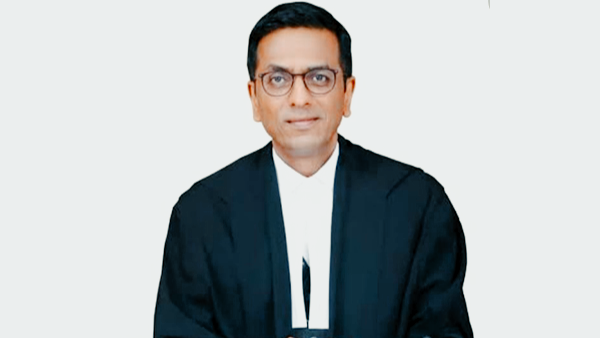
Recently, former CJI D.Y. Chandrachud was appointed Russia’s arbitrator in an investment treaty arbitration filed by Ukraine’s state-owned Oschadbank, highlighting India’s growing role in international commercial arbitration.
What is International Investment Arbitration?
- About: Investment treaty arbitration is a legal dispute-settlement process. Foreign investors use it to resolve conflicts with host governments.
- It is also known as Investor-State Dispute Settlement (ISDS).
- It relies on bilateral or multilateral investment agreements, generally rests on a Bilateral Investment Treaty (BIT), investment treaty, contract, or domestic law.
- Arbitration cannot proceed without valid State consent contained in the applicable legal instrument.
- Dispute Emergence: A dispute may arise from alleged expropriation, discriminatory treatment, denial of fair and equitable treatment, or other treaty violations affecting a protected foreign investment.
- Process:
- The investor usually submits a notice of dispute and may have to observe a treaty-prescribed cooling-off period, allowing diplomatic negotiations or settlement.
- If settlement fails, the investor initiates arbitration under the mechanism permitted by the treaty, such as UNCITRAL Arbitration Rules.
- The UNCITRAL Arbitration Rules were adopted in 1976 and revised in 2010. They provide procedures for constitution, pleadings, evidence, hearings, interim measures, awards and costs.
- The Permanent Court of Arbitration (PCA), established in 1899, can administer UNCITRAL proceedings, provide registry and logistical services, and perform appointing-authority functions.
- It is an intergovernmental arbitration institution, not a conventional standing court.
- After this three-member tribunal constitutes, which determines jurisdiction, including investor nationality, and qualifying investment.
- This tribunal includes one arbitrator appointed by each party, with the third—usually the presiding arbitrator—appointed according to the applicable rules.
- Then parties submit memorials, counter-memorials, documentary evidence, witness statements and expert reports, followed where necessary by oral hearings.
- After this, the tribunal determines whether the State breached applicable investment protections and, where liability exists.
- The tribunal issues a binding award determining liability and potentially compensation, interest and costs.
- The successful party may then seek recognition and enforcement through national courts, subject to the applicable enforcement regime, including the New York Convention for foreign arbitral awards.
- The 1958 New York Convention, in force since 7 June 1959, requires Contracting States to recognize arbitration agreements.
Oschadbank–Russia Investment Dispute
- Claim: Oschadbank, Ukraine’s state-owned savings bank, initiated a new investment-treaty arbitration against the Russian Federation.
- The bank is concerned about assets and banking operations that were lost in Donetsk, Luhansk, Kherson and Zaporizhzhia amid Russia’s 2022 military actions.
- The dispute concerns alleged loss of bank branches, property and business operations in the four regions.
- The claim is reported to involve hundreds of millions of US dollars.
- Governing Treaty: The legal foundation is the Agreement on Encouragement and Mutual Protection of Investments.
- It was signed on 27 November 1998 and entered into force on 27 January 2000.
- The Government of the Russian Federation and the Cabinet of Ministers of Ukraine on the Encouragement and Mutual Protection of Investments signed this agreement.
- It was designed to protect investments of each country’s investors in the territory of the other.
- After a written notice and negotiations, Article 9 provides that unresolved disputes after six months may proceed to a competent court, Stockholm Chamber of Commerce arbitration, or ad hoc UNCITRAL arbitration. Awards are stipulated to be final and binding.
- Termination & Arbitration: Ukraine terminated the BIT effective 27 January 2025.
- However, its 10-year sunset provision preserves protection for investments made before termination until 27 January 2035.
- Oschadbank issued its notice of dispute on 24 July 2025 and commenced arbitration on 7 April 2026.
- Tribunal Composition: The present tribunal has three arbitrators: Dyalá Jiménez of Costa Rica as jointly selected presiding arbitrator, Stavros Brekoulakis of Greece as Oschadbank’s nominee, and former CJI D.Y. Chandrachud as Russia’s nominee.
- Former CJI D.Y. Chandrachud is serving as a party-appointed arbitrator, not as Russia’s lawyer or advocate.
- His responsibility is to participate independently in the tribunal’s adjudicative process, alongside the other two arbitrators, while observing applicable duties of independence and impartiality.
- Chandrachud’s judicial background makes independence, impartiality and conflict-of-interest disclosure particularly important.
- The appointment gives an Indian former Chief Justice a role in a highly consequential international investment-law dispute arising from the Russia–Ukraine war.
- Russia had previously approached Chandrachud to serve as its arbitrator in the Wintershall Dea investment dispute connected with the Ukraine conflict. He declined that approach.
- Russia also approached him regarding another treaty dispute involving Ukrenergo, Ukraine’s electricity transmission operator. Chandrachud again declined to act.
About CJI D.Y. Chandrachud
- Chandrachud served as the 50th Chief Justice of India, assuming office on 9 November 2022 and retiring on 10 November 2024.
- He succeeded Justice U.U. Lalit and was succeeded by Justice Sanjiv Khanna.
- He was born on November 11, 1959. Notably, his father, Y.V. Chandrachud, was the 16th CJI and remains the longest-serving chief justice in Indian history.
- Chandrachud studied Economics and Mathematics at St. Stephen’s College, law at the University of Delhi, and subsequently earned an LL.M. and S.J.D. from Harvard Law School.
- He practised before the Bombay High Court and Supreme Court, was designated Senior Advocate in 1998.
- He served as Additional Solicitor General of India from 1998 until his judicial appointment.
- He became a Bombay High Court judge in 2000 and later served as Chief Justice of the Allahabad High Court from 31 October 2013 until his elevation to the Supreme Court in 2016.
- He also served as Director of the Maharashtra Judicial Academy.
- He was appointed to the Supreme Court on 13 May 2016, serving more than six years before becoming CJI.
- As a judge and CJI, he authored over700 judgments.
- He was part of benches that decriminalized homosexuality (Section 377) and adultery (Section 497).
- He played pivotal roles in the Right to Privacy verdict, Ayodhya dispute, and striking down the Electoral Bonds scheme.
- Chief Justice D.Y. Chandrachud led the unanimous five-judge Supreme Court bench that upheld the abrogation of Article 370 on December 11, 2023.
- The bench ruled that Article 370 was a temporary provision meant for integration, that Jammu and Kashmir held no internal sovereignty, and directed assembly elections by September 30, 2024.
- He chaired the Supreme Court e-Committee, launching the e-Courts project.
- He pioneered live-streaming of constitutional bench proceedings, introduced AI-driven translation of judgments, and established paperless courtrooms to increase judicial transparency.
Frequently Asked Questions (FAQs):
1. Why did Russia appoint D.Y. Chandrachud?
Russia selected Chandrachud for his judicial expertise, credibility, and international arbitration experience.
2. What is the Ukraine arbitration case involving Russia?
It is Oschadbank’s investment-treaty claim concerning assets and operations lost in four Ukrainian regions.
3. What role will D.Y. Chandrachud play?
He will serve as Russia’s party-appointed arbitrator on the three-member tribunal deciding the dispute.
4. When was D.Y. Chandrachud appointed?
His appointment was reported on 12 August 2026; the precise appointment date was not publicly specified.
5. What is international arbitration?
It is a private dispute-resolution mechanism where independent arbitrators determine disputes under agreed legal rules.
6. Is D.Y. Chandrachud representing Russia?
No. He is an arbitrator, not Russia’s lawyer; Russia has a separate legal team.
Disclaimer: Information in this article is based on official announcements and public records. Regulations and implementation details may evolve over time.