ICMR Validates SHetA2 Therapy For Cervical Disease
| General Studies Paper II: Health, Indigenization of Technology, Government Policies |
Why in News?
Recently, Indian Council of Medical Research (ICMR) validated SHetA2 therapy targeting cervical precancer to advance critical non-surgical clinical trials.
What is SHetA2 Therapy?
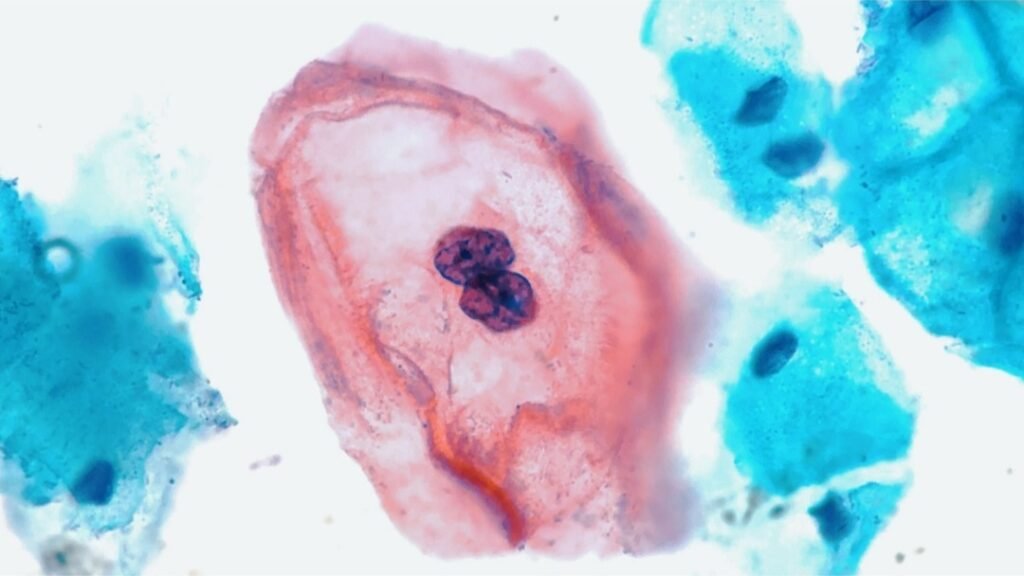
- About: SHetA2 is a first-in-class targeted anti-HPV therapeutic candidate developed to treat Cervical Intraepithelial Neoplasia (CIN), a precancerous condition that may progress to cervical cancer.
- Unlike conventional destructive procedures, it aims to eliminate abnormal cells while preserving healthy tissue.
- Collaboration: The therapy was jointly developed by ICMR–National Institute of Cancer Prevention and Research (NICPR), Noida, and the Stephenson Cancer Center, University of Oklahoma, USA.
- It represents an important Indo–US biomedical research collaboration with strong translational potential.
- Target Disease: SHetA2 specifically targets HPV-induced cervical precancer and cervical cancer, including Cervical Intraepithelial Neoplasia.
- Persistent infection with high-risk Human Papillomavirus (HPV) is the principal cause of most cervical cancer cases, making targeted therapy highly significant.
- HPV infection is a common sexually transmitted DNA virus linked to multiple cancers.
- It spread mainly through sexual contact, infecting the skin and mucous membranes.
- Persistent strains like HPV-16 and HPV-18 cause most cervical cancers.
- It is also linked to cancers of the throat, anus, penis, vagina, and vulva.
- Persistent infection with high-risk Human Papillomavirus (HPV) is the principal cause of most cervical cancer cases, making targeted therapy highly significant.
- Mechanism: The drug disrupts heat shock proteins such as mortalin, Hsc70 and GRP78, weakening HPV-driven cancer pathways.
- It restores the function of tumour suppressor proteins like, p53 and Rb.
- This suppresses E6/E7 oncoproteins, damages abnormal cells and triggers their undergo programmed cell death (apoptosis), while largely sparing normal cells.
- Advantages: Selective action, low toxicity, minimally invasive treatment, and potential oral or vaginal administration distinguish SHetA2 from many existing procedures. These features may improve patient comfort and treatment access.
- Clinical Status: Preclinical studies demonstrated encouraging safety and efficacy.
- Phase-I human evaluation has progressed under an FDA-authorised Investigational New Drug (IND) pathway, while India has completed indigenous validation for technology transfer.
- In 2026, ICMR licensed SHetA2 to Emcure Pharmaceuticals Ltd. under the Medical Innovations Patent Mitra initiative for further development, manufacturing and commercialization in India.
India’s Cervical Cancer Burden
- Global Cervical Cancer Burden: According to the World Health Organization (WHO) and International Agency for Research on Cancer (IARC), cervical cancer caused about 6.6 lakh new cases and around 3.5 lakh deaths worldwide in 2022. It remains the fourth most common cancer among women globally.
- India contributes nearly one-fifth of the world’s cervical cancer burden. IARC estimates show about 1.27 lakh new cases and around 80,000 deaths annually, placing India among the countries with the highest cervical cancer burden.
- It ranks as the second most frequent cancer among women in India overall and specifically for women aged 15 to 44.
- Incidence Rate: The age-standardized incidence rate (ASR) is approximately 18 per 1,00,000 women. This is higher than the global average in several regions, reflecting gaps in screening and vaccination coverage.
- Mortality Burden: Cervical cancer remains a leading cause of cancer death among Indian women. The mortality rate is about 11 per 1,00,000 women, indicating that many cases are diagnosed at advanced stages.
- HPV Infection Burden: WHO estimates that over 80% of sexually active individuals are exposed to Human Papillomavirus (HPV) during their lifetime.
- In India, high-risk HPV infection is detected in a significant proportion of women with cervical precancer and cancer.
- Nearly 99% of cervical cancer cases are driven by persistent high-risk HPV infections.
- Studies by ICMR and IARC show that HPV-16 and HPV-18 together cause about 70% of cervical cancer cases in India. These are the primary targets of current HPV vaccines.
- National Survey Findings: The National Family Health Survey (NFHS-5, 2019–21) reported that awareness of cervical cancer screening remains limited, especially in rural areas. Screening uptake among eligible women is still relatively low.
- Regional Variations: ICMR’s National Cancer Registry Programme (NCRP) shows higher cervical cancer incidence in parts of North-East India, Bihar, Jharkhand and Odisha, while some urban regions show declining trends.
- Abysmal Screening Coverage: Population-wide screening is critically low, estimated at less than 2%. The World Health Organization (WHO) target under its Global Cervical Cancer Elimination Strategy calls for 70% screening coverage by 2030.
- Diagnostic Limitations: Primary screening relies heavily on Visual Inspection with Acetic Acid (VIA), which suffers from high human subjectivity and false variations. Advanced molecular HPV-DNA testing remains restricted to affluent urban pockets.
Government Initiatives for Cervical Cancer Prevention in India
- National HPV Vaccination Programme: In February 2026, the Government of India launched a free nationwide HPV Vaccination Programme for approximately 1.15 crore girls aged 14 years.
- The campaign aims to prevent HPV infection before exposure and reduce future cervical cancer incidence.
- Vaccination is provided through government health facilities across all States and UTs.
- The drive utilizes Gardasil-4 (a quadrivalent vaccine targeting HPV types 6, 11, 16, and 18).
- Routine Immunisation Integration: After the initial intensive campaign, HPV vaccination has been integrated into routine immunisation services.
- Vaccines are administered at Ayushman Arogya Mandirs, PHCs, CHCs, District Hospitals and Government Medical Colleges, ensuring wider accessibility.
- Population-Based Screening: Under the National Programme for Prevention and Control of Non-Communicable Diseases (NP-NCD), women aged 30 years and above receive population-based screening for cervical cancer using VIA, with referral for confirmatory diagnosis and treatment when required.
- National Cancer Grid and Tertiary Care: The Government supports treatment through tertiary cancer centres, State Cancer Institutes (SCIs) and Tertiary Care Cancer Centres (TCCCs) under the National Programme for Prevention and Control of Cancer, Diabetes, Cardiovascular Diseases and Stroke (NPCDCS/NP-NCD), improving access to specialized oncology services.
- Public Awareness Campaigns: The Ministry of Health and Family Welfare conducts nationwide IEC and Behaviour Change Communication campaigns on HPV vaccination, and safe health practices.
- Digital Monitoring: The programme uses the U-WIN digital platform for beneficiary registration and vaccination records. AEFI surveillance systems continuously monitor vaccine safety, ensuring timely reporting and management of adverse events.
- Financial Protection: Eligible patients receive financial support under Ayushman Bharat–Pradhan Mantri Jan Arogya Yojana (AB-PMJAY) for cancer treatment at empanelled hospitals. This reduces catastrophic health expenditure.
- Indigenous Breakthrough (Aatmanirbhar Bharat): The Serum Institute of India (SII) developed CERVAVAC, India’s first indigenously produced quadrivalent HPV vaccine. This asset drastically cuts procurement costs compared to expensive imported formulations.
Frequently Asked Questions (FAQs):
1. What is SHetA2 therapy?
SHetA2 is a targeted anti-HPV drug candidate developed to treat cervical precancer by selectively destroying abnormal cells.
2. How does SHetA2 therapy work against HPV-related cervical disease?
It inhibits HPV-driven cancer pathways, suppresses E6/E7 proteins, and induces death of abnormal cervical cells.
3. What is HPV and how does it affect cervical health?
HPV is a common virus. Persistent high-risk infection can cause cervical precancer and eventually cervical cancer.
4. Can SHetA2 therapy help prevent cervical cancer?
Yes. By treating cervical precancer, SHetA2 may reduce progression to invasive cervical cancer.
5. Is SHetA2 therapy currently approved for clinical use?
No. It remains an investigational therapy undergoing further clinical development and regulatory evaluation.
Disclaimer: Information in this article is based on official announcements and public records. Regulations and implementation details may evolve over time.