



Sanjukta Parasor Appointed First Woman Chief of CRPF’s Elite CoBRA Force, Signifying Gender Inclusivity in Internal Security
| General Studies Paper II: Inclusive Growth, Defence |
Why in News?
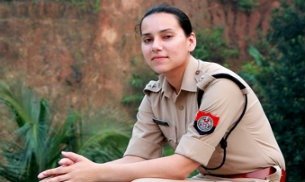
Recently, Senior IPS officer Sanjukta Parashar has taken charge as the Inspector General (IG) of the CRPF’s elite CoBRA unit, becoming the first woman officer to head the specialized jungle-warfare force.
Who Is Sanjukta Parashar?
- Intro: Dr. Sanjukta Parashar is a 2006-batch Indian Police Service (IPS) officer of the Assam-Meghalaya cadre.
- She has built her career around field policing, counter-insurgency, terrorism investigation and internal security.
- She became particularly known for her work against militant groups in Assam and was popularly described as the “Iron Lady of Assam.”
- In September 2026, she became the first woman Inspector General (IG) to head CRPF’s CoBRA.
- Born: According to the 2026 IPS Civil List, Parashar was born on 3 October 1979.
- Education: She received her early education in Assam before moving to Delhi for higher studies.
- She studied Political Science at Indraprastha College for Women, University of Delhi.
- She subsequently pursued higher education at Jawaharlal Nehru University (JNU) in International Relations, followed by an M.Phil. and PhD focusing on US foreign policy.
- The 2026 IPS Civil List records her qualifications as M.Phil., Ph.D. and MDPM.
- Career: Parashar entered the Indian Police Service in the 2006 batch through the UPSC Civil Services Examination. She secured an impressive All India Rank (AIR) of 85.
- Her first reported field posting came in 2008 as Assistant Commandant at Makum, Assam. This assignment exposed her to difficult law-and-order conditions and inter-community tensions, providing operational experience.
- She was subsequently posted to Udalguri, an area affected by violent clashes involving Bodo groups and migrants from Bangladesh. This gave her practical experience in conflict management, deployment of security personnel and sensitive community policing.
- Later field assignments included Rangia and Nalbari, according to profiles documenting her Assam Police career. Parashar subsequently served as Superintendent of Police (SP), Jorhat.
- Her tenure as SP, Sonitpur became the most prominent phase of her early career. Sonitpur was an insurgency-sensitive district, requiring coordination among state police, central forces and intelligence agencies.
- Reports associate her 2013–14 operations with action against the National Democratic Front of Bodoland (NDFB) and other militant networks.
- During approximately 15 months of operations, security forces under her leadership killed 16 militants and arrested more than 64.
- Parashar later moved on central deputation to the National Investigation Agency (NIA), where she served as a Deputy Inspector General (DIG).
- Her responsibilities included investigations involving terrorism, extremism, national security and terror financing.
- She was also associated with investigation of the Bhopal–Ujjain train blast case.
- While serving in the NIA, Parashar received a medal for excellence in police training from Union Home Minister Amit Shah in April 2022.
- After returning from central deputation, she was posted as Inspector General of Police, CID, Assam in April 2024. The 2025 IPS Civil List records her as IGP, CID-I, Assam, with the posting dated 1 January 2025.
- In August 2026, the Government of India formally appointed Smt. Sanjukta Parasor, IPS (AM:2006), as Inspector General in CRPF on deputation.
- She subsequently took charge of CoBRA and became its first woman IG/head. She succeeded IPS officer Danesh Rana.
- Tasked with leading anti-Naxal grid security in Chhattisgarh and Jharkhand, and managing volatile ethnic conflicts in Manipur.
- She subsequently took charge of CoBRA and became its first woman IG/head. She succeeded IPS officer Danesh Rana.
What Is CoBRA Force?
- About: CoBRA stands for Commando Battalion for Resolute Action.
- It is a specialized Central Reserve Police Force (CRPF) formation trained for guerrilla and jungle warfare.
- They are particularly trained for operations against armed extremist groups in difficult forested terrain.
- CRPF describes its personnel as highly trained “jungle warriors.”
- Creation: The Government of India approved creation of CoBRA to counter extremists and insurgents.
- The expansion of Left-Wing Extremism (LWE) created a requirement for personnel capable of operating in dense forests where conventional police formations faced disadvantages.
- The force was raised within the CRPF beginning in 2008–09.
- It is not a separate CAPF; it is an integral specialized component of the CRPF.
- Selection: CoBRA personnel are selected from within the CRPF rather than recruited as a completely separate force.
- Selected personnel undergo intensive commando and jungle-warfare training before deployment.
- Structure: The CoBRA Sector Headquarters is headed by an Inspector General.
- The organization comprises 10 specialized battalions, supported by sector-level command and training infrastructure.
- The official raising schedule provided two battalions in 2008–09, four in 2009–10 and four in 2010–11.
- The force functions within the broader CRPF command structure under the Ministry of Home Affairs.
- The organization comprises 10 specialized battalions, supported by sector-level command and training infrastructure.
- Training: CoBRA training emphasizes jungle warfare, fieldcraft, navigation, tactical movement, weapon handling, intelligence-based operations and survival in difficult terrain.
- CRPF also operates the CoBRA School of Jungle Warfare & Tactics at Belagavi, Karnataka, as part of its specialized training network.
- Operational Mandate: Its principal mandate is counter-insurgency and anti-Naxal operations, particularly against armed extremist.
- CoBRA can undertake long-range patrols, area domination, reconnaissance, intelligence-led operations and counter-ambush missions.
- Deployment Areas: The 10 battalions have historically been deployed across LWE- and insurgency-affected areas, including Chhattisgarh, Jharkhand, Odisha, Bihar, Maharashtra, Madhya Pradesh, West Bengal, Andhra Pradesh, Assam and Meghalaya.
- Two battalions have also been deployed in Manipur amid continuing security challenges.
- Achievements: CRPF’s published CoBRA statistics record 32,220 operations since 2009, involving 359 extremists killed, 3,033 apprehended and 963 surrenders, alongside recovery of large quantities of weapons, ammunition, explosives and detonators.
- CRPF records substantial decorations associated with CoBRA personnel, including Kirti Chakras, Shaurya Chakras, President’s Police Medals for Gallantry and Police Medals for Gallantry.
| Note: The Central Reserve Police Force (CRPF) is an Armed Force of the Union under the Ministry of Home Affairs. It assists states in maintaining law and order, counter-insurgency and internal security. It began as the Crown Representative’s Police on 27 July 1939. Following independence, the CRPF Act, 1949 gave it its present institutional identity. |
Counter-Insurgency and Jungle Warfare in India
- Counter-insurgency (COIN) refers to coordinated efforts by the state to contain, weaken and ultimately defeat organized armed insurgency, while restoring public confidence.
- India’s geographical diversity produces different security environments, including dense forests, mountains, international-border regions and remote tribal areas.
- Insurgent groups can exploit difficult terrain, limited connectivity, local grievances and weak state presence.
- India’s counter-insurgency experience has prominently involved the Northeast, Jammu & Kashmir and Left-Wing Extremism-affected areas. Each theatre has distinct historical, geographical and socio-political characteristics and therefore requires theatre-specific strategies.
- Insurgent groups frequently exploit surprise, terrain familiarity and concealed positions. Counter-insurgency forces therefore train extensively in ambush detection, counter-ambush drills, route security and tactical movement.
- Jungle warfare involves combat and security operations in environments characterized by dense vegetation, limited visibility, and inadequate communications.
- Modern counter-insurgency increasingly emphasizes intelligence-based operations rather than indiscriminate area operations.
- Dense forests favour small, mobile teams capable of moving quietly and remaining self-sufficient for extended periods. Specialized forces such as CoBRA are structured and trained around this operational requirement.
- Improvised Explosive Devices (IEDs) constitute a major threat in LWE theatres because insurgents can use roads, tracks and predictable movement patterns to target security forces.
- Consequently, IED awareness, route-opening procedures and explosive-ordnance capabilities are central to jungle operations.
- Under the Constitution, Police and Public Order are State subjects.
- The Union nevertheless supports affected states through Central Armed Police Forces, intelligence coordination, capacity building and specialized assistance.
- The MHA’s LWE Division explicitly coordinates security and development responses.
- CRPF operates specialized Counter-Insurgency and Anti-Terrorism Schools (CIATs).
- The Silchar CIAT was established in 2005 and serves as a centre for training in counter-insurgency and jungle warfare.
- Other specialized training institutions operate at Shivpuri and Kalikiri.
Women’s Leadership and Gender Inclusivity in Security Forces
- Women’s representation in the Indian Armed Forces has grown significantly, increasing from around 3,000 officers in 2014 to over 11,000 by 2026, backed by transformative legal and institutional reforms.
- A major institutional milestone came with the creation of the 88(Mahila) Battalion in 1986, making CRPF the first central paramilitary force to establish an all-women battalion.
- The first batch of women officers joined CRPF in 1987.
- Two officers from this pioneering cohort, Annie Abraham and Seema Dhundia, would later become the first women officers from the CRPF cadre to attain the rank of Inspector General.
- CRPF expanded the model by raising the 135(M) Mahila Battalion at Gandhinagar, Gujarat, in 1995, reflecting the growing requirement for women personnel in public-order and security duties.
- Women Special Entry Scheme (WSES), introduced short-term, 5-year non-combat roles before being replaced by the Short Service Commission (SSC) in 2006.
- The 213 Mahila Battalion was raised at Nagpur, Maharashtra, in 2011, further institutionalizing women’s operational participation within CRPF.
- The Government approved additional Mahila Battalions and expanded recruitment opportunities.
- Women personnel were increasingly assigned to patrolling, interrogation and escort duties, law-and-order operations, static security and anti-Naxal deployments.
- Government policy also moved toward greater direct entry of women into combat and supervisory roles across Central Armed Police Forces.
- In 2016, the government approved 33% reservation at the Constable level for women in CRPF and CISF, while women were also being incorporated into operational duties.
- In 2017, Assistant Commandant Usha Kiran of CRPF’s 80 Battalion became the first woman CRPF officer publicly reported as being deployed in Bastar, a major Maoist-affected region of Chhattisgarh.
- In 2018, CRPF deployed approximately 500 women personnel in the Kashmir Valley for security duties, including handling crowds and protests involving women. This demonstrated the increasing operational integration of women personnel in sensitive internal-security environments.
- Landmark legal actions, including the 2020 Supreme Court Babita Puniya verdict, mandated equal opportunities for Permanent Commissions across multiple branches.
- National Defence Academy (NDA) opened doors for female cadets starting in 2021, with multiple batches graduating through 2025 and early 2026.
- A major leadership breakthrough occurred in 2022, when Annie Abraham became IG, Rapid Action Force (RAF) and Seema Dhundia became IG, Bihar Sector. They were the first women officers from CRPF’s own cadre to reach the IG level and head major formations.
- The official IPS Civil List records Sanjukta Parashar as IGP, CID-I, Assam, demonstrating her progression to senior command before her central deputation.
- CRPF’s current official leadership women holding senior IG responsibilities in formations including Jammu, North Eastern Sector, Madhya Pradesh, Rajasthan and RAF, demonstrating women’s expanding representation.
- In September 2026, Stanzin Tsangyang became Kargil’s first woman Army officer, commissioned at Officers Training Academy (OTA) in Chennai.
Frequently Asked Questions (FAQs):
1. Who is Sanjukta Parashar and why is she called the Iron Lady of Assam?
Sanjukta Parashar is a 2006-batch IPS officer known for decisive counter-insurgency operations in Assam, earning the “Iron Lady” sobriquet.
2. Why has Sanjukta Parashar’s appointment made history?
Her appointment marks the first time a woman has led CRPF’s elite CoBRA force, expanding women’s leadership in specialized internal-security operations.
3. When did Sanjukta Parashar become Inspector General of CoBRA?
She took charge as CoBRA Inspector General in September 2026, with her appointment confirmed on September 10, 2026.
4. Is Sanjukta Parashar the first woman to lead CoBRA?
Yes. She is the first woman Inspector General and commander of CRPF’s CoBRA, succeeding IPS officer Danesh Rana.
5. What is the CRPF CoBRA unit and what does it specialise in?
CoBRA means Commando Battalion for Resolute Action, specializing in jungle warfare, guerrilla operations, counter-insurgency, ambushes, IED threats and long-range forest operations.
Disclaimer: Information in this article is based on official announcements and public records. Details may evolve over time.