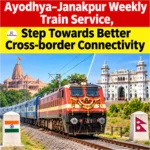



Ayodhya–Janakpur Weekly Train Service, Step Towards Better Cross-border Connectivity Between India-Nepal
| General Studies Paper II: Bilateral Relations, Culture & History |
Why in News?
Recently, Indian Railways approved a 604-km Ayodhya–Janakpur Weekly Train Service, a step towards better cross-border connectivity Between India-Nepal, deepening cultural diplomacy and regional economic cooperation.
Ayodhya–Janakpur Weekly Train Service Highlights
- Announcement: On 14 November 2026, the Ministry of Railways announced approval of a new weekly passenger train connecting Janakpur Dham (Nepal) with Ayodhya Cantt (Uttar Pradesh).
- Distance: The proposed service will cover approximately 604 kilometres.
- Frequency: It will operate once a week in each direction.
- The originating service from Janakpur Dham is scheduled for Saturday, while the return service from Ayodhya Cantt is scheduled for Monday.
- Route and Stoppages: The announced commercial stoppages are Jaynagar, Madhubani, Shisho, Sitamarhi, Raxaul, Narkatiaganj, Gorakhpur, Basti, Mankapur and Ayodhya Dham, besides the terminal stations.
- The route passes through Bihar and Uttar Pradesh before connecting with Nepal, only 28 km of the track network situated inside Nepal.
- This layout integrates the Mithila and Awadh regions.
- Operational Status: The service will be operated and managed by the Indian government.
- Exact departure timings, ticket pricing, and the official start date for regular commercial runs are pending final announcement from the Indian Railway Board.
Significance of Ayodhya–Janakpur Train Service
- India–Nepal Connectivity: The service strengthens connectivity between India and Nepal.
- Improved railway access can facilitate passenger movement, educational exchanges, business travel and family connections.
- India has supported major cross-border projects, including the Jaynagar–Bijalpura–Bardibas and Jogbani–Biratnagar links.
- The Raxaul–Kathmandu railway proposal could further expand Nepal’s connectivity with Indian transport networks.
- Religious Tourism: The railway connects Ayodhya and Janakpur, two destinations deeply associated with the Ramayana tradition. It strengthens cultural connections between communities in India and Nepal.
- Janakpur Dham is traditionally revered as the birthplace of Goddess Sita, while Ayodhya is associated with the birthplace of Lord Rama.
- Easier transportation can increase pilgrimage flows to Ram Janmabhoomi Temple and Janaki Mandir. It can strengthen people-to-people relations.
- The rail link can turn the abstract concept of the Ramayana Circuit—an initiative under the Swadesh Darshan scheme—into tangible, ground-level connectivity.
- Economic Benefits: Increased passenger movement can generate employment in hotels, restaurants, transport, handicrafts, tour operations and other tourism-related services.
- Towns such as Jaynagar, Madhubani, Sitamarhi and Raxaul may benefit from increased commercial activity, passenger spending and improved regional accessibility.
- Better passenger connectivity can support business networks, local entrepreneurship and cross-border commercial relationships.
- India–Nepal freight connectivity is separately expanding through railway links and transit arrangements.
- In November 2025, both countries amended the transit protocol to facilitate expanded rail-based freight movement.
- India–Nepal Relations: The initiative reflects India’s Neighbourhood First Policy, strengthening cooperation with its immediate neighbours.
- Railway connectivity supplements diplomatic engagement, strengthening mutual trust and public goodwill.
- Nepal occupies an important geographical position between India and China. Sustained infrastructure cooperation can strengthen India’s regional engagement.
India–Nepal Bilateral Initiatives Connecting Ayodhya and Janakpur
- Direct Bus Connectivity: On 11 May 2018, during Prime Minister Narendra Modi’s state visit to Nepal, the two Prime Ministers flagged off a direct bus service between Janakpur and Ayodhya. It
- India and Nepal had signed the Agreement for Regulation of Passenger Traffic on 25 November 2014.
- A Joint Working Group on cross-border transport facilitation was established to coordinate international passenger bus operations.
- Ramayana Circuit: In July 2018, the India–Nepal Tourism Joint Working Group agreed to recognise the Ramayana Circuit and Buddhist Circuit for joint promotion through common branding and marketing.
- It links 15 identified Indian pilgrimage and heritage destinations across multiple states with Janakpur in Nepal.
- 15 Identified Destinations in India:
- Uttar Pradesh (4): Ayodhya, Nandigram, Shringverpur, and Chitrakoot
- Bihar (3): Sitamarhi, Buxar, and Darbhanga
- Madhya Pradesh (1): Chitrakoot
- Chhattisgarh (1): Jagdalpur
- Odisha (1): Mahendragiri
- Maharashtra (2): Nashik and Nagpur
- Telangana (1): Bhadrachalam
- Karnataka (1): Hampi
- Tamil Nadu (1): Rameswaram
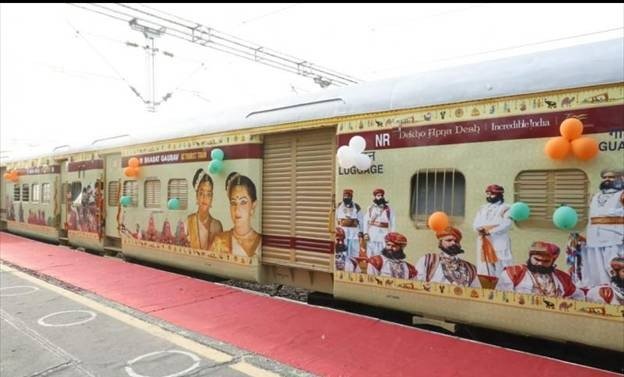
- The circuit is supported by specialized tourist options such as IRCTC’s Bharat Gaurav trains.
- Both countries also agreed to establish an Indo-Nepal Tourism Forum, involving government and private-sector representatives, to facilitate tourism cooperation.
- Proposed Air Connectivity: In November 2026, Nepal proposed establishing a direct air link between Janakpur and Ayodhya.
- Nepal has considered extending Janakpur Airport‘s runway by 200 metres to improve its capacity.
- Road Connectivity: India’s development partnership supports Nepal’s Hulaki (Postal) Highway/Terai Roads, improving accessibility across Nepal’s southern plains and strengthening connections with Indian border regions.
Frequently Asked Questions (FAQs):
1. What is the Ayodhya–Janakpur weekly train service?
It is a newly approved cross-border train by Indian Railways connecting Janakpur Dham in Nepal with Ayodhya Cantt in India.
2. What is the total distance covered by the Ayodhya–Janakpur weekly train?
The rail journey covers approximately 604 kilometers, passing through various towns and cities across Bihar and Uttar Pradesh.
3. What are the operating days of this weekly train?
The train departs from Janakpur Dham every Saturday and makes its return journey from Ayodhya Cantt every Monday.
4. Which major stations fall along the route?
Key commercial stoppages include Jaynagar, Madhubani, Sitamarhi, Raxaul, Narkatiaganj, Gorakhpur, Basti, and Mankapur before reaching Ayodhya Dham.
5. Why is this rail connection culturally significant?
It links Janakpur Dham, the birthplace of Mata Sita, with Ayodhya, the birthplace of Lord Ram, boosting Ramayana circuit tourism.
Disclaimer: Information in this article is based on official announcements and public records. Details may evolve over time.