




India Fast Breeder Reactor Achieves Criticality Milestone
|
General Studies Paper II: Nuclear Technology, Government Policies & Interventions |
Why in News?
Recently, India’s indigenously built Prototype Fast Breeder Reactor (PFBR) at Kalpakkam achieved a criticality milestone, marking a defining step in the second stage of India’s three‑stage nuclear power programme.
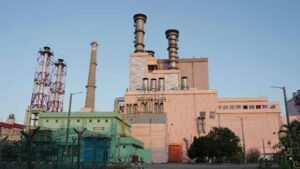
India’s Prototype Fast Breeder Reactor (PFBR)
- About: The Prototype Fast Breeder Reactor (PFBR) is a 500 MWe sodium-cooled fast neutron nuclear reactor designed to produce more fissile fuel than it consumes.
- It uses fast neutrons and follows the principle of fuel breeding, converting non-fissile material into usable nuclear fuel.
- Location: The PFBR is located at Kalpakkam in Tamil Nadu, within the campus of the Indira Gandhi Centre for Atomic Research (IGCAR), near the Madras Atomic Power Station.
- Objective: Its primary objective is to generate electricity while breeding more nuclear fuel, ensuring long-term energy sustainability.
- It also aims to utilize India’s vast thorium reserves by supporting the transition to advanced reactors in future stages.
- Approved Year: The PFBR project was approved in 2003 by the Government of India, with construction beginning in 2004. It represents a long-term strategic investment spanning over two decades of development.
- Developed By: The reactor has been designed by IGCAR and is constructed and operated by Bharatiya Nabhikiya Vidyut Nigam Limited (BHAVINI) under the Department of Atomic Energy (DAE).
- Capacity: PFBR is a fast breeder reactor (FBR) with an electrical capacity of 500 MWe and about 1253 MW thermal power, making it India’s most advanced commercial-scale nuclear reactor.
- Fuel Used: It uses Mixed Oxide (MOX) fuel, a combination of plutonium-239 and uranium-238, derived partly from spent fuel of earlier reactors.
- Coolant System: The PFBR uses liquid sodium as a coolant, which allows efficient heat transfer without slowing neutrons. This is crucial for maintaining a fast neutron spectrum.
- Working Principle: The reactor converts fertile uranium-238 into fissile plutonium-239, thereby producing more fuel than it consumes. This “breeding” capability ensures a sustainable nuclear fuel cycle.
- Criticality Achievement: On 6 April 2026, PFBR achieved first criticality, a crucial milestone before full-scale power generation. This marks the second stage of India’s three-stage nuclear programme.
Criticality in Reactors: Concept and Achievement Means
- Concept: Criticality refers to the state in a nuclear reactor when the nuclear fission chain reaction becomes self-sustaining.
- At this point, each fission event produces enough neutrons to trigger further fissions, maintaining a constant reaction rate.
- It is measured using the effective multiplication factor (k), where k = 1 indicates a stable, controlled reaction without external neutron input.
- There are three stages: Subcritical (k < 1), where the reaction dies out; Critical (k = 1), where the reaction is steady and controlled; and Supercritical (k > 1), where the reaction rate increases exponentially.
- Criticality is achieved by gradually withdrawing control rods (made of neutron-absorbing materials like cadmium or boron) to increase neutron population. Operators carefully monitor neutron flux, reactivity, and temperature coefficients. The first attainment, called “first criticality”, is a major milestone.
- Neutrons are central to sustaining fission. When a fissile nucleus (like Uranium-235 or Plutonium-239) absorbs a neutron, it splits, releasing energy and 2–3 neutrons. For criticality, at least one neutron per fission must cause another fission, while others may be absorbed or lost.
- Criticality is controlled through control rods, moderators, and coolants. Control rods regulate neutron absorption, while moderators (like heavy water or graphite) slow neutrons in thermal reactors. In fast reactors, moderators are absent, and control relies more on geometry and coolant properties. Safety systems ensure rapid shutdown (SCRAM) if needed.
- Maintaining criticality requires strict adherence to nuclear safety protocols. Uncontrolled supercriticality can lead to power surges, overheating, or even core damage. Hence, reactors are designed with negative reactivity coefficients, meaning that increases in temperature automatically reduce reaction rates.
- Successful Criticality Means: Successful criticality achievement means the reactor has reached a point where it can independently sustain a controlled chain reaction. This marks the first functional activation of the reactor core.
- It confirms that the reactor design, control mechanisms, and safety features—including control rods, coolant Systems, and Shutdown Systems (SCRAM)—are operating correctly.
- Although the reactor operates at very low power initially, successful criticality establishes the base for gradual power escalation.
- Achieving criticality also demonstrates technological maturity and energy self-reliance, especially in advanced reactors.
Significance of Successful Criticality Achievement for India
- Bridging India’s Uranium Scarcity Gap: India possesses limited domestic uranium reserves (2% of global resources) but large energy demand. The success of criticality in a fast breeder reactor (FBR) directly addresses this gap by enabling fuel multiplication, where more plutonium fuel is generated than consumed, reducing dependence on imported uranium.
- Acceleration of Closed Nuclear Fuel Cycle: The PFBR operational milestone strengthens India’s closed fuel cycle strategy, where spent fuel from Pressurised Heavy Water Reactors (PHWRs) is reprocessed and reused. This reduces radioactive waste volume and long-term toxicity, improving sustainability compared to once-through fuel cycles used in many countries.
- Gateway to Thorium-Based Energy Economy: India holds one of the largest thorium reserves globally (25% of world resources). However, thorium is not directly fissile. The PFBR enables production of Uranium-233 (via breeding processes), which is essential to unlock Stage-3 thorium reactors, ensuring centuries of clean energy potential.
- Enhancing India’s Global Nuclear Position: With PFBR achieving criticality, India joins a very small group of nations (like Russia) with commercial-scale fast breeder reactor capability. This elevates India’s global technological stature, positioning it as a leader in advanced nuclear engineering and next-generation reactor systems.
- Contribution to Climate Commitments: India has committed to achieving Net Zero emissions by 2070. Fast breeder reactors provide low-carbon baseload power, unlike intermittent renewables. By enabling continuous electricity generation with minimal greenhouse gas emissions, PFBR helps bridge the gap between energy growth and climate goals.
- Catalysing Indigenous Industrial Ecosystem: The PFBR project involved 200+ Indian industries and MSMEs, reflecting strong indigenisation under “Aatmanirbhar Bharat”. Successful criticality validates domestic manufacturing, advanced metallurgy, sodium technology, and nuclear-grade engineering, reducing reliance on foreign technology.
|
India’s Three-Stage Nuclear Power Programme:
|
|
Also Read: Approval to Build Nuclear Reactors in India |