




Vivek Aggarwal Elected as Vice-President of Financial Action Task Force
| General Studies Paper II: International Institutions, Effect of Policies & Politics of Countries on India’s Interests |
Why in News?
Recently, India’s senior bureaucrat Vivek Aggarwal was elected Vice-President of the Financial Action Task Force (FATF) for 2026–27, succeeding Giles Thomson of the United Kingdom.
- He will assume office on 1 July 2026 and serve as FATF Vice-President until 30 June 2027.
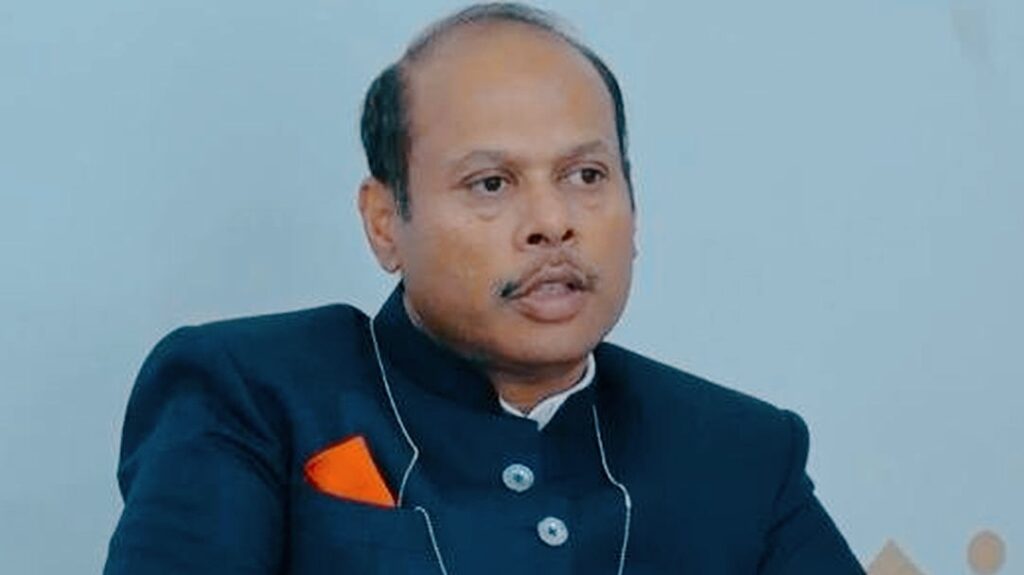
Who is Vivek Aggarwal?
- About: Vivek Aggarwal is a senior 1994-batch IAS officer of the Madhya Pradesh cadre.
- In June 2026, he was elected Vice-President of the Financial Action Task Force (FATF), the world’s leading anti-money laundering and counter-terror financing body.
- He currently serves as Secretary, Ministry of Culture, Government of India.
- Early Life: Vivek Aggarwal was born on 1 June 1971. His home state is reported as Haryana. He belongs to the generation of civil servants that entered public service during India’s economic reform era.
- Qualifications: He completed his foundational tertiary education at Panjab University, Chandigarh, obtaining a Bachelor of Commerce (B.Com) alongside a Bachelor of Laws (LL.B.).
- He qualified the Intermediate level from the Institute of Company Secretaries of India (ICSI).
- He secured the prestigious Gurukul Scholarship for Leadership and Excellence to study Globalization and International Financial Systems at the London School of Economics (LSE).
- Career: He cleared the UPSC Civil Services Examination and joined the Indian Administrative Service in 1994 under the Madhya Pradesh cadre.
- He served as a Sub-Divisional Officer (SDO) in locations like Gwalior and worked as a Chief Executive Officer (CEO) in Tikamgarh by 1998.
- He served as a Collector and District Magistrate on interstate deputation in Kapurthala (Punjab) from 2001 to 2002.
- During his early career, he served as District Collector of Rajgarh, Ujjain and Indore.
- He pioneered critical infrastructure shifts under Public-Private Partnerships (PPP) in Madhya Pradesh.
- Between 2008 and 2015, he served as the Managing Director of the MP Warehousing Corporation, the MP Agriculture & Marketing Board, and the MP Road Development Corporation.
- He concurrently acted as the Secretary to the Chief Minister from 2009 onward.
- At the Union level, he worked in the Ministry of Agriculture and Farmers’ Welfare, helping implement PM-KISAN, Digital Agriculture, and the Agriculture Infrastructure Fund.
- Between 2021–2025, he served as Additional Secretary (Revenue).
- 2023–2025 he took on the additional responsibility of Director for FIU-IND (Financial Intelligence Unit – India). He handled matters related to the Prevention of Money Laundering Act (PMLA), GST, economic security and represented India at FATF.
- In April 2025 appointed as the Secretary for the Ministry of Culture, Government of India and assigned the additional charge of Secretary, Ministry of Tourism.
What is the Financial Action Task Force (FATF)?
- About: The Financial Action Task Force (FATF) is an inter-governmental policymaking body to combat global money laundering and terrorist financing.
- As the preeminent global watchdog, it safeguards the integrity of the international financial system.
- It was formed at the 1989 Paris G7 Summit.
- Evolution: FATF expanded its mandate after the 9/11 attacks to counter terrorist financing.
- Originally time-bound, FATF was granted an open-ended mandate in 2019.
- Over the decades, its scope expanded beyond anti-money laundering (AML) to include Countering the Financing of Terrorism (CFT) in 2001, and countering the financing of Weapons of Mass Destruction (WMD) proliferation in 2012.
- Standards: The FATF Recommendations (often referred to as the “40 Recommendations”) act as the international AML/CFT standard.
- They provide a comprehensive, actionable framework of measures covering financial regulations, customer due diligence, and criminal justice to tackle illicit financial flows.
- Membership: FATF consists of 39 member jurisdictions (including major economies like the US, UK, India, and the European Commission).
- Collectively, over 200 countries and jurisdictions have committed to implementing the FATF Standards.
- Organizational Structure: The primary decision-making body is the FATF Plenary, which meets three times a year to adopt reports and hold countries accountable.
- The other three internal structures are the President (assisted by a Vice-President), the Steering Group, and the Secretariat, which is hosted at the OECD headquarters in Paris.
- Nine FATF-Style Regional Bodies (FSRBs) work in close cooperation with FATF to ensure universal implementation.
- These bodies, such as MONEYVAL and the Eurasian Group (EAG), conduct mutual evaluations and research risks in their specific geographic regions.
- Evaluation: FATF evaluates member countries through intensive mutual evaluations, where experts assess domestic legislative, regulatory, and operational frameworks.
- FATF evaluates performance against 40 Recommendations and 11 Immediate Outcomes.
- If a country fails to comply effectively, it faces public scrutiny and targeted follow-up processes.
- Lists: Repeated non-compliance results in a country being placed on public monitoring lists.
- Increased Monitoring (“The Grey List”) signifies a country is actively correcting deficiencies, while High-Risk Jurisdictions (“The Black List”) face comprehensive calls for action and severe international financial restrictions.
- New Tech: In 2019, FATF updated its standards to regulate Virtual Assets (VAs) and Virtual Asset Service Providers (VASPs) to deter crypto-related financial crimes.
- This included the landmark Travel Rule, demanding transparency in crypto wire transfers across borders.
- Significance: FATF has a profound impact on global financial credibility.
- International institutions such as the IMF, World Bank and UN bodies recognize FATF standards.
- Being deemed non-compliant limits access to the global banking system, harms foreign direct investment (FDI), and disrupts terrorist syndicates.
India’s Expanding Role in Strengthening Global Financial Security
- India has emerged as a major stakeholder in the global fight against money laundering (AML), terrorist financing (CFT) and proliferation financing.
- As the world’s fastest-growing major economy and a key geopolitical actor, India increasingly shapes international financial-security norms.
- India became a member of the Financial Action Task Force (FATF) in 2010, gaining a seat in the world’s principal AML/CFT standard-setting body.
- India has progressively strengthened laws such as the Prevention of Money Laundering Act (PMLA), 2002, the Unlawful Activities (Prevention) Act (UAPA) and related financial regulations.
- Institutions such as FIU-IND, Enforcement Directorate (ED), NIA, RBI and intelligence agencies now operate through enhanced information-sharing mechanisms.
- In its 2024 Mutual Evaluation Report, FATF concluded that India achieved a high level of technical compliance.
- It demonstrated substantial effectiveness across multiple assessment areas.
- India was placed in the prestigious Regular Follow-Up category.
- India consistently highlights threats from cross-border terrorism, terror networks and illicit financial channels. Expansion of bank accounts, digital payments, Aadhaar-enabled verification and financial inclusion initiatives has improved transaction traceability.
- India actively participates in the Egmont Group, FATF working groups and bilateral intelligence-sharing arrangements.
Implications of India’s FATF Leadership
- Global Financial Governance: India’s election to the FATF Vice-Presidency (2026–27) places it within the organization’s top leadership structure.
- This enhances India’s ability to influence agenda-setting, policy discussions and strategic priorities concerning emerging illicit-finance threats.
- Counter-Terror Diplomacy: The appointment provides India a stronger diplomatic platform to highlight concerns regarding cross-border terror financing, illicit funding channels and terrorist ecosystems.
- India’s enhanced position is likely to increase scrutiny of issues related to terror-financing compliance in South Asia.
- India has repeatedly advocated closer examination of Pakistan’s implementation of FATF commitments and monitoring obligations.
- Voice for Global South: India can act as a bridge between advanced economies and developing nations.
- Its leadership may help ensure that FATF standards remain effective while also considering the compliance capacities of emerging economies.
- Regional Leadership: India’s elevation reinforces its position as South Asia’s principal voice in global financial-security discussions.
- This may encourage greater regional cooperation against hawala networks, organized crime and illicit financial flows.
- Multilateral Forums: Leadership within FATF strengthens India’s standing across institutions such as the IMF, World Bank, G20 and the United Nations, where financial transparency compliance are increasingly important policy issues.
- Investment Confidence: Leadership in the world’s premier anti-financial-crime body strengthens perceptions of India as a responsible financial jurisdiction.
- This supports investor confidence, regulatory credibility and India’s ambition to become a major global financial hub.
FAQs:
Who is Vivek Aggarwal?
Vivek Aggarwal is a 1994-batch IAS officer and Secretary, Ministry of Culture, elected FATF Vice-President for July 2026–June 2027.
What is the Financial Action Task Force (FATF)?
FATF is an intergovernmental body established in 1989 to combat money laundering, terrorist financing, and proliferation financing globally.
Why is Vivek Aggarwal’s appointment significant for India?
His election gives India its first-ever FATF vice-presidency, reflecting growing international trust in India’s anti-financial-crime leadership.
What are the functions of FATF?
FATF sets global AML/CFT standards, evaluates countries, monitors compliance, identifies risks, and promotes international cooperation against illicit finance.
When will Vivek Aggarwal assume the role of FATF Vice-President?
Vivek Aggarwal will assume office on 1 July 2026 and serve as FATF Vice-President until 30 June 2027.
Disclaimer: Information in this article is based on official announcements and public records. Regulations and implementation details may evolve over time.