




Government Adds Heatwaves and Lightning to Disaster List
| General Studies Paper II: Government Policies & Interventions, Important Geophysical Phenomena |
Why in News?
Recently, India included heatwaves and lightning under SDRF-NDRF notified disasters, strengthening climate resilience and disaster-risk protection.
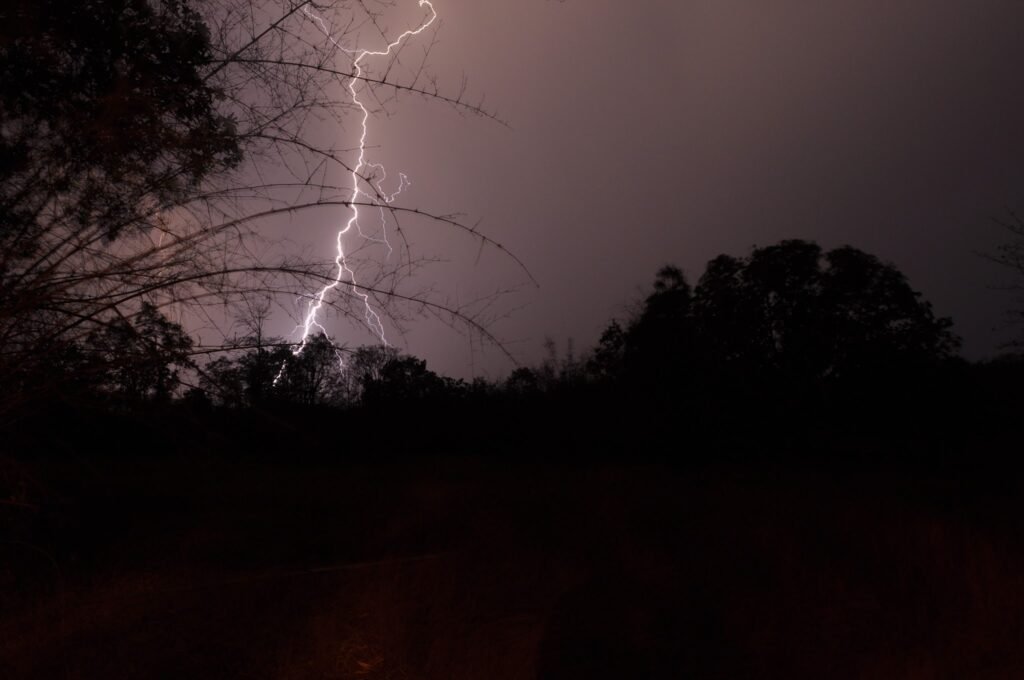
Understanding Heatwaves and Lightning
- Meaning:
- Heatwaves: A heatwave is a prolonged period of abnormally high temperatures above the climatological average of a region.
- Heatwave conditions are declared using scientifically defined temperature thresholds based on maximum temperature and departure from normal.
- Heatwaves mainly occur during March–June, before the southwest monsoon.
- Lightning: Lightning is a sudden electrical discharge between clouds or between a cloud and the ground.
- It forms due to the separation of positive and negative electrical charges inside thunderclouds.
- Lightning is among India’s deadliest weather hazards, causing significant human and livestock losses every year.
- Heatwaves: A heatwave is a prolonged period of abnormally high temperatures above the climatological average of a region.
- Authority: The India Meteorological Department (IMD) is the nodal scientific authority for monitoring, forecasting and issuing warnings on heatwaves and lightning.
- Causes:
- Heatwaves: The primary causes include persistent high-pressure systems, clear skies, dry winds, low soil moisture, delayed pre-monsoon rainfall, urban heat island effect, deforestation, and global climate change.
- Rising greenhouse gas concentrations are increasing the frequency, intensity and duration of extreme heat events across India.
- Lightning: Lightning develops due to strong atmospheric instability, cumulonimbus cloud formation, moisture-laden air, intense surface heating, and convective thunderstorms.
- Climate variability and increasing atmospheric moisture can enhance thunderstorm activity in several regions.
- Heatwaves: The primary causes include persistent high-pressure systems, clear skies, dry winds, low soil moisture, delayed pre-monsoon rainfall, urban heat island effect, deforestation, and global climate change.
- Vulnerability: India lies in the tropical and subtropical climatic zone, making it naturally prone to extreme heat and convective storms.
- High population density, rapid urbanisation, widespread outdoor employment, and dependence on rain-fed agriculture significantly increase exposure and vulnerability.
- Impacts: Heatwaves reduce labour productivity, increase heat-related illnesses, strain electricity and water demand, and affect crop yields.
- Lightning causes sudden fatalities, damages infrastructure, disrupts livelihoods and results in livestock losses, particularly in rural areas.
- Heatwaves frequently affect northwestern, central, eastern and peninsular India, while lightning is common across eastern, central, northeastern and monsoon-affected states.
- Large cities experience additional warming due to the urban heat island effect.
- The highest risk is faced by farmers, construction workers, street vendors, elderly persons, children, pregnant women, people with chronic diseases, and economically weaker households.
- Between March 1 and July 26, 2026, India recorded 4,853 heatstroke cases and 20 confirmed deaths.
- Government data presented in the Lok Sabha shows Maharashtra led with 11 confirmed fatalities, while Telangana recorded the highest state count with 915 cases.
- NCRB’s Accidental Deaths & Suicides in India (ADSI) report shows lightning deaths in India increased from a decennial average of 1,683 (1975–1984) to 2,809 (2015–2024), with 2,825 deaths in 2024 marking a 10.4% year-over-year rise.
- According to the Annual Lightning Report 2024–25 by CROPC, a 400% surge in strikes between 2019 and 2025, particularly impacting Madhya Pradesh.
Expanded Disaster Relief Framework
- Inclusion: On 4 August 2026, the Union Home Ministry confirmed in the Lok Sabha that heatwaves and lightning have been added to the list of notified disasters.
- A notified disaster is a hazard officially recognized under India’s disaster relief framework, making it eligible for financial assistance through the State Disaster Response Fund (SDRF) and, where required, the National Disaster Response Fund (NDRF) according to approved norms.
- The SDRF, constituted under Section 48(1)(a) of the Disaster Management Act, 2005, is the primary fund available with State Governments for providing immediate relief during notified disasters.
- The NDRF supplements State resources when disasters exceed State response capacity. Assistance is provided after assessment under Government of India norms.
- The Central Government contributes 75% of SDRF allocations for general States and 90% for North-Eastern and Himalayan States, while the remaining share is contributed by the respective State Governments.
- A notified disaster is a hazard officially recognized under India’s disaster relief framework, making it eligible for financial assistance through the State Disaster Response Fund (SDRF) and, where required, the National Disaster Response Fund (NDRF) according to approved norms.
- Recommendation: The decision follows the formal recommendations of the 16th Finance Commission.
- The commission recommended adding heatwaves and lightning to the list of notified disasters due to their rising frequency, mortality and economic losses.
- For 2026–31, the Commission recommended ₹1,63,521 crore for SDRF and ₹40,880 crore for the State Disaster Mitigation Fund (SDMF).
- It also recommended a ₹79,406 crore corpus for the National Disaster Funds to strengthen both response and mitigation.
- Impact: The inclusion of heatwaves and lightning expands the list of nationally recognized disasters.
- States can now provide immediate relief and compensation to affected people using disaster-response funds without relying solely on state-specific notifications.
- The decision reflects India’s shift from managing only traditional natural disasters to addressing climate-induced extreme weather events.
- It integrates disaster management with climate adaptation, risk reduction and resilient governance.
India’s Disaster Management Framework and Institutional Mechanism
- Legal Foundation: India’s disaster management system is governed by the Disaster Management Act, 2005 under the Ministry of Home Affairs (MHA).
- It provides a comprehensive legal framework for prevention, mitigation, preparedness, response, recovery and reconstruction.
- It establishes a multi-level institutional structure for coordinated disaster governance across the country.
- The Disaster Management Act officially covers 15 distinct categories of notified disasters.
- These include severe weather events like cyclones, droughts, floods, tsunamis, hailstorms, cloudbursts, frost, cold waves, heatwaves and lightning.
- The list also encompasses geological and environmental hazards such as earthquakes, landslides, avalanches, and fires, alongside biological threats like pest attacks and Covid-19.
- Apex Policy Body: The National Disaster Management Authority (NDMA) is the apex statutory authority chaired by the Prime Minister.
- It formulates national policies, guidelines and disaster management plans, and promotes risk reduction.
- It coordinates disaster preparedness among Ministries, Departments and States.
- NDMA has issued guidelines covering numerous disaster types, including heatwaves and lightning:
- Mandatory Heat Action Plans (HAPs) for states.
- Structural Cool Roof initiatives and public shade.
- No heavy outdoor labor between 12:00 PM and 3:00 PM.
- Dedicated heat-stroke wards and hospital electrical audits.
- Hydrate with ORS or buttermilk; avoid alcohol and caffeine.
- Real-time SMS alerts via the Sachet Portal.
- Sirens and alert poles in high-risk zones.
- Planting palm trees as natural lightning rods.
- Unplug indoor appliances; avoid plumbing during storms.
- Never stand under trees; use the crouch position if exposed.
- National Executive Committee (NEC): The National Executive Committee (NEC) assists the NDMA in implementing policies.
- It prepares the National Disaster Management Plan, coordinates Central Ministries, and monitors implementation.
- It ensures effective execution of disaster-response measures before, during and after disasters.
- State-Level Framework: Every State establishes a State Disaster Management Authority (SDMA) chaired by the Chief Minister.
- The SDMA prepares the State Disaster Management Plan, and issues State-specific guidelines.
- It coordinates departments, district authorities and local bodies for effective disaster risk management.
- District-Level Mechanism: The District Disaster Management Authority (DDMA), chaired by the District Magistrate/Collector, is the primary field-level authority.
- It prepares district plans, conducts vulnerability assessments, supervises preparedness, coordinates emergency response and ensures last-mile delivery of relief and rehabilitation.
- Specialized Response Force: The National Disaster Response Force (NDRF), constituted under Section 44 of the Act, is India’s specialised disaster-response force.
- It undertakes search and rescue, evacuation, medical assistance and response to natural, technological and CBRN disasters.
- The force currently consists of 16 battalions deployed strategically across India.
- Capacity Building and Research: The National Institute of Disaster Management (NIDM) serves as India’s premier institution for training, research, documentation and capacity building.
- Financial and Information Mechanism: The framework is supported by SDRF, NDRF, State Disaster Mitigation Fund (SDMF) and National Disaster Mitigation Fund (NDMF).
- The National Disaster Management Information System (NDMIS) improves disaster-data collection, fund monitoring, transparency and evidence-based decision-making.
- Multi-Agency Participation: India follows a whole-of-government and whole-of-society approach.
- Local bodies, Panchayati Raj Institutions, Urban Local Bodies, civil society, NGOs, scientific agencies, IMD, ISRO, Armed Forces and community volunteers jointly strengthen disaster preparedness and response.
Frequently Asked Questions (FAQs):
1. Why has the Government added heatwaves and lightning to the disaster list?
Answer: To enable SDRF/NDRF relief, strengthen climate resilience, and support timely assistance for affected people.
2. Which authority classifies heatwaves in India?
Answer: The India Meteorological Department (IMD) classifies and issues official heatwave warnings.
3. Which law governs disaster management in India?
Answer: The Disaster Management Act, 2005 provides India’s legal framework for disaster management.
4. What is the role of the National Disaster Management Authority (NDMA)?
Answer: NDMA formulates disaster policies, guidelines, preparedness strategies, and coordinates national disaster management.
5. How does the new classification benefit States?
Answer: States can provide faster relief using SDRF funds for heatwave and lightning-affected victims.
Disclaimer: Information in this article is based on official announcements and public records. Regulations and implementation details may evolve over time.