


Street Food Hubs India: Centre Releases First Tranche of Funds to Develop 18 Street Food Hubs
| General Studies Paper III: Government Policies, Food Security, Employment |
Why in News?
Recently, the Centre released the first tranche of funds to develop 18 Street Food Hubs under the PM SVANidhi scheme, improving affordable street-food infrastructure nationwide.
What are Street Food Hubs?
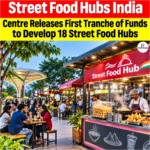
- About: Street Food Hubs are designated urban clusters or organized vending zones comprising multiple contiguous food stalls that collectively sell local and regional cuisines.
- Objective: Its aim is to formalise street vending, improve food safety, strengthen small businesses and promote local food tourism.
- It seeks to transform unorganised vending locations into attractive, well-managed public spaces.
- Administrative Framework: The initiative has been launched by the Ministry of Housing and Urban Affairs (MoHUA) under the broader PM SVANidhi framework.
- Implementation involves urban development departments, State Governments and Urban Local Bodies, supported by a convergence-based institutional mechanism.
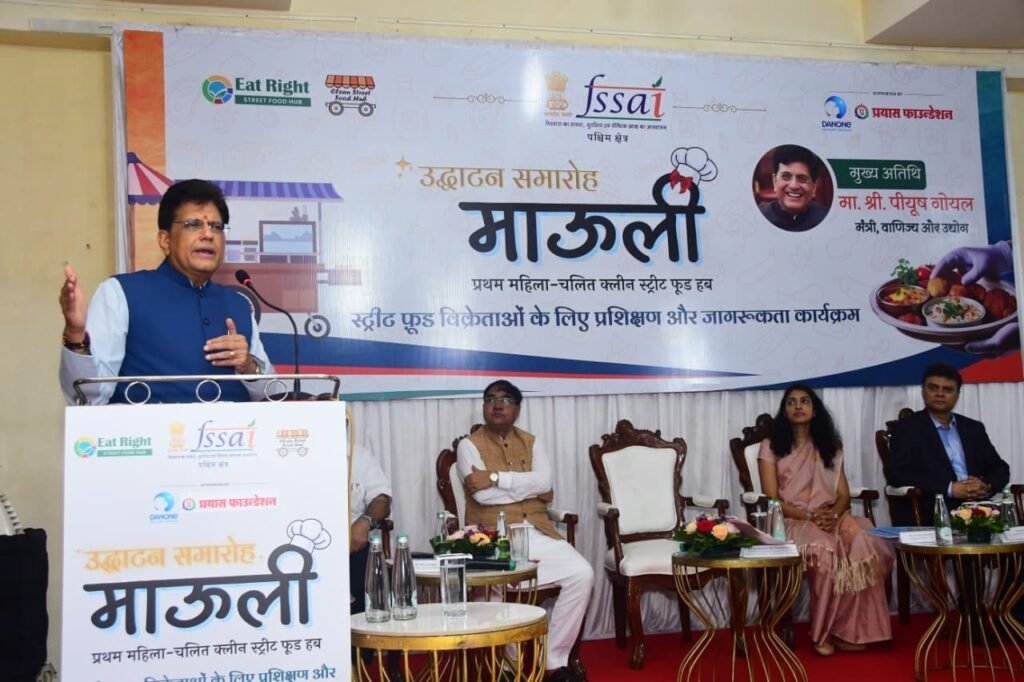
- The Food Safety and Standards Authority of India (FSSAI) provides food safety training, hygiene-related capacity building and certification support.
- The MoHUA’s Centres of Excellence for Urban Planning and AMRUT-funded Centres of Planning provide technical assistance to States and ULBs.
- Funding Pattern: Each approved Street Food Hub receives ₹4 crore in financial assistance.
- Funding is released in three instalments: 30% initially, 50% subsequently and 20% after project completion.
- A ₹25 lakh incentive is also provided to cities notifying their Street Vending Plan.
- Total Hubs: The government proposes to establish up to 50 Street Food Hubs nationwide.
- The Ministry received 126 proposals from 32 States and Union Territories, covering 106 Urban Local Bodies and seven Census Towns.
- Target towns are chosen based on high tourism potential, historical significance, local culinary popularity, and direct alignment with heritage networks like Swadesh Darshan, PRASHAD, UNESCO World Heritage Sites and UNESCO Creative Cities.
- Features:
- Designated vending spaces: Organised stalls and dedicated vending zones.
- Every licensed vendor operates utilizing heavy-duty, standardized mobile carts.
- Water facilities: Access to safe drinking and cleaning water.
- Sanitation: Toilets, handwashing and drainage facilities.
- Waste management: Scientific disposal and segregation of waste.
- Electricity: Lighting and essential utility connections.
- Food safety: Hygienic preparation, storage and serving practices.
- Establishments undergo rigorous Schedule 4 compliance assessments executed by state food safety officials.
- Consumer facilities: Seating, signage and visitor-friendly arrangements.
- Designated vending spaces: Organised stalls and dedicated vending zones.
- Recent Development: On 5 November 2026, MoHUA had released the first tranche of funding for the 18 selected locations.
- The Housing and Urban Affairs Minister released the funds during the National Urban Conclave 2026 in Bhubaneswar in October.
- 18 Selected Locations: Ahmedabad and Dwarka (Gujarat), Ayodhya and Prayagraj (Uttar Pradesh), Bhubaneswar and Puri (Odisha), Cyberabad in Telangana, Daman, Indore and Ujjain (Madhya Pradesh), Kakinada (Andhra Pradesh), Kurukshetra (Haryana), Lakhanpur and Tangmarg (Jammu and Kashmir), Madurai (Tamil Nadu), Manali (Himachal Pradesh), Mysuru (Karnataka) and Nathdwara (Rajasthan).
What is PM SVANidhi Scheme?
- About: The Prime Minister Street Vendor’s AtmaNirbhar Nidhi (PM SVANidhi) is a Central Sector Scheme launched on 1 June 2020 by the Ministry of Housing and Urban Affairs.
- It was introduced to help street vendors recover their businesses following the economic disruption caused by the COVID-19 pandemic.
- Objectives: The scheme aims to provide collateral-free working capital, promote financial inclusion, encourage digital transactions, develop entrepreneurial capabilities and integrate street vendors into the formal banking system.
- Target Beneficiaries: It covers eligible street vendors operating in urban areas, including mobile and stationary vendors.
- Under its restructured framework, coverage is being extended progressively to Census Towns and peri-urban areas through a city-region approach.
- Loan Structure: The scheme provides three progressive working-capital loan tranches:
| Tranche | Maximum loan | Repayment period |
| First | ₹15,000 | 12 months |
| Second | ₹25,000 | 18 months |
| Third | ₹50,000 | 36 months |
- Subsequent loans require full repayment of the preceding tranche.
- Loans are collateral-free, and premature repayment attracts no penalty.
- Interest Subsidy: Eligible vendors receive an interest subsidy of 7% per annum on timely repayment under the scheme’s applicable provisions. This reduces borrowing costs and encourages responsible credit behaviour.
- Digital Transaction Incentives: The restructured scheme provides cashback incentives to encourage digital adoption:
- Retail transactions: Up to ₹1,200 annually.
- Wholesale purchases: Up to ₹400 annually, subject to prescribed conditions.
- Credit Card: Vendors who successfully repay their second loan become eligible for a UPI-linked RuPay Credit Card, with a credit limit of up to ₹30,000.
- It provides additional short-term financial flexibility for business requirements.
- SVANidhi Se Samriddhi: This component connects street vendors and their families with eight government welfare schemes, including social security and pension-related benefits.
- Institutional Mechanism: MoHUA and the Department of Financial Services (DFS) jointly oversee implementation.
- Small Industries Development Bank of India (SIDBI) acts as the implementing agency, while banks, financial institutions, States and ULBs facilitate identification, loan disbursement and beneficiary mobilisation.
- Restructuring and Extension: The Union Cabinet approved restructuring on 27 August 2025.
- The scheme received a total outlay of ₹7,332 crore, with lending extended until 31 March 2030.
- Its target is 1.15 crore beneficiaries, including 50 lakh new beneficiaries.
- Significance: PM SVANidhi represents a shift from emergency financial assistance towards long-term livelihood security, formal credit access, digital inclusion and urban poverty reduction. It supports inclusive growth and the formalisation of India’s informal economy.
Significance of Street Food Hubs
- Street Food Hubs provide designated vending spaces, helping vendors transition from unorganised activities towards structured economic participation.
- Access to working capital, digital payments and business training encourages micro-entrepreneurship and reduces dependence on informal moneylenders.
- FSSAI-supported training, hygienic preparation facilities, clean water and waste disposal systems promote food safety, consumer protection and healthier urban food environments.
- Integrating food hubs with pilgrimage centres, heritage destinations and tourism circuits can improve visitor experiences.
- Local cuisines become tourism attractions, generating additional economic opportunities for host communities.
- Designated vending zones can improve pedestrian movement, sanitation, drainage, waste management and public-space utilisation.
- Scientific spatial planning can reduce congestion and conflicts between vendors, pedestrians and municipal authorities.
- Street food businesses create direct and indirect employment for cooks, helpers, suppliers, farmers, transporters and small traders.
- Increased demand can strengthen local agricultural supply chains, particularly for vegetables, dairy products, spices and indigenous food ingredients.
- Street food vending offers opportunities for women entrepreneurs, self-help groups and household-based businesses.
- Accessible vending spaces, financial services and training can strengthen women’s economic participation and financial independence.
- Proper waste segregation, reusable serving materials, efficient water consumption and responsible food disposal can reduce environmental pressures.
- Street Food Hubs contribute to SDG 1 (No Poverty), SDG 3 (Good Health), SDG 8 (Decent Work), SDG 11 (Sustainable Cities) and SDG 12 (Responsible Consumption and Production).
Similar Government Initiatives
- Street Vendors (Protection of Livelihood and Regulation of Street Vending) Act, 2014: It provides for Town Vending Committees (TVCs), vendor surveys, Certificates of Vending, vending zones and regulated street vending. It promotes a balance between vendors’ rights and public-space management.
- Deendayal Antyodaya Yojana – National Urban Livelihoods Mission (DAY-NULM): Implemented by MoHUA, DAY-NULM seeks to reduce urban poverty through self-employment, skill development, institutional credit and livelihood support.
- 100 Food Streets Initiative (2023): The Ministry of Health and Family Welfare, in collaboration with MoHUA, proposed developing 100 hygienic food streets across 100 districts.
- Implemented through the National Health Mission (NHM), it provides ₹1 crore per food street, with FSSAI technical support.
- Clean Street Food Hub Initiative: Under Eat Right India, FSSAI promotes certification of hygienic street-food clusters. Eligible clusters generally comprise 20 or more vendors, with at least 80% representing local and regional cuisines. Certification involves pre-audit, FoSTaC training, final audit and compliance assessment.
- EatSmart Cities Challenge: This initiative encourages cities to create healthier and safer food environments through food safety benchmarking, certification and awareness campaigns.
- PM Formalisation of Micro Food Processing Enterprises (PMFME): Implemented by the Ministry of Food Processing Industries, PMFME supports micro food-processing enterprises through credit-linked subsidies, capacity building, branding and marketing assistance.
- Street Markets Initiative: The Union Budget announced a proposed scheme to support the development of 100 weekly haats or street-food hubs annually for five years in selected cities, building upon PM SVANidhi’s experience.
Frequently Asked Questions (FAQs):
1. Which 18 Indian cities will develop Street Food Hubs?
Ahmedabad, Dwarka, Ayodhya, Prayagraj, Bhubaneswar, Puri, Cyberabad, Daman, Indore, Ujjain, Kakinada, Kurukshetra, Lakhanpur, Tangmarg, Madurai, Manali, Mysuru and Nathdwara.
2. What is the main objective of the Street Food Hub Scheme?
To establish organised, hygienic vending spaces, strengthen street vendors’ livelihoods, preserve regional cuisines and promote food safety and tourism.
3. How much funding has the Centre released for street food hubs?
Each approved hub receives ₹4 crore, released in three instalments: 30%, 50% and 20% after completion.
4. How will street food hubs benefit local street vendors?
They provide organised vending spaces, better infrastructure, improved customer access, food-safety training, livelihood opportunities and greater business visibility.
5. What facilities will be provided under the Street Food Hub Initiative?
Facilities include organised stalls, safe water, sanitation, drainage, waste management, electricity, hygienic food preparation and visitor-friendly infrastructure.
6. Will street food vendors receive financial assistance under this scheme?
Yes. Each hub receives ₹4 crore in project assistance; individual vendors can separately access eligible PM SVANidhi loans.
Disclaimer: Information in this article is based on official announcements and public records. Details may evolve over time.
| Also Read: Bharat International Rice Conference 2026 |