


Thirupparankundram Deepam Controversy: TN’s Apology, SC Contempt Plea & Temple Administration
| General Studies Paper II: Polity, Governance, and Judiciary |
Why in News?
Recently, Tamil Nadu apologized to the Supreme Court for failing to light the Karthigai Deepam at Deepathoon, blaming temple trustees’ resistance.
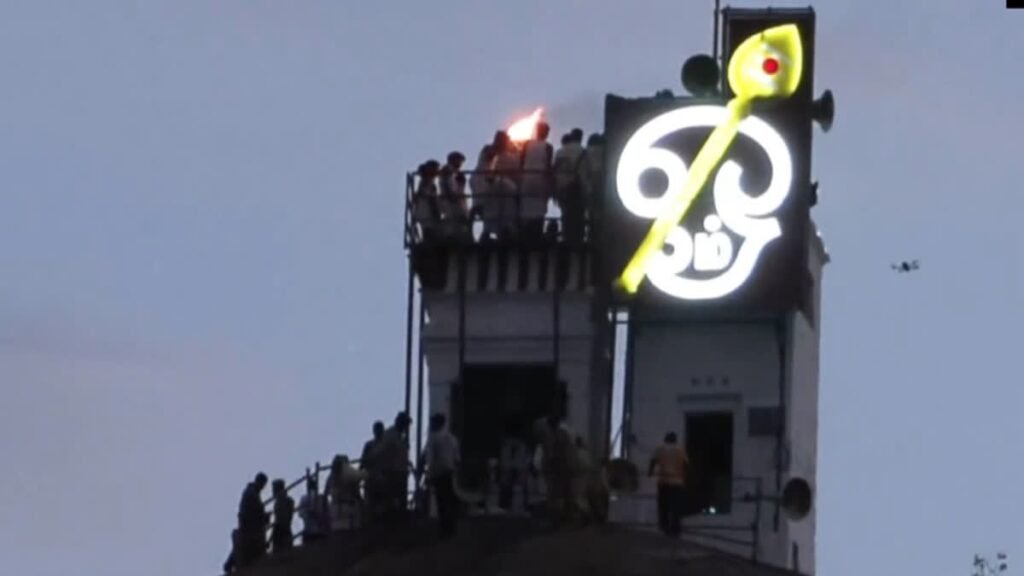
Thirupparankundram Deepam Controversy
- Dispute: Thirupparankundram Hill, near Madurai, Tamil Nadu, houses the Subramaniya Swamy Temple, a Jain heritage landscape and Sulthan Sikkandar Badhusha Dargah.
- According to the Hindu custom, the ceremonial Maha Deepam lamp should be lit during the annual Karthigai Deepam festival on Thiruparankundram hill.
- For decades, the lamp has been lit at the Deepa Mandapam near the Uchipillaiyar temple on the lower slopes.
- Hindu groups and devotees sought permission to light it at the Deepathoon, a stone pillar higher up the hill located roughly 50 metres from the Dargah.
- Temple devotees claim the lamp represents religious freedom, while temple authorities and opponents dispute the pillar’s religious significance.
- The tension stems from a timeline:
- Between 1920–1923, property litigation established separate claims over the hill.
- In 1931, a Privy Council decree became an important legal reference governing temple and Dargah property rights.
- Between 1994–1996, litigation concerning hilltop Deepam resulted in directions permitting lighting at the lower Deepa Mandapam.
- Madras High Court Ruling:
- In 2025 when petitioner Rama Ravikumar sought permission to light the Karthigai Deepam at Deepathoon.
- On December 1, 2025, Justice G.R. Swaminathan permitted devotees to light an additional Karthigai Deepam at Deepathoon.
- The judge directed temple authorities to facilitate the ritual with police assistance, considering the devotees’ religious claims.
- On January 6, 2026, Justices G. Jayachandran and K.K. Ramakrishnan upheld the decision.
- Justice MD Sumathi of the Madras High Court reminded the Madurai District Collector and other officials of their constitutional duty under Article 144.
- In 2025 when petitioner Rama Ravikumar sought permission to light the Karthigai Deepam at Deepathoon.
- Supreme Court Interim Ruling: Tamil Nadu challenged the High Court’s decision. It argued that established custom at the disputed pillar had not been sufficiently demonstrated.
- On November 20, 2026, a Supreme Court bench of Justices Aravind Kumar and Vipul M Pancholi allowed a restricted, temple-authorized team to light the lamp at Deepathoon as a one-time measure on November 24.
- The Supreme Court stayed the Madras High Court judgment while granting this limited, festival-specific permission.
- The arrangement did not finally determine ownership, customary rights or the permanent religious status of the pillar.
- Government’s Apology:
- On November 24, 2026, the lamp was ultimately lit at the customary Deepa Mandapam.
- On November 25, the state government apologised before the Supreme Court.
- The temple’s Board of Trustees declined to authorize the designated team and opted for the traditional site instead.
- Contempt Proceedings:
- The Supreme Court declined to initiate contempt proceedings suo motu, allowing aggrieved petitioners to file separate petitions.
- Petitioner Rama Ravikumar initiated contempt proceedings against 11 figures—including senior administration, police leadership, and temple trustees.
- The Supreme Court is scheduled to hear the contempt petitions on November 27, 2026.
- Fresh contempt proceedings seek examination of possible administrative interference and responsibility for the alleged non-compliance.
Temple Administration in India
- Indian secularism—affirmed in the Preamble (added via the 42nd Amendment, 1976) and recognized as part of the Basic Structure—follows principled distance and sarva dharma sambhava (equal respect/neutrality toward all religions).
- The State has no official religion and cannot levy taxes specifically for promoting or maintaining a particular religion (Article 27) or impart religious instruction in wholly state-funded institutions.
- Allowing non-discriminatory aid and minority educational rights (Articles 28(2)–(3), 29–30).
- Temple administration in India governs under Article 25(2)(a), Article 26(b)/(d), and state endowment statutes (such as state Hindu Religious and Charitable Endowments acts).
- Constitutional doctrine draws a sharp line between religious affairs (rituals, liturgy, spiritual governance, protected under Article 26(b)).
- Secular administration (accounting, property management, auditing, preventing misuse of funds, regulated under Article 25(2)(a) (Article 26(d) “in accordance with law”).
- It includes opening public Hindu religious institutions (which for this clause includes Sikhs, Jains, and Buddhists) to all classes and sections.
- It also protects wearing and carrying a kirpan as part of professing the Sikh faith.
- Religious Freedom:
- Article 25 guarantees “all persons” (not just citizens) freedom of conscience and the right to freely profess, practice, and propagate religion.
- Freedom of conscience covers inner belief, non-belief, or agnosticism, while professing means open declaration.
- These rights are expressly subject to public order, morality, health, and other Part III provisions.
- Article 26 grants collective religious freedom to “religious denominations” or sections thereof, subject to public order, morality, and health.
- To qualify as a denomination, a group generally requires a system of beliefs conducive to spiritual well-being, a common organization, and a distinctive name.
- Articles 27 and 28 complete the scheme by barring compelled taxes for promoting a specific religion and prohibiting religious instruction in wholly state-funded schools.
- Judicial Authority: The judiciary—especially the Supreme Court under Article 32—acts as the arbiter between religious claims, state regulation, and constitutional rights.
- In the Shirur Mutt case (1954), the Supreme Court held that “religion” covers rituals integral to a faith, while secular activities can be regulated.
- The courts developed the Essential Religious Practices (ERP) doctrine to separate core religious tenets from secular or peripheral practices.
- Subsequent rulings—such as Mohd. Hanif Quareshi (1958), Ananda Marga (2004), and Shayara Bano (2017)—narrowed protection to practices deemed doctrinally essential or mandatory rather than merely customary or optional.
- In the Sabarimala verdict (2018), a five-judge bench struck down the entry ban on women aged 10–50 by invoking constitutional morality and Articles 14, 15, 17, and 25.
Frequently Asked Questions (FAQs):
1. Where is Thirupparankundram Hill located?
It is located near Madurai, Tamil Nadu, and houses the historic Subramaniya Swamy Temple and Sulthan Sikkandar Badhusha Dargah.
2. What is the Deepathoon controversy?
It concerns devotees’ demand to light the Karthigai Deepam at a disputed stone pillar near the Dargah.
3. Which constitutional articles protect religious freedom in India?
Articles 25 and 26 primarily protect religious freedom, while Articles 27 and 28 address related secular safeguards.
4. Why did the Tamil Nadu government face contempt proceedings?
Petitioners alleged non-compliance with judicial directions permitting additional Deepam lighting at Deepathoon.
5. What is the major constitutional significance of this controversy?
It highlights the balance between religious freedom, judicial authority, secular governance, public order and communal harmony.
Disclaimer: Information in this article is based on official announcements and public records. Details may evolve over time.
| Also Read: Controversy over New Malayalam Language Bill |