


Microbial Monitoring Norms in India
| General Studies Paper II: Government Policies & Interventions, Health |
Why in News?
Recently, the Union Health Ministry proposed amending Schedule M of Drugs Rules, 1945 to strengthen microbial monitoring norms, aligning public health standards with WHO guidelines.
Microbial Monitoring in India
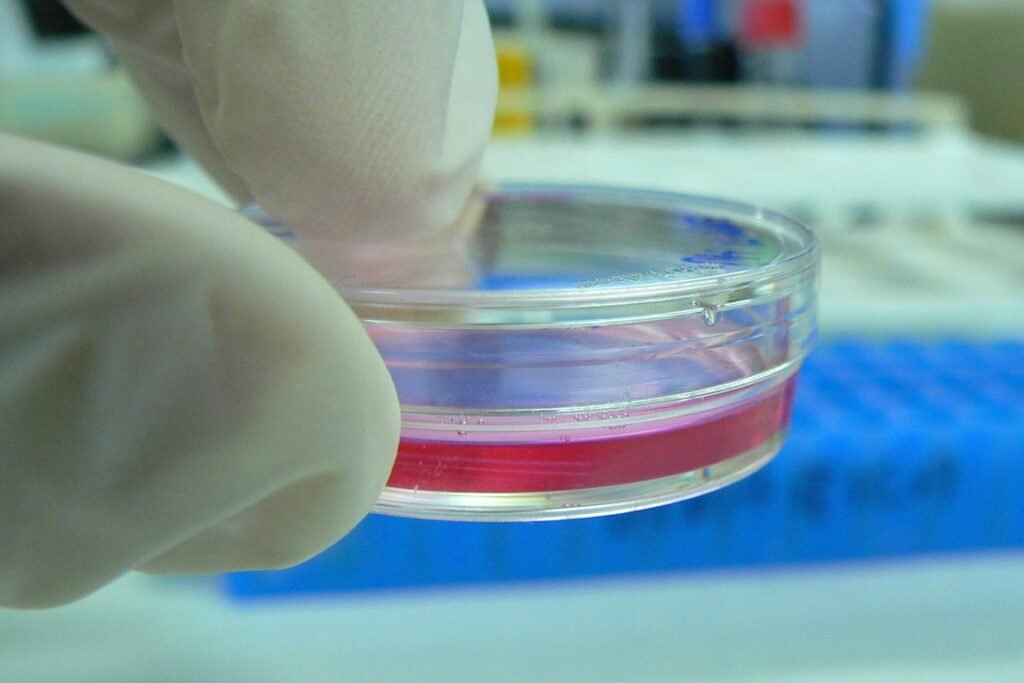
- Microbial monitoring involves detecting and measuring microorganisms, including bacteria, fungi, yeasts and moulds, in pharmaceutical manufacturing environments.
- It helps prevent contamination and ensures the quality, safety and sterility of medicines.
- Regulatory Framework:
- Pharmaceuticals and Medical Devices: Drugs and Cosmetics Rules, 1945 (specifically Schedule M governing Good Manufacturing Practices or GMP).
- It sets strict microbiological monitoring mandates for cleanrooms, environmental air quality, surfaces, and water used in manufacturing.
- Food and Consumer Goods: Food Safety and Standards Regulations (FSSR), 2011 (primarily Food Products Standards and Food Additives and Licensing and Registration of Food Businesses).
- Appendix B of the FSSR explicitly defines the microbiological criteria for food and water. It sets specific limits for two categories using global 2-class (n, c, m) and 3-class (n, c, m, M) sampling plans:
- Indicator organisms like Total Plate Count (TPC) and Coliforms.
- Strict pathogenic absence limits for Salmonella, Listeria monocytogenes, and E. coli in ready-to-eat foods, infant nutrition, dairy, and meat.
- Appendix B of the FSSR explicitly defines the microbiological criteria for food and water. It sets specific limits for two categories using global 2-class (n, c, m) and 3-class (n, c, m, M) sampling plans:
- Environment and Public Health:Environment (Protection) Act, 1986 and the Water (Prevention and Control of Pollution) Act, 1974.
- It establishes permissible biological indicators (e.g., Fecal Coliform counts) for municipal sewage treatment, industrial effluent discharge, and open water bodies to curb waterborne pathogen transmission.
- Pharmaceuticals and Medical Devices: Drugs and Cosmetics Rules, 1945 (specifically Schedule M governing Good Manufacturing Practices or GMP).
- Institutional Roles:
- It is primarily regulated by the Ministry of Health and Family Welfare.
- CDSCO (Central Drugs Standard Control Organisation): Pharmaceuticals, acts as the National Regulatory Authority for Biologics & Medical Devices.
- Formulates Schedule M revisions, conducts risk-based joint GMP inspections with state authorities, and reviews environmental monitoring data for sterile drug compliance.
- FSSAI (Food Safety and Standards Authority of India): It operates as the apex statutory food body for Food, Beverages & Dietary Supplements.
- It publishes standard validation testing protocols—such as the FSSAI Manual on Microbiological Examination of Food and Water—and oversees a network of NABL-accredited labs.
- BIS (Bureau of Indian Standards): It formulates the definitive Indian Standards (IS) codes for testing methodologies.
- Codes like IS 5402 and IS 5887 specify the precise physical methods required to isolate and enumerate bacterial strains like Salmonella and E. coli.
- ICMR (Indian Council of Medical Research): It provides the underlying epidemiological research, tracks Antimicrobial Resistance (AMR) trends, and consults on pathogen risk assessments to update nationwide testing guidelines.
- State Level Bodies (State FDA / State Pollution Control Boards): They conduct localized site audits, draw field samples for statutory testing, and issue regulatory penalties or production halts when microbial levels cross legal thresholds.
- The National Action Plan on AMR actively checks antimicrobial residue contamination across industrial effluents
WHO Guidelines and Global Standards for Microbial Quality Control
- The World Health Organization (WHO) establishes universal standards to eliminate microbial contamination in pharmaceuticals, water, and food.
- These protocols mandate structural control over pathogenic microorganisms to mitigate global biosecurity risks, prevent disease outbreaks, and ensure final product safety.
- Under the WHO Technical Report Series (TRS) No. 1044 Annex 2 regarding Good Manufacturing Practices (GMP), production lines must integrate rigid environmental monitoring.
- WHO categorises sterile manufacturing environments into Grades A, B, C and D, according to contamination risks and manufacturing operations.
- Grade A covers critical aseptic operations; Grade B provides its background environment, while Grades C and D support less critical manufacturing stages.
- Grade A represents the highest level of environmental cleanliness. It is used for aseptic preparation and filling.
- The qualification limits under TRS 1044 provide the following benchmarks:
| Grade | Air (CFU/m³) | Settle plates (CFU/4h) | Contact plates (CFU) |
| A | No growth | No growth | No growth |
| B | 10 | 5 | 5 |
| C | 100 | 50 | 25 |
| D | 200 | 100 | 50 |
- Water used for manufacturing is drawn on demand without prior batch-by-batch release.
- The official WHO GMP for Water Guidelines requires continuous engineering oversight and periodic sanitization of Water for Pharmaceutical Use (WPU) systems.
- Testing operations require dedicated, segregated laboratory units featuring completely isolated air-handling systems.
- Comprehensive access restrictions and specialized clean-room sterility testing areas prevent cross-contamination during active analytical phases, ensuring strict containment of biohazardous materials.
- WHO emphasises a documented Contamination Control Strategy (CCS) covering facility design, personnel, equipment, utilities, cleaning, disinfection, monitoring and process controls.
- National healthcare networks align with the International Health Regulations by adopting integrated laboratory frameworks. Facilities deploy mandatory External Quality Assessment (EQA) schemes and blind proficiency testing programs.
Proposed Regulatory Reforms and Amendments to Schedule M
- On 28 October 2026, the Union Ministry of Health and Family Welfare issued draft notification G.S.R. 953(E), proposing amendments to the Drugs Rules, 1945, to align Grade A microbial monitoring requirements with WHO standards.
- This shift ensures that all domestic medicines strictly comply with international standards like PIC/S, and ICH Q10.
- The draft amendment is proposed under Sections 12(1) and 33(1) of the Drugs and Cosmetics Act, 1940, following consultation with the Drugs Technical Advisory Board.
- The proposal seeks to substitute Table 3 under Requirement 4, paragraph 4.9, Part II of Schedule M, dealing with recommended microbial contamination limits for sterile pharmaceutical manufacturing areas.
- This introduces a strict “no growth” microbial limit for Grade A cleanrooms (aseptic zones), meaning any detected microbial count triggers an immediate regulatory investigation.
- The revised framework replaces old quality controls with a formal Pharmaceutical Quality System (PQS). Under these guidelines, senior management is held directly accountable for quality governance.
- The introduction of mandatory Quality Risk Management (QRM) requires manufacturers to scientifically assess all manufacturing stages.
- To eliminate data manipulation, the amendments strictly enforce ALCOA+ principles—ensuring records are Attributable, Legible, Contemporaneous, Original, Accurate, Complete, Consistent, Enduring, and Available.
- Any microbial growth detected in Grade A environments would trigger an investigation, rather than being treated as an acceptable result merely because it falls below one CFU.
- The Drugs Consultative Committee (DCC) examined the discrepancy, and the 93rd DTAB meeting, held on 16 February 2026, agreed with the proposed revision.
- The government invited objections and suggestions within 30 days of Gazette publication. The draft will be considered after this consultation period.
- These reforms advance Article 47, strengthen the right to life under Article 21 through protection of public health, and support SDG 3 by improving access to safe and quality-assured medicines.
Microbial Contamination Risks and Public Health Implications
- Microbes enter our food and water supplies through agricultural runoff, sewage leaks, and poor hygiene.
- Common vectors include irrigation water, raw poultry, and unpasteurized milk.
- Even minimal exposure to feces or contaminated soil can introduce millions of pathogenic cells into fresh produce or processing facilities.
- Public health is routinely threatened by bacterial, viral, and parasitic agents.
- Salmonella, Escherichia coli (E. coli), and Listeria monocytogenes represent top bacterial risks, capable of surviving extreme conditions.
- Viruses like Norovirus and Hepatitis A spread rapidly through contact, while parasites like Cryptosporidium resist standard chlorine treatments.
- Some microorganisms produce dangerous chemical toxins that remain harmful even after the living bacteria are killed.
- Staphylococcus aureus and Clostridium botulinum secrete potent neurotoxins and enterotoxins during improper food storage.
- These toxins are highly heat-resistant, meaning boiling contaminated food will not prevent poisoning.
- The systemic impact of foodborne and waterborne illness ranges from acute gastroenteritis to fatal organ failure.
- Vulnerable populations—the elderly, infants, and immunocompromised individuals—face the highest mortality rates.
- Severe infections can trigger chronic long-term sequelae like Hemolytic Uremic Syndrome (HUS) or Guillain-Barré syndrome.
- The mutation of pathogens into drug-resistant strains complicates modern clinical treatment.
- Overuse of antibiotics in livestock accelerates the selection of multi-drug resistant (MDR) bacteria.
- When these “superbugs” infect humans, standard frontline antibiotic therapies fail, dramatically increasing hospitalization periods and mortality numbers worldwide.
- Hospitalised patients, newborns, elderly individuals, cancer patients and people with weakened immunity face greater risks from contaminated medicines because their ability to resist infections may be reduced.
- Contaminated medicines can trigger product recalls, manufacturing shutdowns, regulatory penalties, litigation and loss of export markets.
- Such incidents also increase healthcare expenditure and undermine public confidence.
Challenges and Way Forward
- Challenges:
- Transitioning to the upgraded Schedule M imposes a massive capital expenditure burden on Micro, Small, and Medium Enterprises (MSMEs).
- Upgrading manufacturing plants and contamination-free cleanrooms requires substantial investment.
- Achieving stringent microbial standards requires advanced cleanrooms, HEPA filtration, HVAC systems, controlled airflow and contamination-resistant manufacturing infrastructure.
- Effective microbial monitoring requires trained microbiologists. Shortages of qualified professionals can undermine implementation.
- Maintaining accurate environmental monitoring records, deviation reports, batch documentation and CAPA records increases administrative responsibilities.
- Transitioning to the upgraded Schedule M imposes a massive capital expenditure burden on Micro, Small, and Medium Enterprises (MSMEs).
- Way Forward:
- Regulators must transition from routine audits to a predictive, risk-based inspection model utilizing centralized digital databases.
- The government should launch targeted technology upgradation subsidies and low-interest credit schemes.
- Every sterile pharmaceutical manufacturer should establish a comprehensive Contamination Control Strategy (CCS) integrating facility design, and environmental monitoring.
- Joint workshops led by international GMP experts will bridge the knowledge gap regarding data integrity, validation, and risk analysis.
- Establishing a rapid, automated reporting channel for Adverse Drug Reactions (ADRs) will allow immediate tracking of defective sub-standard batches.
Frequently Asked Questions (FAQs):
1. What is microbial monitoring and why is it important?
Microbial monitoring detects microorganisms in manufacturing environments, preventing contamination and ensuring pharmaceutical quality, sterility and patient safety.
2. What changes are proposed in India’s microbial monitoring norms?
The government proposes replacing Grade A’s less-than-one-CFU limit with zero microbial growth, aligning standards with WHO guidelines.
3. Why does the government want to strengthen microbial monitoring standards?
To minimise contamination risks, improve sterile medicine safety, strengthen GMP compliance and harmonise India’s pharmaceutical standards internationally.
4. What are the WHO guidelines for microbial monitoring?
WHO TRS 1044 prescribes Grades A–D, microbial monitoring limits, environmental surveillance and contamination-control measures for sterile pharmaceutical manufacturing.
5. How can microbial contamination affect public health?
Contaminated medicines can cause bloodstream infections, sepsis, fever, eye infections and potentially life-threatening complications, especially among vulnerable patients.
6. How will the new microbial monitoring norms improve public health?
Stricter monitoring, early contamination detection and mandatory investigations will strengthen medicine safety, prevent avoidable infections and protect patients.
Disclaimer: Information in this article is based on official announcements and public records. Details may evolve over time.