


Taliban Ban on Afghan Women’s Names in Balkh
| General Studies Paper II: Human Rights & International Relations |
Why in News?
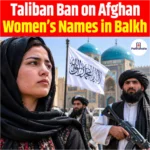
Recently, Taliban authorities in Afghanistan’s Balkh province reportedly barred women’s names from official and medical records, deepening systemic identity erasure and risk of medical errors.
Taliban Ban on Afghan Women’s Names in Balkh
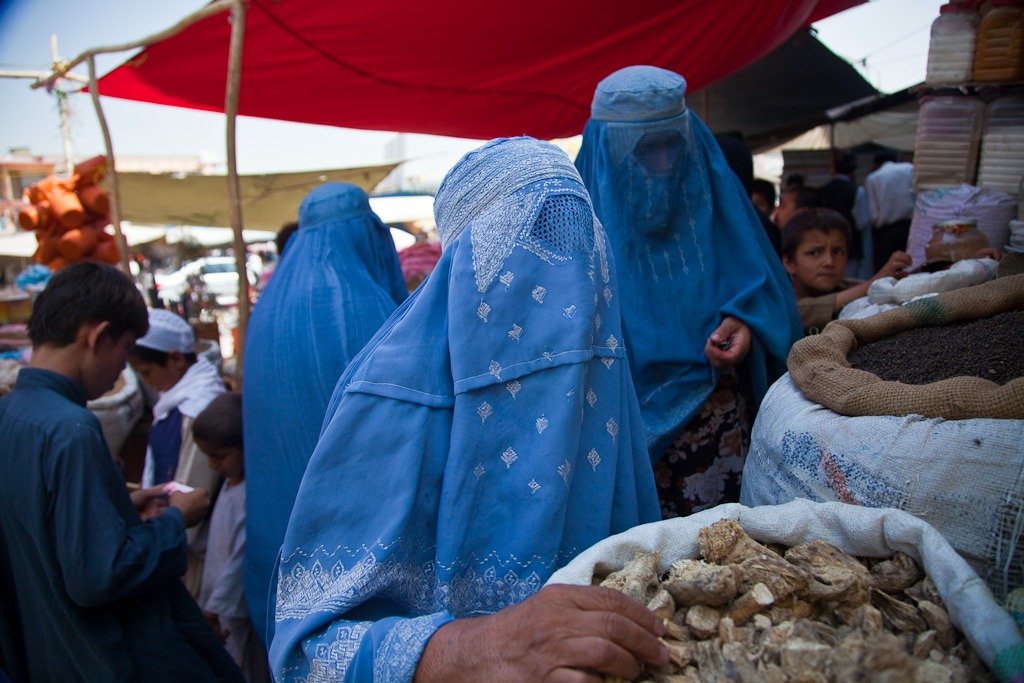
- Reports from Zan Times, El País, The Guardian (published in November 2026) indicate that Taliban morality authorities in Afghanistan’s northern Balkh province ordered to drop women’s personal names from official paperwork.
- The directive reportedly began around May 2026 via the Ministry for the Propagation of Virtue and the Prevention of Vice.
- Activists like Zubaida Akbar of Femena warn local rules—among more than 144 decrees tracked by Femena—often spread nationwide.
- This is an administrative and identity-erasure ban targeting official records, medical files, prescriptions, and government documents for women in Balkh.
- Taliban officials defend restrictions broadly as alignment with Sharia law.
- Officials and healthcare workers in Balkh were instructed to replace women’s given names with “Bibi,” a Dari and Pashto term traditionally meaning grandmother or elderly woman.
- Activist Lalah Osmany reported testimonies of women being called degrading labels like “goat” or “cow” or listed only by male relatives.
- Osmany led the Where Is My Name? campaign that won voluntary inclusion of mothers’ names on birth certificates in 2020.
- Activist Lalah Osmany reported testimonies of women being called degrading labels like “goat” or “cow” or listed only by male relatives.
- Using identical or generic labels like “Bibi” on prescriptions and medical charts raises serious risks of treatment and medication errors.
- Stripping women’s names erases individual civic visibility and reinforces dependence on male relatives in daily life.
- Women’s names removal can make documentation and access to public services more difficult.
- The case of Afghan journalist Khadija Amin, who faced difficulties establishing her maternity because her name was absent from her children’s birth certificates, illustrates these consequences.
Taliban’s Restrictions on Afghan Women
- Since returning to power on 15 August 2021, the Taliban have progressively restricted women’s education, employment, movement, healthcare, expression and participation in public life.
- The Taliban dismantled the Ministry of Women’s Affairs, replacing it with the Ministry for the Propagation of Virtue and the Prevention of Vice.
- Authorities ordered female civil servants to stay home, dismissed all 270 female judges, and barred girls from attending secondary schools beyond grade six.
- In November 2021, directives banned women from appearing in television dramas, restricted access to health clinics without a male chaperone (mahram), and shuttered women’s shelters.
- Authorities prohibited women from traveling over 72 kilometers without a mahram and banned taxi drivers from transporting uncovered women.
- In May 2022, a strict decree mandated full face coverings (burqa or niqab) in public and on television, punishing male guardians for violations.
- By November 2022, women were barred from entering public parks, gyms, sports clubs, and public bathhouses (hammams), systematically eliminating their recreational and social spaces.
- In December 2022, the Taliban suspended university education for women and barred them from working for national and international NGOs.
- Authorities expanded the employment ban to United Nations agencies in April 2023 and ordered the nationwide closure of women’s beauty salons by July 2023, wiping out remaining economic lifelines.
- The August 2024 Law on the Propagation of Virtue and Prevention of Vice codified extreme surveillance, classifying women’s voices in public as awrah (intimate) and banning singing or reading aloud.
- In December 2024, Supreme Leader Hibatullah Akhundzada barred women from medical institutes, cutting off their final pathway to higher education and healthcare training.
- In January 2026, the Taliban terminated the stipends of stay-at-home female civil servants and enacted a discriminatory Penal Code sanctioning domestic abuse unless severe injuries occur.
- By May 2026, the Code on Judicial Separation of Spouses abolished legal gender equality, institutionalized child marriage, and severely restricted women’s right to divorce.
Taliban’s International Legal Human Rights Violations
- As Afghanistan’s de facto authorities, the Taliban are legally bound by international treaties previously ratified by the Afghan state, regardless of formal diplomatic recognition.
- Afghanistan ratified the Convention on the Elimination of All Forms of Discrimination Against Women (CEDAW) in 2003.
- The Taliban violated Articles 2, 7, 10, 11, and 15 by banning secondary and higher education, barring women from employment and public life.
- Afghanistan acceded to the Rome Statute in 2003, granting jurisdiction to the International Criminal Court (ICC).
- The regime violated Article 7 through gender persecution, torture, and enforced disappearances.
- Bound by the International Covenant on Civil and Political Rights (ICCPR) and the Convention Against Torture (CAT), the regime breached Articles 6, 7, 9, 18, and 19.
- Violations include extrajudicial killings of former officials, arbitrary detentions, public floggings, media censorship, and religious persecution of Hazara and Sikh minorities.
- Under the International Covenant on Economic, Social and Cultural Rights (ICESCR) and the Convention on the Rights of the Child (CRC), the Taliban violated Articles 6, 12, and 13 (ICESCR) alongside Articles 2, 28, and 38 (CRC).
- In response, the ICC issued arrest warrants against top Taliban leaders, including Haibatullah Akhundzada and Abdul Hakim Haqqani, for crimes against humanity.
- Reinstating public executions, stonings, and floggings violates the Convention Against Torture (CAT). Retaliatory abuses against deported refugees violate customary international law and the 1951 Refugee Convention’s principle of non-refoulement.
Global Response to Taliban Gender Restrictions
- Over 40 countries and rights groups like Amnesty International and Human Rights Watch denounce Taliban policies as gender persecution and potential gender apartheid.
- Many countries adopted a Taliban-related sanctions framework, including asset freezes, travel restrictions and an arms embargo against designated individuals and entities.
- Many governments have withheld formal recognition of the Taliban administration.
- In December 2025, Australia introduced an autonomous sanctions framework specifically responding to repression of women and girls.
- The United Nations (UN) treats the Taliban’s crackdown as one of the world’s worst women’s rights crises.
- The UN Women highlight that over 2.4 to 2.6 million girls are affected by the ban.
- The UN Human Rights Council’s Independent Investigative Mechanism condemned bans on female UN staff and premises.
- Security Council Resolution 2593 (2021), called for the protection of human rights, including women’s rights, and an inclusive political settlement.
- UN Security Council Resolution 2026, adopted on 12 February 2026, continued the Taliban-related sanctions framework.
- The International Criminal Court (ICC) issued arrest warrants against senior Taliban figures, including Supreme Leader Haibatullah Akhundzada, Chief Justice Abdul Hakim Haqqani for alleged crimes against humanity.
- India consistently calls for an inclusive Afghan government, equal rights for women and girls, and female access to education and employment under UN Security Council Resolution 2593.
- In December 2022, it expressed concern over the university ban and emphasised women’s equal access to higher education.
- India restored its Technical Mission in Kabul to the status of the Embassy of India in Afghanistan on October 21, 2025, following the Afghan Foreign Minister’s visit to New Delhi .
- India provided more than 50,000 metric tonnes of wheat, approximately 450 tonnes of medicines and vaccines, and scholarships to nearly 3,000 Afghan students, including around 1,000 women.
Frequently Asked Questions (FAQs):
1. What is the reported Taliban ban in Balkh province?
Authorities reportedly restricted using women’s actual names in official and medical records, replacing them with generic terms such as Bibi.
2. What was the Where Is My Name? campaign?
Launched in 2017 by Lalah Osmany, it demanded recognition of Afghan women’s names in official documents.
3. Which international convention protects Afghan women’s rights?
The CEDAW (1979) protects women’s rights against discrimination in education, employment, healthcare and public participation.
4. What action did the ICC take against Taliban leaders?
In July 2025, the ICC issued arrest warrants against two senior Taliban officials for alleged gender-based persecution.
5. What is India’s approach towards Afghanistan?
India combines humanitarian assistance and diplomatic engagement with support for inclusive governance and Afghan women’s rights.
Disclaimer: Information in this article is based on official announcements and public records. Details may evolve over time.
| Also Read: Hyderabad Gender-Neutral Prison Cell |