NAFED-NCCF Pulses Procurement
| General Studies Paper III: Food Security |
Why in News?
Recently, the government directed National Agricultural Cooperative Marketing Federation (NAFED) and National Cooperative Consumers’ Federation (NCCF) to procure pulses and oilseeds directly from farmers.
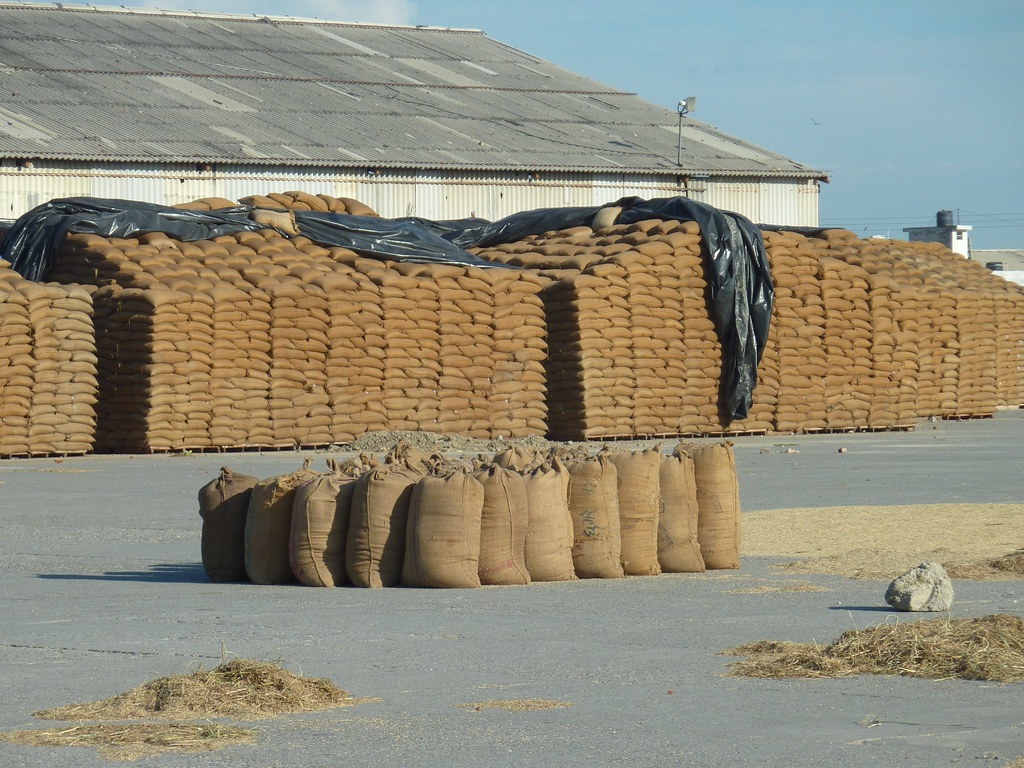
Agricultural Procurement in India
- Concept: India’s agricultural procurement system is a government mechanism for purchasing crops from farmers at Minimum Support Price (MSP) when market prices fall below remunerative levels.
- The procurement system is anchored in MSP, announced annually on the recommendations of the Commission for Agricultural Costs and Prices (CACP).
- MSP currently covers 23 notified commodities across cereals, pulses, oilseeds and commercial crops, providing a price floor against market volatility.
- Its objectives are farmer income protection, price stabilization, food security, and maintaining buffer stocks for welfare schemes.
- Institutions: India follows a multi-agency procurement model.
- Food Corporation of India (FCI) is the primary central nodal agency responsible for the procurement, storage, and distribution of wheat and paddy.
- NAFED (National Agricultural Cooperative Marketing Federation of India) and NCCF (National Cooperative Consumers’ Federation) procure pulses and oilseeds under Price Support Scheme (PSS).
- Cotton Corporation of India (CCI) is the apex agency that handles the procurement of raw cotton to protect farmers from distress sales.
- Jute Corporation of India (JCI) is the central agency responsible for procuring raw jute and mesta at MSP without quantitative limits.
- State-level bodies act as essential field-level partners to execute direct purchases, manage local logistics, and coordinate with the national nodal agencies.
- Process: Farmers register through procurement portals e-Samriddhi or Central Food Grains Procurement Portal or designated centres.
- Produce is quality-tested, weighed and purchased at MSP.
- Procurement continues during the harvest period when market prices remain below MSP, ensuring guaranteed market access.
- Increasingly, payments are transferred through Direct Benefit Transfer (DBT) directly into farmers’ bank accounts, improving transparency and reducing leakages.
- Procured foodgrains are stored in the Central Pool and distributed through the Public Distribution System (PDS) and welfare schemes.
- PM-AASHA Framework: Procurement operates under Pradhan Mantri Annadata Aay Sanrakshan Abhiyan (PM-AASHA).
- It is the umbrella scheme launched in September 2018 to ensure the effective implementation of Minimum Support Price (MSP) and protect farmers.
- It comprises Price Support Scheme (PSS), Price Deficiency Payment Scheme (PDPS) and Private Procurement and Stockist Scheme (PPSS).
- Price Support Scheme (PSS) central agencies physically procure notified pulses, oilseeds, and copra at the MSP during peak arrivals, with the Central Government bearing associated expenditures and losses.
- Price Deficiency Payment Scheme (PDPS) without requiring physical procurement, the government directly compensates registered farmers for the difference between the MSP and the actual modal market price.
- Private Procurement and Stockist Scheme (PPSS) a pilot model where registered private players are incentivized to procure oilseeds at MSP, alleviating the procurement burden on state agencies.
- Significance: The system stabilizes agricultural markets, supports rural demand and provides predictable income signals.
- MSP procurement also influences cropping decisions and investment in agricultural production.
- Challenges: Challenges include regional concentration of procurement, storage constraints, high fiscal costs and fraudulent registrations.
- Procurement often heavily favors specific, well-connected agricultural belts, excluding remote smallholders.
- Manual or highly bureaucratic administrative workflows cause bottlenecks that prevent timely crop purchases.
Government Push for Direct Pulses Procurement
- Policy Shift: On 23 June 2026, Union Cooperation Minister Amit Shah directed NAFED and NCCF to procure pulses and oilseeds directly from farmers, eliminating intermediaries.
- The reform aims to ensure that the full benefits of MSP reach cultivators and strengthen cooperative-led agricultural marketing.
- Implementation: The government has fixed a two-year deadline for creating a nationwide system where farmers can directly sell produce to NAFED and NCCF.
- Payment: Procurement payments are transferred directly into farmers’ bank accounts within 48 hours.
- This strengthens Direct Benefit Transfer (DBT) mechanisms, reduces leakages, and improves liquidity for farmers during harvest seasons.
- Self-Reliance: India still imports about 6–7 million tonnes of pulses annually. The new procurement strategy seeks to encourage domestic pulse cultivation by assuring farmers of reliable procurement.
- The government approved the Mission for Aatmanirbharta in Pulses (2025–31) with an outlay of ₹11,440 crore. NAFED and NCCF are central to procurement, storage, and market support under this mission.
- The Centre approved procurement of thousands of tonnes of moong, urad and groundnut across Uttar Pradesh, Gujarat, Haryana and Tamil Nadu under PSS.
- Participation: During the Rabi 2026-27 procurement season, over 1.5 lakh pulse farmers were registered through NAFED and NCCF platforms.
- Farmers are increasingly onboarded through localized portals, such as the E-Samyukti portal.
- This indicates rapid expansion of institutional procurement networks across producing states.
- Technology: Government launched NAFEX.in, the DRISHTI inventory management system, and the Saksham ERP platform.
- National Agricultural Cooperative Marketing Federation of India (NAFED) developed these platforms to form a combined digital network designed to modernise agricultural marketing.
- Nafex.in is a specialized digital auction platform used for trading procured pulses and oilseeds.
- DRISHTI is a dedicated inventory management system designed to track and manage pulses and oilseeds stocks.
- ERP is an Enterprise Resource Planning software utilized for streamlined internal organizational management.
- NAFED Kalyan is a scholarship programme aimed at supporting higher education and career development for children belonging to farming families.
- Scale: NAFED has decades of experience in MSP procurement.
- Under PSS, it procured 91.098 lakh metric tonnes of pulses and oilseeds during 2014–19.
- NAFED has experienced massive financial growth, expanding from a crisis-level turnover of ₹500 crore to ₹30,000 crore by FY25.
- The government has set a new, ambitious turnover target of ₹50,000 crore.
Government Initiatives
- Market Intervention for Perishables: The Market Intervention Scheme (MIS) protects growers of perishable horticultural items from localized distress sales.
- The financial coverage protects up to 25% of local production.
- A modern update permits direct differential cash transfers into bank accounts instead of relying solely on physical stock collection.
- Central Financial Guarantee: To back aggressive procurement targets, the state extended its sovereign guarantee to ₹45,000 crore.
- This massive funding enables smooth commercial operations through portals like eSamridhi (NAFED) and eSamyukti (NCCF).
- National Agriculture Market Integration: The e-NAM digital platform unifies independent wholesale mandis into a digitized national network.
- It removes geographical boundaries by allowing remote trade, transparent bidding, and streamlined online payments.
- Private Procurement Pilot Matrix: The Private Procurement & Stockist Scheme (PPSS) tests private-sector integration within official state procurement.
- Implemented on a pilot basis in selected APMC zones, it permits registered private stockists to procure oilseeds.
- Direct Benefit Disbursement Timelines: To prevent vendor delays, revised regulations mandate that agencies must pay farmers within 3 days of produce receipt.
- Procurement limits are managed systematically, restricting single-day intake to 40 quintals per farmer.
- Bank operations link directly with Aadhaar verified land data to maintain transaction transparency.
FAQs:
-
What are NAFED and NCCF?
NAFED and NCCF are central cooperative agencies that procure pulses and oilseeds from farmers under government support schemes.
-
Why has direct procurement of pulses and oilseeds been started?
To eliminate middlemen, improve transparency, and ensure farmers receive full MSP benefits directly
-
To eliminate middlemen, improve transparency, and ensure farmers receive full MSP benefits directly
Farmers will get assured MSP, direct sales opportunities, and bank payments within 48 hours
-
How will procurement at MSP be carried out?
Registered farmers can sell eligible produce directly to NAFED and NCCF at MSP under PSS norms.
-
What impact will this initiative have on the agriculture sector?
It will raise farmer incomes, strengthen cooperatives, boost pulse production, and reduce import dependence.
Disclaimer: Information in this article is based on official announcements and public records. Regulations and implementation details may evolve over time.
| Also Read: Minimum Support Price (MSP) |