China Supercomputer Crown
| General Studies Paper IlI: IT & Computers, AI |
Why in News?
Recently, China reclaimed the global supercomputing crown as the LineShine system topped the TOP500 rankings, surpassing the U.S. El Capitan.
- The TOP500 ranking, published twice yearly since 1993, tracks the world’s fastest supercomputers using the LINPACK benchmark.
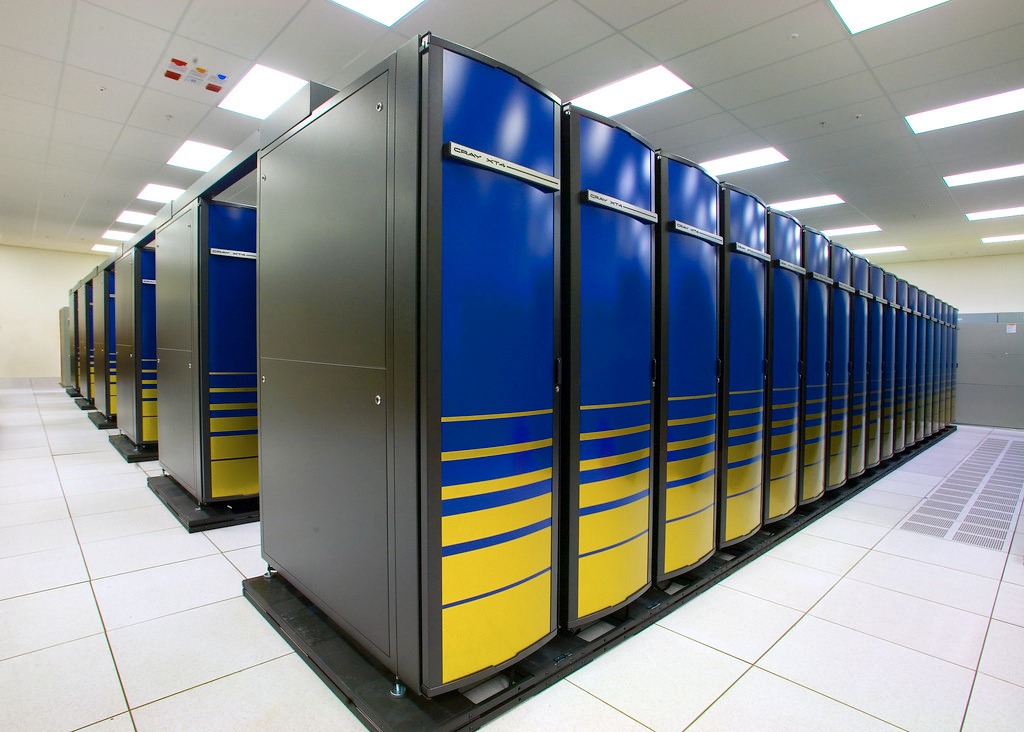
Highlights of China’s Global Supercomputer Leadership
- Position: China’s LineShine supercomputer has secured the No. 1 position in the June 2026 TOP500 rankings, ending the United States’ lead.
- It marked China’s first supercomputing crown since 2017.
- The achievement signals Beijing’s resurgence in advanced computing capabilities.
- Performance: LineShine achieved 2.198 ExaFLOPS on the High-Performance Linpack benchmark, surpassing the US El Capitan system’s 1.809 ExaFLOPS.
- It became the first publicly ranked machine to sustain more than 2 exaflops of double-precision performance.
- Domestic Technology: A major highlight is that LineShine uses 100% Chinese-developed CPUs, memory, networking and cooling technologies.
- This demonstrates China’s progress toward technological self-reliance amid continuing US export restrictions on advanced chips.
- Architecture: Unlike most modern exascale systems that rely heavily on GPUs, LineShine operates using approximately 14 million Arm-based CPU cores.
- This makes it a rare example of a CPU-only exascale supercomputer.
- AI Capability: Although LineShine leads traditional computing benchmarks, experts note it is not optimized for cutting-edge AI workloads and ranks lower in AI-oriented performance tests than GPU-based systems.
- Energy: The system consumes about 42.2 megawatts of electricity, highlighting the enormous energy requirements of exascale computing and future concerns over sustainability.
- Significance: The development strengthens China’s position in the broader technology rivalry with the United States.
- It showcases China’s ability to advance high-performance computing despite external technological constraints.
- China’s success may accelerate investments in supercomputing across the US, European Union, Japan and other technology powers, intensifying global competition in advanced computing infrastructure.
- LineShine demonstrates that multiple technological pathways can achieve exascale performance.
- The next phase of competition will focus on integrating supercomputing, artificial intelligence, quantum computing and semiconductor innovation into national development strategies.
What is a Supercomputer?
- About: A supercomputer is the world’s most powerful class of computer, designed to perform trillions to quintillions of calculations per second.
- It solves highly complex scientific, engineering, defence and AI problems through massive parallel processing using thousands to millions of processors.
- History: The term “supercomputer” emerged in the 1960s during the race for faster scientific computing.
- The field evolved from vacuum-tube machines to transistor systems, vector processors, massively parallel systems and today’s exascale computers.
- The first widely recognized supercomputer was the CDC 6600, developed in 1964 in the United States by computer engineer Seymour Cray.
- Appearance: Modern supercomputers occupy entire halls or buildings.
- They consist of thousands of interconnected cabinets, often weighing hundreds of tonnes, requiring specialized cooling systems, power infrastructure and dedicated data centres.
- Processing Speed: Performance is measured in FLOPS (Floating-Point Operations Per Second).
- Current leaders operate at the Exaflop scale. China’s LineShine delivers 2.198 ExaFLOPS, equivalent to more than 2 quintillion calculations per second.
- Storage and Memory: Supercomputers employ petabytes of memory and storage, high-bandwidth memory, ultra-fast interconnects and distributed architectures enabling simultaneous processing of enormous datasets.
- Working Mechanism: They function through parallel computing, dividing a problem into millions of smaller tasks processed simultaneously by thousands or millions of CPU and GPU cores connected through high-speed networks.
- Performance Measurement: Major benchmarks include TOP500 HPL, HPCG, Green500 and AI-oriented mixed-precision tests. These evaluate speed, real-world efficiency and energy performance.
- Applications: It can be used in multiple roles including weather forecasting, climate modelling, earthquake prediction, aerospace design, nuclear simulations, genomics, drug discovery, cryptography, defence research, quantum simulations and artificial intelligence.
- Global Landscape: The leading countries are the United States, China, Japan, Germany, Italy, Switzerland and the United Kingdom.
- Top Supercomputers: LineShine (China), El Capitan (USA), Frontier (USA), Aurora (USA) and JUPITERBooster (Germany).
- China’s Sunway TaihuLight in Wuxi and Tianhe-2 in Guangzhou, alongside Dell Frontera in Austin, Piz Daint in Lugano, and ABCI in Tokyo, represent major global hubs of high-performance computing.
Supercomputer in India
- Background: India’s supercomputing programme began in the late 1980s after the United States denied export of advanced Cray supercomputers due to strategic restrictions.
- In response, the Government established the Centre for Development of Advanced Computing (C-DAC) in 1988 under the leadership of Vijay Bhatkar to develop indigenous high-performance computing capabilities.
- Agency Involved: Centre for Development of Telematics (C-DOT) developed “CHIPPS” (C-DOT High-Performance Parallel Processing System), targeting telecommunications and complex, high-speed data networking.
- Bhabha Atomic Research Centre (BARC) created the Anupam series of supercomputers, utilized heavily for internal computational fluid dynamics, reactor physics, and molecular simulations.
- Advanced Numerical Research and Analysis Group (ANURAG) developed the PACE series of supercomputers, designed specifically for cryptographic modeling, and general-purpose microprocessor development.
- National Aerospace Laboratories (NAL) initiated the Flosolver series, which pioneered early computational fluid dynamics for aerospace and aeronautical sector.
- India’s First Supercomputer: The PARAM 8000 became India’s first indigenous supercomputer in 1991.
- It achieved approximately 1 GFLOPS performance and demonstrated India’s capability.
- It marked India’s entry into the elite global HPC club.
- Evolution: India steadily advanced through PARAM 8600 (1992), PARAM 9900 (1994), PARAM 10000 (1998), PARAM Padma (2002), PARAM Yuva (2008) and PARAM Yuva II (2013).
- PARAM Padma became India’s first machine in the global TOP500 rankings, while PARAM Yuva II crossed 500 TFLOPS peak performance.
- Private-Sector: Developed by Computational Research Laboratories, EKA entered the global Top-10 supercomputers in 2007.
- It became a landmark achievement for India’s private technology sector and demonstrated world-class HPC capability.
- Weather Supercomputers: Launched in 2018, Pratyush (Pune) and Mihir (Noida) revolutionized weather forecasting.
- Together they delivered about 6.8 PFLOPS, enabling better monsoon prediction, cyclone tracking, climate modelling and disaster management.
- Initiative: Launched jointly by DST and MeitY, the ₹4,500-crore National Supercomputing Mission (NSM) aims to establish over 70 supercomputing facilities.
- It was launched in 2015. It is India’s flagship initiative to build indigenous high-performance computing (HPC) capabilities and create a vast, connected supercomputing grid.
- It links academic and R&D institutions across the country via the high-speed National Knowledge Network (NKN).
- Over 35 supercomputers have been deployed across India, bringing the nation’s cumulative supercomputing capability to roughly 40+ Petaflops (PF).
- The mission provides open research access and has trained over 20,000 individuals in HPC and AI skills to build indigenous technological self-reliance.
- Indigenous Manufacturing: In 2019, PARAM Shivay at IIT-BHU became the first supercomputer assembled under NSM.
- Delivering 837 TFLOPS, it marked India’s transition from importing systems to designing and assembling advanced HPC infrastructure domestically.
- AI Era: India entered AI supercomputing with PARAM Siddhi-AI and later AIRAWAT-PSAI at C-DAC Pune.
- AIRAWAT currently ranks among India’s fastest systems with over 13 PFLOPS peak performance, supporting AI, machine learning and national research initiatives.
- Latest Generation: PARAM Pravega at IISc Bengaluru provides about 3.3 PFLOPS for academic research, while the latest PARAM Rudra systems represent India’s push toward indigenous petascale computing using Indian servers and cooling technologies.
- Global Position: India currently operates multiple TOP500-ranked systems including AIRAWAT, Arka, Arunika, Pratyush and Mihir.
- Roadmap: India’s supercomputing strategy is centered on the NSM and its upcoming NSM 2.0 phase.
- The goal is to expand indigenous computing capacity to about 90–95 petaflops through nationwide deployment of advanced systems using Indian-designed Rudra servers.
- India is targeting a pre-exascale supercomputer by 2027–28 and has prepared a roadmap toward achieving full exascale computing capability by 2030.
- A major policy objective is technological self-reliance, with indigenous content expected to exceed 70% by 2030 and eventual development of Indian CPUs, GPUs, AI accelerators, networking systems and software stacks.
- The mission also aims to establish a nationwide grid of 70+ supercomputing facilities, connected through the National Knowledge Network for research, defence, climate science, AI and strategic applications.
- The long-term vision is to position India among the world’s leading high-performance computing nations, integrating supercomputing with the IndiaAI Mission, semiconductor initiatives, quantum technologies and digital public infrastructure.
FAQs:
1. What is a Supercomputer?
A supercomputer is an ultra-powerful computer capable of performing trillions to quintillions of calculations per second.
2. What achievement has China made in supercomputing?
China’s LineShine became the world’s fastest supercomputer in June 2026 with 2.198 ExaFLOPS performance.
3. Where does India stand in supercomputer rankings?
India has multiple TOP500-ranked systems and over 37 supercomputers under the National Supercomputing Mission.
4. What is the National Supercomputing Mission?
It is a Government of India initiative to build indigenous supercomputers and nationwide high-performance computing infrastructure.
5. In which fields are supercomputers used?
They support weather forecasting, climate modeling, AI, defense research, genomics, aerospace design, and scientific simulations.
6. What is Exascale Computing?
Exascale computing refers to systems capable of executing at least one exaflop, or one quintillion calculations per second.
7. How do supercomputers help AI and scientific research?
They accelerate AI training, data analysis, simulations, drug discovery, climate studies, and complex scientific computations.
8. Which are the world’s fastest supercomputers?
LineShine, El Capitan, Frontier, Aurora, and JUPITER Booster are currently the top-ranked systems.
9. Which are India’s major supercomputers?
AIRAWAT, PARAM Siddhi-AI, PARAM Pravega, Pratyush, Mihir, and PARAM Shivay are notable Indian systems.
10. What is the future of supercomputer technology?
Future systems will integrate exascale computing, AI, quantum technologies, and indigenous semiconductor innovations.
Disclaimer: Information in this article is based on official announcements and public records. Regulations and implementation details may evolve over time.
| Also Read: Terafab AI Chip Manufacturing Project |