




Supreme Court Forms Four Special Benches For Oldest Cases
| General Studies Paper II: Judiciary, Indian Constitution |
Why in News?
Recently, the Supreme Court constituted four special division benches to exclusively hear its oldest pending civil and criminal cases.
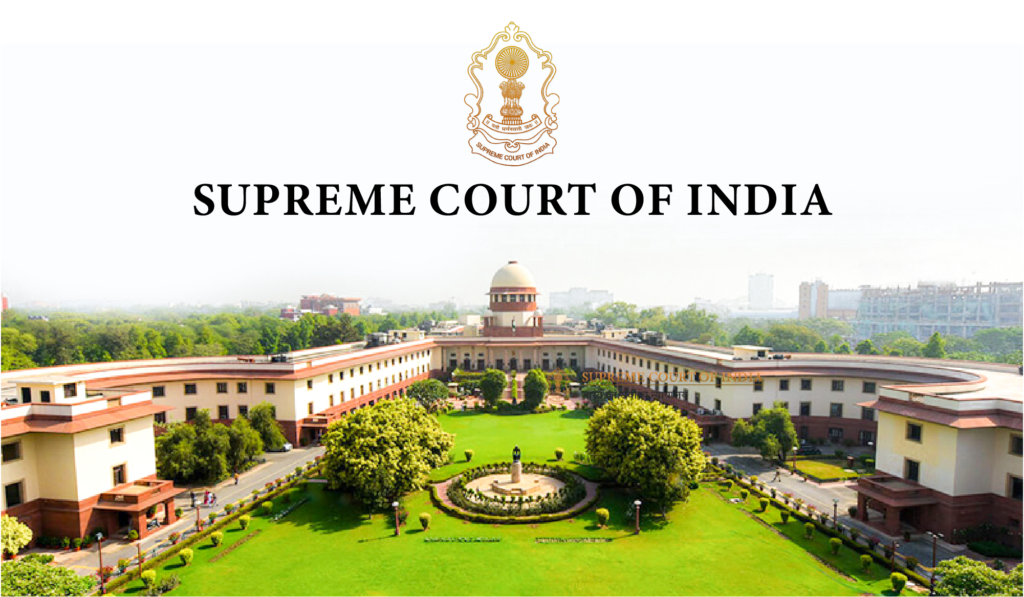
Supreme Court’s Four Special Division Benches
- Special Bench: The Supreme Court constituted four Special Division Benches exclusively to hear the oldest pending civil and criminal cases.
- The initiative was launched under Chief Justice of India (CJI) Surya Kant, who issued a new roster effective 13 July 2026.
- Composition: All four are Division Benches (two judges each).
- Justice P.K. Mishra and Justice S.V.N. Bhatti will head the two benches for civil matters.
- Justice Manoj Misra and Justice Ujjal Bhuyan will head the two benches for criminal matters.
- Mandate: These benches will hear only the oldest identified pending cases, remaining insulated from the regular inflow of fresh litigation.
- Schedule: The benches will function on Tuesdays, Wednesdays and Thursdays, designated as non-miscellaneous days.
- Case Allocation: Around 800 legacy cases have been identified initially, with approximately 200 matters assigned to each bench for systematic disposal.
| Note: A Division Bench is a panel of two judges that hears and decides cases in the Supreme Court and High Courts. CJI acts as the “Master of the Roster,” holding the exclusive administrative authority to constitute these benches and allocate specific judicial work. |
Pendency of Cases in the Supreme Court
- As of 13 July 2026, the Supreme Court of India had 96,045 pending cases, comprising 74,244 civil and 21,801 criminal matters.
- Civil litigation constitutes nearly 77% of the total backlog.
- The pendency pattern shows a clear imbalance, with civil cases outnumbering criminal cases by over 52,000 matters.
- The oldest civil case before the Supreme Court dates back to 1986, remaining unresolved for nearly four decades.
- Such prolonged litigation underscores the challenge of legacy case management.
- The oldest criminal case currently pending was instituted in 1991 and has remained before the apex court for over 30 years.
- The Supreme Court has 24 civil and 2 criminal cases pending for more than 30 years.
- Beyond the oldest matters, 525 civil and 7 criminal cases filed between 1996 and 2005 remain pending, indicating a substantial legacy docket.
- The largest legacy segment comprises 7,993 civil and 1,585 criminal cases pending for 10–20 years, demonstrating medium-term delays.
- In the Supreme Court alone, pendency reached a record 93,000 cases by March 2026, marking a 30% increase over the last four years.
- Although the Supreme Court has recorded higher disposal rates in recent years, fresh filings continue to exceed disposals, causing overall pendency to rise.
Reasons of Case Pendency in Indian Courts
- Acute Shortage of Judges: India’s judiciary operates with a significant judge deficit.
- The Law Commission recommended 50 judges per million population, whereas India has only about 22 judges per million.
- Inadequate judicial strength reduces disposal capacity, allowing fresh filings to outpace case clearance.
- Massive Volume of Litigation: India has over 5 crore pending cases across all court levels, with district and subordinate courts accounting for nearly 90% of the backlog.
- Nearly 50% of pending cases involve government departments.
- Rapid growth in litigation continuously increases pressure on courts and judicial infrastructure.
- Large Number of Judicial Vacancies: Vacant judicial posts remain a major structural constraint.
- Recent assessments indicate thousands of judicial vacancies, with only about 79% of sanctioned strength filled, directly limiting the number of cases heard daily.
- Systemic delays are exacerbated by a 33% vacancy rate in High Courts.
- Inadequate Court Infrastructure: Many courts face shortages of courtrooms, support staff, digital facilities, record rooms and administrative personnel.
- Limited infrastructure restricts simultaneous hearings and slows case disposal despite increasing litigation.
- Frequent Adjournments: Repeated adjournments remain among the biggest procedural causes of delay.
- Counsel unavailability, requests from parties and repeated postponements extend the life cycle of litigation substantially.
- Delay in Investigation: Criminal cases are delayed by absconding accused, missing witnesses, pending forensic reports, unavailable records and incomplete investigations, preventing timely commencement or completion of trials.
Reforms to Reduce India’s Judicial Pendency
- National Mission for Justice Delivery: The National Mission for Justice Delivery and Legal Reforms, launched in 2011.
- It provides the umbrella framework for reducing judicial delays through policy reforms, infrastructure development, process simplification and technology adoption.
- It coordinates reforms between the Union Government, High Courts and State Governments to improve case disposal.
- e-Courts Mission Project: The flagship e-Courts Mission Mode Project has transformed court administration through digitisation.
- Phase III (2023–27) was approved with an ₹7,210 crore outlay to establish paperless courts, digitise legacy records, enable intelligent case scheduling and create a unified digital judicial platform.
- National Judicial Data Grid (NJDG): The NJDG provides real-time, daily updated data on case institution, disposal and pendency across courts.
- It supports year-wise, category-wise, state-wise and delay-reason analysis, enabling evidence-based judicial planning and scientific docket management.
- Digital Justice Ecosystem: Courts have expanded e-Filing, e-Payments, Virtual Hearings and the Integrated Criminal Justice System (ICJS).
- By 31 December 2025, over 1.03 crore e-filed cases, 3.93 crore virtual hearings, and 94.55 lakh online challans had been processed nationwide.
- Dedicated Virtual Courts dispose of traffic and petty offences without requiring physical appearance.
- Twenty-nine Virtual Courts have collected over ₹973 crore through digital challan payments.
- Judicial Infrastructure: The Union Government continues financial assistance for new court complexes, additional courtrooms, residential units, digital infrastructure, video conferencing facilities and support staff, enhancing courts’ disposal capacity.
- ₹12,000 crore as of late 2025 investment expanded court halls from 15,818 in 2014 to over 22,372 by 2025.
- This facilitated essential facilities like digital computer rooms and solar power in 1,471 court complexes.
- Fast Track Special Courts: Fast Track Special Courts (FTSCs) have been established for rape and POCSO Act cases to ensure time-bound trials and reduce pendency involving women and children.
- As of 31 December 2025, 774 Fast Track Special Courts, including 398 exclusive e-POCSO Courts.
- Commercial Court Reforms: Commercial courts introduced electronic case allocation, online filing, electronic summons, pre-trial conferences and structured case-management hearings.
- These reforms reduced average commercial dispute resolution time from 1,445 days to nearly 626–744 days in major cities.
- Alternative Dispute Resolution: Greater emphasis on mediation, Lok Adalats and arbitration diverts suitable disputes away from regular courts.
- The Mediation Act, 2023 further institutionalises mediation as an efficient mechanism for reducing litigation.
- In single-day sessions, Lok Adalats have settled nearly 12.76 lakh disputes.
Future Measures to Reduce Judicial Pendency in India
- Create an All India Judicial Service (AIJS): Establishing the All India Judicial Service (AIJS) can ensure merit-based, timely and uniform recruitment of judges across States.
- Establish a National Judicial Infrastructure Authority: A dedicated National Judicial Infrastructure Authority (NJIA) should standardise planning, funding and maintenance of court infrastructure.
- Mandatory Pre-Litigation Mediation: Expanding mandatory pre-litigation mediation beyond commercial disputes can prevent thousands of civil disputes from entering courts.
- The Parliamentary Standing Committee has recommended wider adoption of mediation to reduce avoidable litigation.
- Strengthen Gram Nyayalayas: Many Gram Nyayalayas function only one or two days a week, limiting their effectiveness. Ensuring full-time operation, adequate staffing and infrastructure would provide faster rural justice.
- Adopt AI-Assisted Case Management: Courts should deploy Artificial Intelligence for case classification, scheduling, document summarisation, legal research and similar-case identification.
- Introduce Scientific Case Prioritisation: Courts should implement algorithm-assisted docket prioritisation, categorising matters by urgency, public importance, age and complexity.
- Develop Multi-Door Courthouses: The proposed “multi-door courthouse” model integrates mediation, arbitration, conciliation and negotiated settlements alongside conventional trials. This diversified justice-delivery system can resolve suitable disputes faster.
FAQs:
1. Why has the Supreme Court constituted four special benches?
To expedite disposal of the oldest pending civil and criminal cases.
2. What is the purpose of the special benches?
To reduce judicial backlog and strengthen timely justice delivery.
3. Which cases will these special benches hear?
The oldest pending civil and criminal cases identified for priority disposal.
4. Who approved the formation of the special benches?
Chief Justice of India Surya Kant approved the special benches.
Disclaimer: Information in this article is based on official announcements and public records. Regulations and implementation details may evolve over time.