




Aastha Van Sanrakshan Yojana to Save 15,000 Sacred Groves
| General Studies Paper II: Government Policies & Interventions, Biodiversity Conservation |
Why in News?
Recently, the Union Government approved the Aastha Van Sanrakshan Yojana (AVSY) to conserve and restore 15,000 sacred groves.
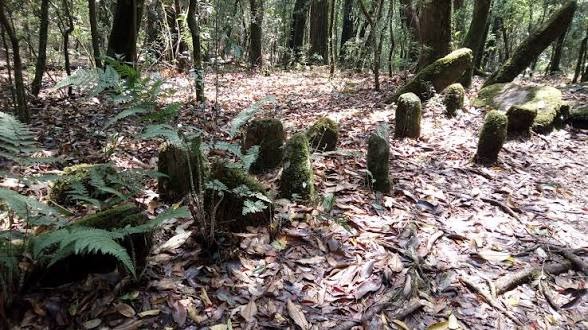
What is Aastha Van Sanrakshan Yojana (AVSY)?
- About: It is a Central conservation initiative approved by the National Compensatory Afforestation Fund Management and Planning Authority (National CAMPA) Governing Body to protect and restore sacred groves (Aastha Vans) across India.
- Sacred groves are community-protected forest patches preserved due to religious, spiritual and cultural beliefs.
- Many are safeguarded by tribal and rural communities, preventing exploitation for generations.
- Objective: The scheme aims to restore degraded sacred groves, conserve biodiversity, and improve ecosystem services such as groundwater recharge, and climate resilience.
- Launched By: The scheme was approved by the 7th Governing Body of the National CAMPA during its meeting in Coimbatore, chaired by Union Environment Minister Bhupender Yadav.
- Ministry: The programme is implemented under the Ministry of Environment, Forest and Climate Change (MoEFCC).
- National CAMPA will be the statutory authority responsible for compensatory afforestation and ecological restoration.
- Fund: The scheme has an initial outlay of ₹3,000 crore.
- Financial support will come from the National CAMPA Fund, established under the Compensatory Afforestation Fund Act, 2016.
- Target: The programme will run from 2026–27 to 2030–31.
- It targets the conservation and restoration of nearly 15,000 sacred groves distributed across different States and Union Territories of India.
- Feature: The scheme prioritises ecological restoration of degraded sacred forests through native vegetation regeneration, habitat improvement, and protection from encroachment to revive natural ecosystems.
- Local communities and tribal groups remain the principal custodians. Their traditional conservation practices are integrated with scientific forest management for sustainable protection.
- Significance: The scheme institutionalises faith-based conservation, strengthens India’s biodiversity strategy.
- It is India’s first dedicated national programme for conserving sacred groves (Aastha Vans).
- It supports ecosystem restoration, and complements compensatory afforestation.
- It contributes to SDG 13 (Climate Action) and SDG 15 (Life on Land) while preserving India’s natural and cultural heritage.
What are Sacred Groves?
- About: Sacred Groves are patches of natural forest traditionally protected by local communities because they are dedicated to deities, ancestral spirits, or religious beliefs.
- Tree felling, hunting, and resource extraction are generally prohibited, allowing these forests to remain ecologically intact.
- Most groves are associated with temples, shrines, sacred springs, ponds, or burial grounds.
- Ecological Role: These groves act as biodiversity hotspots.
- They conserve endemic species, medicinal plants, pollinators, wildlife, and valuable gene pools.
- They also improve groundwater recharge, soil conservation, carbon storage, and local climate regulation.
- Preservation is important for achieving India’s net-zero target by 2070.
- Protected By: The Wild Life (Protection) Act, 1972 allows States to notify eligible community lands as Community Reserves.
- Protection is primarily provided by tribal communities, village councils, temple committees, indigenous institutions, and local customs.
- Distribution Across India: Sacred groves occur across almost all States with different local names:
- Orans (Rajasthan), Devrai (Maharashtra), Devarakadu (Karnataka), Kavu/Sarpakavu (Kerala), Sarna/Jaherthan (Jharkhand), Devgudi (Chhattisgarh), Ka Law Kyntang (Meghalaya), Umang Lai (Manipur), Kovilkadu (Tamil Nadu), Devban (Himachal Pradesh), Jahera (Odisha), and Pavithra Vana (Andhra Pradesh).
- Total No: India has over 13,000 documented sacred groves.
- Documented groves occupy about 33,000 hectares (0.01% of India’s land area).
- Maharashtra leads with 2,820 documented groves, followed closely by Kerala (2,000), West Bengal (670), Rajasthan (560), Tamil Nadu (503) and Jharkhand (251).
- Judicial Interpretation: On December 18, 2024, the Supreme Court directed the Centre to formulate a nationwide policy to protect sacred groves.
- In Rajasthan specifically, the Court ordered the mapping of nearly 25,000 orans and mandated their legal recognition as forests under the Forest Conservation Act.
- The Rajasthan Forest Department is tasked with both satellite and on-ground mapping to officially demarcate these.
- The Court recommended adopting the eco-centric Piplantri village model from Rajasthan to demonstrate community-led ecological conservation.
- The Ministry of Environment, Forest and Climate Change (MoEFCC) was instructed to create a nationwide survey and comprehensive management policy.
- Initiatives: Government initiatives to protect these groves: National CAMPA support, and the Development of Wildlife Habitat Scheme.
- State-led initiatives: State-level mapping programmes, State Biodiversity Boards and Community Reserve Management Committees.
- It aligns with the “Other Effective Area-Based Conservation Measures” (OECM) approach.
- Challenges: Major threats include encroachment, urbanisation, mining, infrastructure projects, invasive species, weakening traditional beliefs, and poor documentation. Many groves also lack formal legal recognition.
- Other challenges include fragmentation, inadequate funding, land ownership disputes, climate change, and absence of a uniform national inventory for scientific monitoring.
- Way Forward: Government should prepare a national sacred grove policy, complete GIS mapping, grant legal protection where appropriate.
- The government should strengthen community stewardship, and integrate traditional knowledge with scientific management.
- Must ensure community rights under the Forest Rights Act 2006 and provide incentives.
- The government should align its conservation with existing schemes like CAMPA & Green India Mission.
FAQs:
1. What is the ₹3,000-crore Sacred Groves Conservation Scheme?
A National CAMPA-funded programme to restore and conserve 15,000 sacred groves across India.
2. What are sacred groves in India?
Community-protected forest patches preserved through religious, cultural, and traditional beliefs.
3. Why is the government protecting 15,000 sacred groves?
To conserve biodiversity, restore ecosystems, and preserve India’s cultural and ecological heritage.
4. Which ministry will implement the conservation scheme?
Ministry of Environment, Forest and Climate Change through National CAMPA.
5. How will the scheme benefit biodiversity?
It protects native species, wildlife habitats, medicinal plants, and genetic diversity.
6. What is the ecological importance of sacred groves?
They support carbon storage, groundwater recharge, soil conservation, and climate resilience.
7. Will local communities participate in the conservation effort?
Yes. Local and tribal communities will remain key custodians and conservation partners.
Disclaimer: Information in this article is based on official announcements and public records. Regulations and implementation details may evolve over time.