




Gujrati Unjha Cumin And Fennel Receive GI Tags
| General Studies Paper II: Intellectual Property Rights (IPRs) |
Why in News?
Recently, Gujarat’s Unjha Cumin (Jeera) and Unjha Fennel (Variyali) received Geographical Indication (GI) tags under Class 30 (Spices).
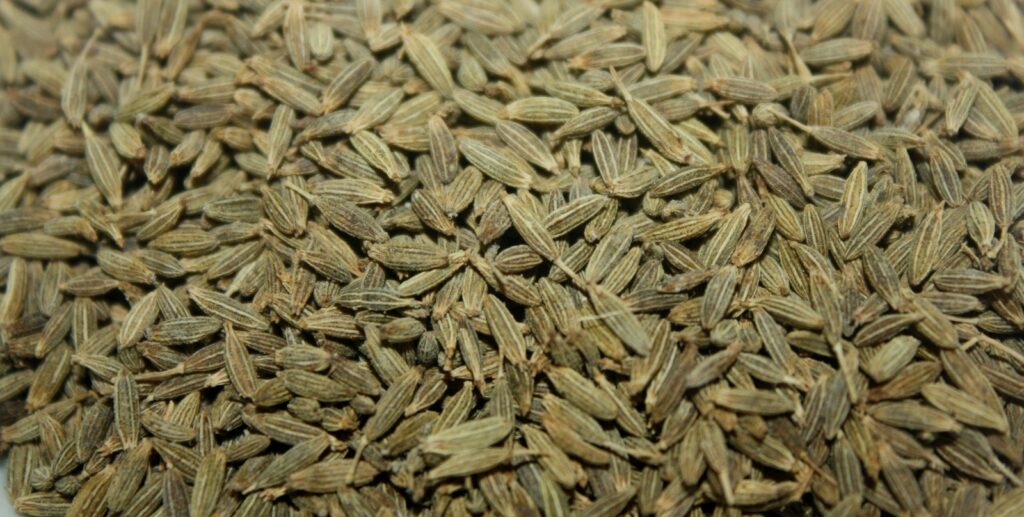
Highlights of GI Tagged Unjha Cumin and Unjha Fennel
- Unjha Cumin (Jeera):
- Origin: Unjha Cumin is cultivated in North Gujarat, particularly around Unjha (Mehsana district).
- Unique Features: Unjha Cumin is known for its highly concentrated volatile oils, which impart a remarkably strong, distinct, and long-lasting aroma.
- The cumin seeds produced in this geographical area are elongated and plump, with a distinct curvature and uniform straw-yellow to light brown coloration.
- Cultivation thrives during the winter (Rabi) season, requiring cool, dry weather and well-drained sandy to loamy soils.
- Significance: Unjha hosts India’s largest spice trading hub (APMC Unjha), where cumin forms a major component of agricultural trade.
- It supports thousands of farmers, traders, processors, exporters, and allied industries.
- GI status enhances global branding, export competitiveness, farmer remuneration, and value addition.
- Gujarat produces a massive share of India’s cumin, with a significant portion funneled through Unjha for export to 70 to 80 countries worldwide.
- Experts estimate GI-certified products may obtain 20–30% higher market prices, supporting the ‘Local to Global’ initiative.
- Unjha Fennel (Variyali or Saunf):
- Origin: Unjha Fennel originates from the North Gujarat spice belt, where generations of cultivation have established a unique regional identity.
- Unique Features: Unjha Fennel is renowned for its naturally high anethole content, which gives the seed an exceptionally sweet taste and cooling after-flavor.
- Authentic Unjha Fennel is visibly characterized by its vibrant, bright green color and plump, elongated seeds.
- They are long, heavy, and very firm. The seeds possess uniform sizing and a robust structure that resists shattering during bulk transport.
- Fennel cultivation is a labor-intensive process that demands meticulous care. It requires a moderate climate without extreme frosts, along with well-drained, nutrient-rich soil.
- Significance: Fennel cultivation substantially contributes to the regional rural economy, supporting processing, grading, packaging, exports, employment generation, and value-chain development.
- India exports an average of 15,000 to 20,000 metric tonnes of fennel annually, with Unjha acting as the primary hub.
- GI recognition strengthens export credibility, premium branding, rural livelihoods, intellectual property protection, and international market access.
- The tag supports the government’s One District One Product scheme. It encourages farmers to adopt sustainable farming practices.
What is a Geographical Indication (GI) Tag?
- About: A Geographical Indication (GI) Tag is an Intellectual Property Right (IPR) that identifies a product as originating from a specific geographical region, where its quality, reputation, or distinctive characteristics are essentially linked to that place.
- Legal Framework: GI protection is provided under the Geographical Indications of Goods (Registration and Protection) Act, 1999 (Act No. 48 of 1999), which came into force on 15 September 2003.
- The GI system is recognised globally under the WTO’s Agreement on Trade-Related Aspects of Intellectual Property Rights (TRIPS).
- Registration Authority: GI applications are examined and registered by the Geographical Indications Registry, Chennai.
- It functions under the Office of the Controller General of Patents, Designs and Trade Marks (CGPDTM), DPIIT, Ministry of Commerce and Industry.
- Eligible Products: GI registration covers agricultural products, natural goods, manufactured goods, handicrafts, textiles, food products, and industrial goods.
- A product qualifies for GI registration only when its quality, reputation, or unique characteristics arise primarily from its geographical environment, including natural factors and traditional human skills.
- Rights Conferred: GI registration grants exclusive legal rights to authorised producers to use the registered name and enables action against unauthorised use, imitation, or misleading commercial practices.
- Validity: A registered Geographical Indication (GI) is initially valid for 10 years.
- It can be renewed indefinitely for successive 10-year periods to maintain legal protection.
- Importance: GI tags promote premium pricing, export competitiveness, rural employment, value addition, branding, tourism, and market differentiation, while improving income opportunities.
- Important Products: India currently safeguards over 650 unique, regionally distinct products with GI tags.
- Uttar Pradesh currently holds the highest number of GI tags, having crossed the 75-product milestone.
- Gujarat’s other GI Tagged agricultural products: Gir Kesar mango (2011), Bhalia wheat (2011), Kachchhi Kharek (2023), Amalsad Chikoo (2025).
- Famous GI Tagged agricultural products:
- Darjeeling Tea (West Bengal): Famous globally as the “Champagne of Teas,” significant as India’s very first GI-tagged product (2004).
- Kashmir Saffron (Jammu & Kashmir): One of the most expensive spices in the world, valued for its deep color and aroma.
- Alphonso Mango (Maharashtra): The “King of Mangoes,” crucial for India’s agricultural export economy.
- Basmati Rice (Indo-Gangetic Plains): Known for its unique grain length and aroma..
- Kala Namak Rice (Uttar Pradesh): Known as “Buddha Rice,” historically important and rich in micronutrients.
- Chak-Hao (Manipur): A highly nutritious black rice variety rich in anthocyanin.
- Bhut Jolokia (Assam): Listed as one of the world’s hottest chillies, highlighting the biodiversity of the Northeast.
- Erode Turmeric (Tamil Nadu): A leading turmeric variety monitored for price and agricultural trade.
- Guntur Sannam Chilli (Andhra Pradesh): A major chilli variety driving agricultural exports.
- Nilgiri Tea (Tamil Nadu): Known for its dark color and distinct flavor, grown in the Western Ghats.
FAQs:
1. What is the GI Tag granted to Unjha Cumin and Fennel?
They received Geographical Indication (GI) status protecting their unique regional identity.
2. Why are Unjha Cumin and Fennel famous?
They are renowned for superior aroma, quality, purity, and strong export demand.
3. What is a Geographical Indication (GI) Tag?
An Intellectual Property Right protecting products linked to specific geographical origins.
4. How does a GI Tag benefit farmers?
It increases market value, prevents imitation, and improves farmers’ income.
5. Which authority grants GI Tags in India?
The Geographical Indications Registry, Chennai, under DPIIT, grants GI registrations.
Disclaimer: Information in this article is based on official announcements and public records. Regulations and implementation details may evolve over time.