



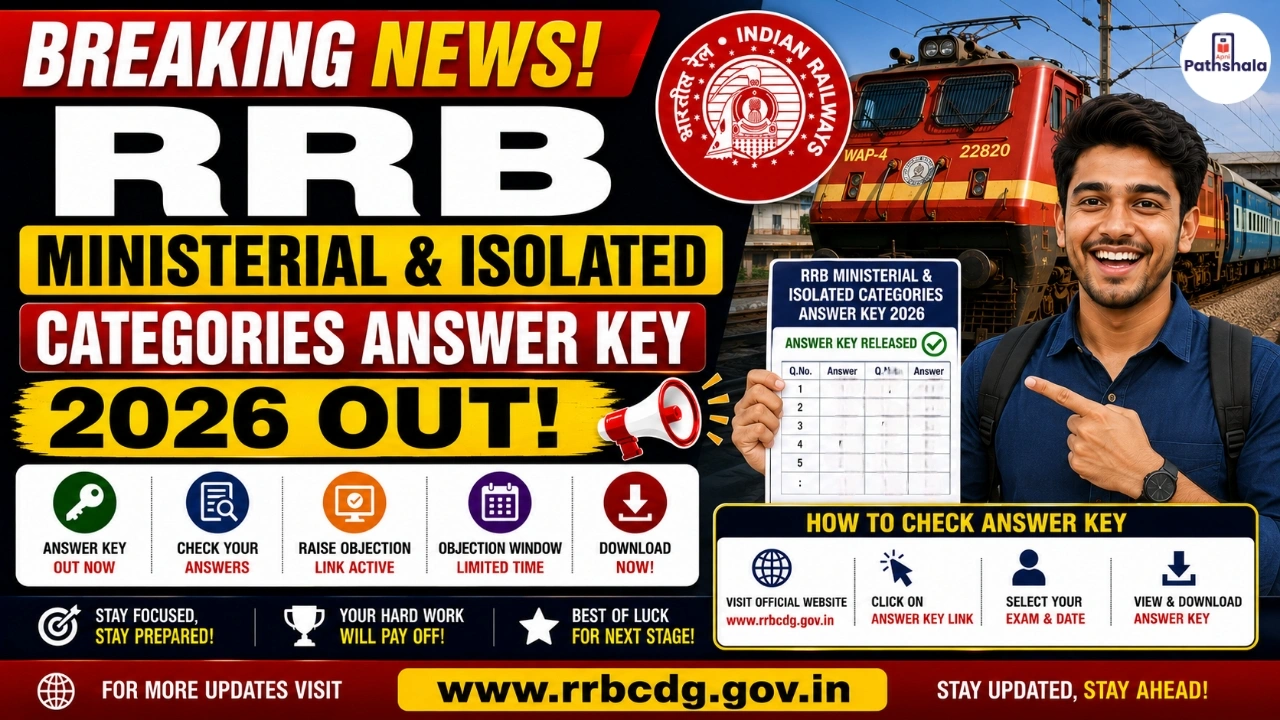
RRB Ministerial Answer Key 2026 Out
रेलवे भर्ती बोर्ड (RRB) द्वारा RRB Ministerial Answer Key आज 31 जुलाई 2026 को आधिकारिक तौर पर जारी कर दी गई है। परीक्षा में शामिल होने वाले सभी उम्मीदवार अब आधिकारिक वेबसाइट rrb.indianrailways.gov.in पर जाकर अपनी उत्तर कुंजी और रिस्पॉन्स शीट डाउनलोड कर सकते हैं।
RRB Ministerial Answer Key 2026 Overview
रेलवे भर्ती बोर्ड (RRBs) द्वारा मिनिस्टीरियल और आइसोलेटेड कैटेगरी के कुल 311 पदों को भरने के लिए विज्ञापन संख्या CEN 08/2025 के तहत यह भर्ती आयोजित की जा रही है। यह परीक्षा 14 और 15 जुलाई 2026 को आयोजित कंप्यूटर आधारित टेस्ट (CBT) के रूप में देश भर में आयोजित कराई गई। परीक्षा के सफल और निष्पक्ष संचालन के बाद, आज रेलवे ने 31 जुलाई 2026 को इसकी प्रोविजनल आंसर की जारी कर दी है। उम्मीदवार अपने क्रेडेंशियल्स (रजिस्ट्रेशन नंबर और जन्मतिथि) का उपयोग करके अपनी रिस्पॉन्स शीट की जांच कर सकते हैं। यदि किसी भी छात्र को बोर्ड द्वारा जारी उत्तरों पर किसी भी प्रकार की आपत्ति है, तो वे निर्धारित समय सीमा के भीतर ऑनलाइन माध्यम से ऑब्जेक्शन भी दर्ज करा सकते हैं।
| भर्ती बोर्ड का नाम | रेलवे भर्ती बोर्ड (RRB) |
| विज्ञापन संख्या (Advt No.) | CEN 08/2025 |
| पद का नाम | मिनिस्टीरियल एंड आइसोलेटेड कैटेगरी (MI) |
| कुल रिक्तियां (Vacancies) | 311 |
| सीबीटी परीक्षा तिथि | 14 और 15 जुलाई 2026 |
| उत्तर कुंजी जारी होने की तिथि | 31 जुलाई 2026 |
| आपत्ति दर्ज करने की अंतिम तिथि | 07 अगस्त 2026 (रात 11:55 बजे तक) |
| आधिकारिक वेबसाइट | rrb.indianrailways.gov.in |
RRB Isolated Categories Answer Key 2026 Download Direct Link
सभी उम्मीदवार रेलवे की केंद्रीय वेबसाइट या अपने संबंधित क्षेत्रीय बोर्ड की वेबसाइट पर जाकर RRB MI Answer Key 2026 Link के माध्यम से लॉगिन करके इसे डाउनलोड कर सकते हैं। आपकी सुविधा के लिए उत्तर कुंजी और रिस्पॉन्स शीट डाउनलोड करने का एक्टिव लिंक नीचे दिया गया है:
How to Download RRB MI Categories Answer Key 2026?
अपनी रिस्पॉन्स शीट और प्रोविजनल आंसर की बिना किसी परेशानी के डाउनलोड करने के लिए नीचे दिए गए स्टेप्स का पालन करें:
| चरण 1: सबसे पहले रेलवे भर्ती बोर्ड की केंद्रीयकृत वेबसाइट rrbapply.gov.in या अपने संबंधित क्षेत्रीय RRB पोर्टल पर जाएं। |
| चरण 2: होमपेज पर दिख रहे “CEN 08/2025: View Question Paper, Responses and Keys & Raising of Objections” वाले लिंक पर क्लिक करें। |
| चरण 3: लिंक पर क्लिक करते ही एक नया लॉगिन पेज स्क्रीन पर खुल जाएगा। |
| चरण 4: यहाँ अपना पंजीकरण संख्या (Registration Number) और जन्मतिथि (Password/DOB) सावधानीपूर्वक दर्ज करें। |
| चरण 5: क्रेडेंशियल्स भरने के बाद स्क्रीन पर नीचे दिए गए ‘Login’ बटन पर क्लिक करें। |
| चरण 6: अब डैशबोर्ड पर ‘Candidate Response’ टैब को चुनें, जिससे आपकी आंसर की पीडीएफ फॉर्मैट में दिखाई देगी। |
| चरण 7: इसे भविष्य के संदर्भ और स्कोर कैलकुलेशन के लिए डाउनलोड करें और इसका प्रिंटआउट निकाल लें। |
RRB MI Answer Key 2026: Raise Objection Window Guidelines
यदि किसी भी उम्मीदवार को आधिकारिक उत्तर कुंजी में दिए गए किसी उत्तर पर आपत्ति है, तो वे ऑनलाइन ऑब्जेक्शन विंडो के माध्यम से चुनौती दे सकते हैं। आपत्ति दर्ज करने की यह खिड़की 31 जुलाई से 7 अगस्त 2026 तक खुली रहेगी। उत्तर कुंजी को ऑनलाइन चुनौती देने और अपनी आपत्ति दर्ज कराने की पूरी प्रक्रिया नीचे दी गई है:
| पोर्टल लॉगिन: उम्मीदवार सबसे पहले अपने लॉगिन आईडी और पासवर्ड का उपयोग करके आधिकारिक आपत्ति ट्रैकर (Objection Tracker) पोर्टल पर लॉगिन करें। |
| प्रश्न का चयन: डैशबोर्ड में जाकर ‘Raise Objection’ के विकल्प पर क्लिक करें और उस विशिष्ट प्रश्न संख्या को चुनें जिस पर आपको आपत्ति है। |
| साक्ष्य अपलोड करना: उम्मीदवार को अपनी आपत्ति के समर्थन में एक वैध और प्रामाणिक शैक्षणिक दस्तावेज़ या संदर्भ साक्ष्य (Proof) स्कैन करके अपलोड करना होगा। |
| शुल्क भुगतान: प्रत्येक प्रश्न को चुनौती देने के लिए उम्मीदवारों को ₹50 प्रति प्रश्न का निर्धारित शुल्क देना होगा, जिसका भुगतान ऑनलाइन नेट बैंकिंग, यूपीआई या कार्ड से किया जा सकता है। |
| रिफंड नीति: यदि उम्मीदवार द्वारा उठाई गई आपत्ति रेलवे बोर्ड द्वारा सही और वैध पाई जाती है, तो यह ₹50 का शुल्क उनके मूल बैंक खाते में वापस (Refund) कर दिया जाएगा। |
| अंतिम सबमिशन: सभी विवरण भरने और शुल्क जमा करने के बाद ‘Submit’ बटन पर क्लिक करें और पुष्टिकरण रसीद को सुरक्षित रख लें। |
What Next After RRB Isolated Categories Answer Key 2026 Release?
आपत्ति विंडो बंद होने के बाद, बोर्ड सभी आपत्तियों की समीक्षा करेगा और इसके बाद Final Answer Key जारी की जाएगी, जिसके आधार पर सितंबर 2026 के आस पास अंतिम परिणाम और मेरिट लिस्ट घोषित होगी। इस कंप्यूटर आधारित टेस्ट (CBT) को पास करने के लिए सामान्य (UR) और ईडब्ल्यूएस कैटेगरी के लिए न्यूनतम योग्यता अंक 40%, ओबीसी व एससी के लिए 30% और एसटी के लिए 25% निर्धारित हैं। जो उम्मीदवार लिखित परीक्षा के कट-ऑफ को सफलतापूर्वक पार करेंगे, उन्हें पद की आवश्यकता के अनुसार अगले चरण यानी स्किल टेस्ट (Skill Test / Stenography / Translation Test), दस्तावेज़ सत्यापन (DV) और मेडिकल परीक्षा के लिए शॉर्टलिस्ट किया जाएगा।
FAQs:
-
RRB Ministerial Answer Key 2026 कैसे डाउनलोड करें?
क्षेत्रीय RRB वेबसाइट पर जाएं, उत्तर कुंजी लिंक पर क्लिक करें और पंजीकरण संख्या व जन्मतिथि से लॉगिन करें।
-
उत्तर कुंजी पर आपत्ति कैसे दर्ज करें?
लॉगिन कर ‘Raise Objection’ चुनें, प्रश्न व साक्ष्य अपलोड करें और निर्धारित शुल्क का ऑनलाइन भुगतान कर सबमिट करें।
-
आपत्ति दर्ज करने की अंतिम तिथि क्या है?
उम्मीदवार 7 अगस्त 2026 को रात 11:55 बजे तक ऑनलाइन आपत्ति दर्ज करा सकते हैं।
-
क्या उत्तर कुंजी के साथ रिस्पॉन्स शीट भी जारी की गई है?
हाँ, उत्तर कुंजी के साथ उम्मीदवारों की व्यक्तिगत रिस्पॉन्स शीट (Response Sheet) भी जारी की गई है।
-
आपत्ति शुल्क कितना है?
प्रत्येक चुनौती दिए गए प्रश्न के लिए उम्मीदवारों को ₹50 प्रति प्रश्न शुल्क देना होगा।