


Ladakh Lilium Flowers: Ladakh Flags Off First Lilium Consignment for National Markets
| General Studies Paper III: Growth & Development, Government Policies |
Why in News?
Recently, Ladakh dispatched its first air-consignment of 15,000 A-grade Lilium stems from the Choglamsar flower field in Leh, marking a major milestone for high-altitude commercial floriculture in the region.
Lilium Cultivation in Ladakh
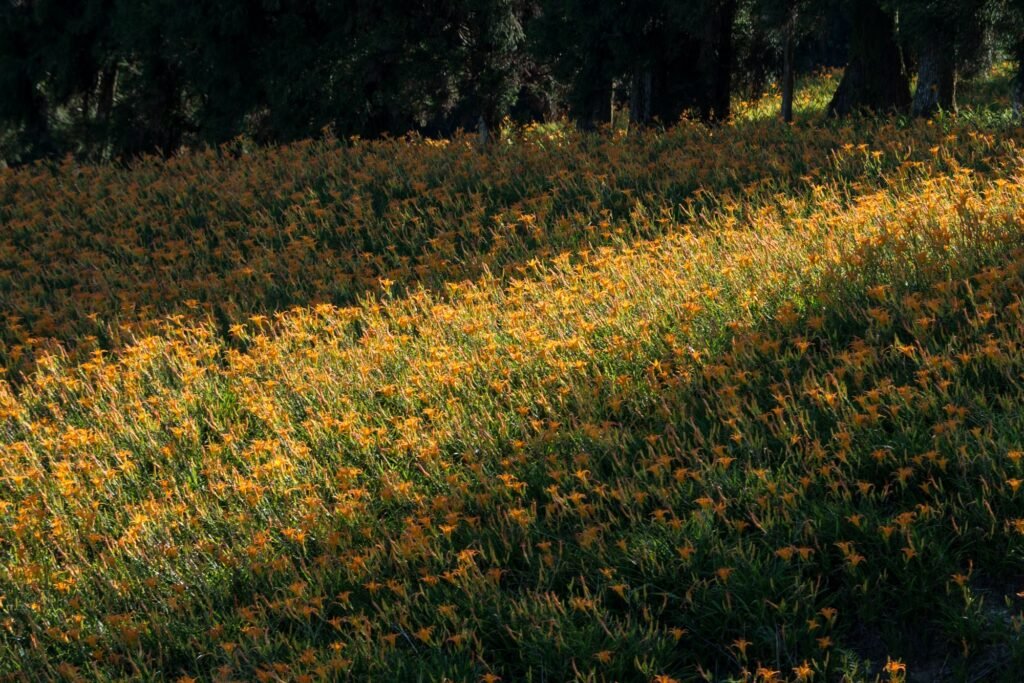
- Twin Flower Fields: On 17 September 2026, Ladakh Lieutenant Governor Vinai Kumar Saxena inaugurated twin flower fields at Choglamsar and Stakna in Leh.
- These are described as the world’s highest-altitude twin flower fields, situated at around 10,600 feet (about 3,230–3,265 metres).
- Together, the fields cover approximately 40 acres and contain more than 25 lakh high-value flowers, comprising around 24 lakh Lilium and 1 lakh Gladiolus.
- Commercial Field: The Choglamsar Flower Field, located on the banks of the Indus (Sindhu) River, covers about 93,000 square metres.
- Its foundation stone was laid on 22 June 2026, and more than 50,000 premium Lilium bulbs were planted by mid-July.
- The project received scientific and technical support from CSIR–Institute of Himalayan Bioresource Technology (CSIR-IHBT), Palampur.
- Choglamsar was developed in approximately two months. Plantation began on 16 July, while the first blooms appeared during the first week of September.
- At Stakna, nearly 14 lakh Lilium were planted during August, with flowering expected towards late October.
- First National Consignment: On 29 September 2026, Ladakh flagged off its first commercial air consignment of 15,000 A-grade Lilium stems from Kushok Bakula Rimpochee Airport, Leh.
- The flowers were cultivated at Choglamsar and were sent towards major markets in Delhi, Mumbai and Chandigarh.
- The consignment contained red, pink, white, yellow and orange flowers.
- The administration defines A-grade Lilium as stems carrying four to five buds.
- Such stems command premium prices. The flowers have a 5–7 day shelf life.
- Participation: The project has a strong livelihood and institutional component. Initially, 15 local women were engaged in cutting, sorting and packaging, receiving ₹900 per day.
- In the first phase, the Agriculture Department develops and manages the fields and subsequently transfers them to selected Self-Help Groups (SHGs) and cooperative societies, with marketing support.
What is Lilium?
- Lilium is a bulbous flowering plant belonging to the family Liliaceae. It is commercially important as a premium cut flower because of its attractive colours, large flowers and ornamental value.
- Different commercial groups include Asiatic hybrids, Oriental hybrids and Longiflorum hybrids.
- Lilium is generally propagated commercially through bulbs, rather than ordinary seed production for cut-flower farming.
- Lilium is particularly suitable for the cut-flower industry, where stems are sold individually or in bunches.
- Commercial quality depends on factors such as stem length, number of buds, flower size, colour, uniformity and post-harvest life.
- Lilium generally performs well under cool growing conditions. It needs adequate moisture but is sensitive to waterlogging.
- The Ladakh project benefits from the region’s naturally cool climate, which can reduce some requirements for artificial cooling.
- Ladakh combines high altitude, cool temperatures, strong solar radiation and low atmospheric humidity.
- According to the National Horticulture Board’s Lilium project material, Lilium requires well-structured and well-drained soil.
- Recommended soil pH is approximately 6.0–7.0 for Asiatic and Longiflorum hybrids, while Oriental hybrids prefer about 5.5–6.5.
- Ideal daytime temperatures range from 18°C to 25°C, and nighttime temperatures range from 10°C to 15°C.
- Best grown under Protected Cultivation Technology of Lilium in greenhouses or polyhouses using 40% to 50% UV-protected shade nets to avoid direct, harsh sunlight.
- Lilium is generally planted from quality bulbs. NHB guidance indicates that planting depth should be approximately three times the bulb diameter, with about 6 inches mentioned as a general initial depth in its project material.
Significance of Lilium Cultivation in Ladakh
- Ladakh faces structural constraints including limited cultivable land, harsh winters, low precipitation and a short agricultural season.
- Floriculture provides an alternative model based on high-value output from relatively limited land.
- Lilium is commercially attractive because it belongs to the premium cut-flower segment.
- The Ladakh Administration reported wholesale market prices of around ₹60–70 per stick, while retail prices can be substantially higher.
- The dispatch of 15,000 A-grade stems represents the transition from experimental cultivation to an actual commercial supply chain.
- This is economically significant because floriculture creates employment beyond the farmer, including grading, packaging, transportation, and marketing.
- The project incorporates SHGs and cooperative societies.
- The greatest economic opportunity lies in developing an integrated farm-to-market value chain.
- Floriculture can generate businesses in nursery development and retailing.
- It is intended to provide farmers and youth exposure to scientific cultivation, modern farming practices and post-harvest management.
- The Choglamsar facility is also intended as a recreational and educational space. This creates scope for combining agriculture and tourism.
- The administration has identified both national and international markets as longer-term opportunities.
- The administration is planning to expand cultivation to 200 acres across Kargil, Drass, Sham, Changthang, and Zanskar.
Floriculture Projects in India
- Pushp Kranti Yojana (Himachal Pradesh): Implemented by the Himachal Pradesh Department of Horticulture, the project drives mountain agricultural transformation through dedicated budget allocations.
- It targets cold and dry temperate zones like Lahaul-Spiti and Kinnaur, utilizing greenhouse structures to exploit the region’s intense solar radiation.
- This layout promotes year-round production of high-value cut flowers like Carnations and Lilium.
- High-Altitude Bulbs & Seeds Infrastructure (Uttarakhand): Operating near Mana at altitudes reaching 3,200 meters, Uttarakhand’s specialized horticulture fields focus on temperate bulb and seed multiplication.
- Backed by the Mission for Integrated Development of Horticulture (MIDH), the state establishes model centers that reduce India’s import reliance on European planting material by domesticating premium Tulip and Gladiolus strains.
- Eco-Tourism & Commercial Hub Model (Leh Corridor): This project scales up production by linking remote high-altitude clusters directly to metropolitan markets through air consignments.
- By leveraging the scenic “Valley of Flowers” model, it integrates floriculture with ecological tourism.
- This dual approach builds community resilience by combining farm gate tourism with highly coordinated commercial value chains.
- CSIR-IHBT Floriculture Mission (Himalayan Belt): A broad technology-transfer framework managed by the CSIR-IHBT, this mission spans from the Western to the Eastern Himalayas.
- It focuses on micropropagation, tissue culture, and agro-technologies tailored for cold-desert conditions.
- The institutional objective is to introduce low-volume, high-value crops that replace unsustainable, water-intensive subsistence farming.
- HMNEH Cluster Development Project: Falling under the central Horticulture Mission for North East and Himalayan States (HMNEH), this policy intervention operates with a 90:10 central funding pattern.
- It organizes mountain communities into Farmer Producer Companies (FPCs), providing cold-chain transport infrastructure and modern pack-houses.
Frequently Asked Questions (FAQs):
1. Where were 15,000 Ladakh-grown Lilium flowers sent?
They were air-dispatched to major flower markets in Delhi, Mumbai and Chandigarh.
2. How are Lilium flowers being grown in Ladakh?
They are grown from premium bulbs under scientific floriculture practices at high altitude, supported by CSIR-IHBT.
3. Where is the world’s highest flower field located?
It is located at Choglamsar and Stakna in Leh, Ladakh, at approximately 10,600 feet altitude.
4. What is the price of Ladakh-grown Lilium flowers?
Lilium sells for approximately ₹60–70 per stem wholesale and ₹150–200 per stem retail.
Disclaimer: Information in this article is based on official announcements and public records. Details may evolve over time.