




Iran Chabahar-Zahedan Rail Link, Strengthening India’s Connectivity to Central Asia
| General Studies Paper II: Effect Of Policies & Politics Of World On India’S Interests |
Why in News?
Iran announced the completion of the strategic 730-km Chabahar-Zahedan railway line in September 2026, opening a new route for India to Central Asia.
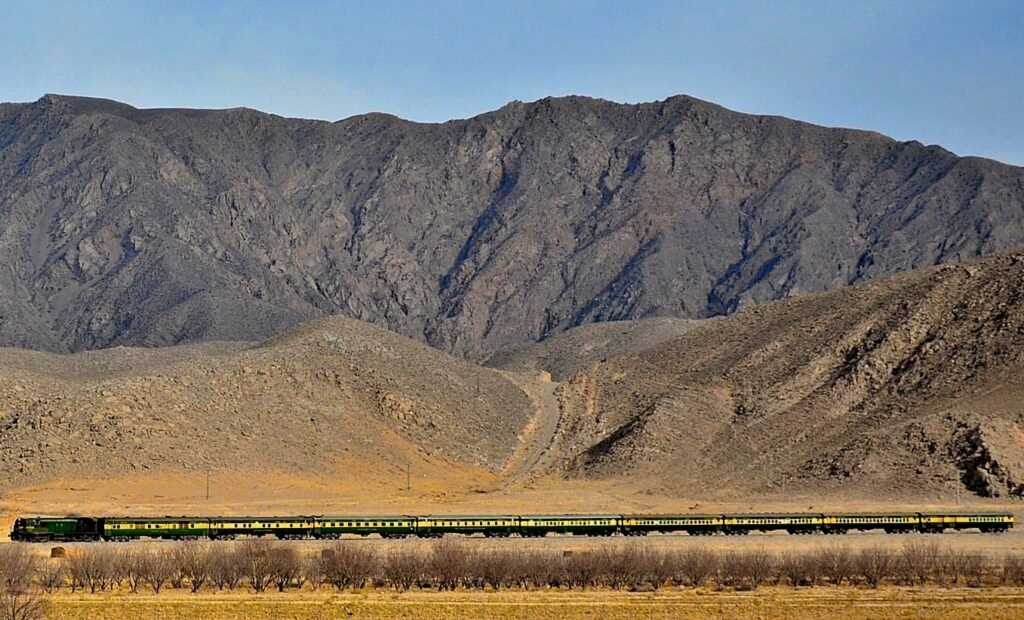
What is the Chabahar–Zahedan Railway?
- About: The Chabahar–Zahedan Railway is a strategic Iranian railway connecting Chabahar Port on the Gulf of Oman with Zahedan, capital of Sistan and Baluchestan and an important junction with Iran’s wider railway network.
- The railway serves as a vital infrastructure spine under the international Transit and Transport Corridor framework.
- Purpose: Its purpose is to create a port-to-inland rail corridor towards Afghanistan and Central Asia.
- Its objective is to integrate Chabahar Port with Iran’s national railway network, enabling cargo from the Indian Ocean to move inland towards Afghanistan, Central Asia and Eurasia.
- Agreement: The project originated through a trilateral agreement signed on May 23, 2016, by the leaders of India, Iran, and Afghanistan in Tehran.
- During Prime Minister Narendra Modi’s Iran visit in May 2016, India and Iran signed an IRCON–CDTIC MoU concerning the Chabahar–Zahedan railway.
- IRCON represented India, while Iran’s Construction and Development of Transport and Infrastructure Company (CDTIC) represented the Iranian side.
- During Prime Minister Narendra Modi’s Iran visit in May 2016, India and Iran signed an IRCON–CDTIC MoU concerning the Chabahar–Zahedan railway.
- Construction: In 2010, initial concept and preliminary planning began and in 2016, trilateral agreement synchronized the port and rail development.
- The original plan envisaged an estimated US$1.6-billion railway, with India proposing financing and technical participation.
- India also offered approximately US$400 million worth of steel/railway assistance, while Iran subsequently allocated funding from its own resources.
- Implementation became complicated because of US sanctions, financing difficulties and disagreements concerning Iranian entities involved in construction.
- In July 2020, Iran announced that it would proceed independently using its National Development Fund, while leaving open the possibility of later Indian participation.
- Features:
- Length: The original project length was 628 km, while the completed system is now reported at approximately 730–735 km including branches.
- Infrastructure: The railway crosses difficult terrain in southeastern Iran and contains approximately 33 stations, 39 tunnels and 201 bridges.
- The standard-gauge line is engineered for a maximum operational speed of 120 km/h for passenger trains.
- Heavy commercial freight locomotives will safely traverse the corridor at maximum speeds of 90 km/h.
- Recent reporting also describes approximately 630 km of mainline track.
- Logistics Capacity: Once commercial operations peak, the infrastructure can accommodate 2.2 million passengers annually. It is built to process up to 7.7 million tonnes of freight cargo every year.
- Status: Iran completed track-laying in September 2026, marking a major construction milestone.
- Iranian authorities are undertaking final safety inspections, operational preparations and commissioning procedures.
- It is scheduled to become fully operational within three to four months from late September 2026.
- Commercial freight traffic is slated to commence around January 2027.
- Significance: Once operational, the line can transform Chabahar from an isolated maritime facility into a multimodal gateway.
- Improved port–rail integration can reduce transshipment dependence, logistical bottlenecks and route uncertainty.
- The railway forms part of the broader Chabahar connectivity framework involving India, Iran and Afghanistan and complements the International North–South Transport Corridor (INSTC).
- India and Iran have repeatedly discussed integrating Chabahar into the INSTC to connect Indian markets with Central Asia, Russia and Europe.
- It slashes maritime-cum-land transit times and transportation costs by up to 30%.
About Chabahar Port
- Location: Chabahar Port lies in southeastern Iran on the Gulf of Oman, outside the Persian Gulf and close to the Arabian Sea.
- It gives India a maritime gateway into Iran and onward continental markets without requiring access through the Strait of Hormuz for the initial maritime approach.
- Port Complexes: Chabahar comprises Shahid Kalantari and Shahid Beheshti port complexes.
- India’s principal involvement is centred on developing and operating facilities at Shahid Beheshti.
- Agreement: The idea of developing Chabahar emerged in the early 2000s, and formal agreements were signed between India and Iran in 2003.
- India and Iran signed an MoU on 6 May 2015 for Indian participation in developing Chabahar Port.
- On 23 May 2016, India Ports Global Private Limited and Iran’s Arya Banader signed the commercial contract for development and operation.
- India committed to developing two terminals with five berths, including a 600-metre multipurpose terminal and 640-metre container terminal.
- On 13 May 2024, India Ports Global Limited and Iran’s Ports and Maritime Organization signed the Long-Term Main Contract for developing, equipping and operating the Shahid Beheshti terminal for 10 years. This replaced the earlier interim operational arrangement with a longer-term framework.
- Operations: India took over operations of part of Shahid Beheshti Port in December 2018 through its special-purpose entity.
- Commercial operations began when the vessel MV Macheras arrived with 72,458 tonnes of corn, marking India’s first operation of a port outside its territory.
- India allocated ₹400 crore for Chabahar development between FY 2016–17 and 2023–24, of which ₹201.51 crore had been utilised by July 2024.
- Trade Performance: During 2023–24, Chabahar recorded a 43% increase in vessel traffic and a 34% increase in container traffic, according to India’s Ministry of Ports, Shipping and Waterways.
- Connectivity Hub: Chabahar is intended to become a gateway linking India–Iran–Afghanistan–Central Asia, while potentially complementing the INSTC.
- In 2025, Central Asian states expressed interest in using Shahid Beheshti Terminal for trade with India and beyond.
- Geopolitical Counterweight: Chabahar is located roughly 170 kilometers west of the Pakistani port of Gwadar. Gwadar is a highly critical maritime node heavily developed by China, meaning
- Chabahar gives India a direct, necessary geostrategic balance against Chinese expansion in the Indian Ocean.
- Chabahar offers India an alternative maritime route to Afghanistan, avoiding dependence on Pakistani transit.
India–Iran Cooperation
- India–Iran relations rest on longstanding historical, cultural and civilisational connections.
- The modern strategic framework was articulated through the New Delhi Declaration of 2003, which envisaged a stronger political, economic and regional partnership.
- It also recognised Afghanistan’s stability as important for regional security.
- India and Iran maintain economic relations involving Indian exports such as rice, tea, pharmaceuticals, sugar and electrical machinery, while imports have included dry fruits, chemicals and glassware.
- Iran possesses major oil and gas resources, while India has substantial energy demand. Historically, hydrocarbons formed a major pillar of cooperation.
- The two countries maintain Joint Commission Meetings, Foreign Office Consultations, security consultations and consular mechanisms. In 2022, India and Iran also signed an MoU concerning recognition of Certificates of Competency for seafarers.
- India and Iran cooperate through platforms including BRICS and the SCO, while Chabahar increasingly involves Central Asian partners.
- The India–Central Asia Joint Working Group on Chabahar demonstrates the shift from bilateral infrastructure towards wider regional connectivity.
Major Challenges
- The largest external constraint remains US sanctions on Iran. India’s ability to operate and invest in Chabahar depends partly on the applicable sanctions regime and exemptions, creating uncertainty for banks, insurers and private contractors.
- Large infrastructure projects require predictable long-term financing, insurance and payment mechanisms. Sanctions-related banking restrictions can make ordinary international financial transactions difficult.
- Southeastern Iran and neighbouring areas face security challenges, while instability in Afghanistan and wider West Asia can disrupt transport corridors and raise insurance and logistics costs.
- A railway is commercially valuable only when connected to efficient ports, customs systems, roads, warehouses and downstream rail networks. Completing track-laying therefore does not automatically guarantee high cargo volumes.
Way Forward
- India should maintain continuous legal and financial due diligence, ensuring all Chabahar-related transactions, contractors, banks and equipment suppliers comply with applicable international and domestic regulations.
- India, Iran, Afghanistan and Central Asian states must coordinate customs, transit documentation, tariffs, railway standards, cargo handling and border procedures for seamless multimodal movement.
- India should promote long-term cargo agreements involving exporters, importers, shipping companies and logistics operators to ensure sufficient freight volumes and predictable railway utilisation.
- A dedicated India–Iran project-monitoring mechanism should periodically review construction, safety, financing, sanctions compliance, cargo volumes, customs efficiency and operational performance.
Frequently asked questions (FAQs):
1. What is the Chabahar–Zahedan railway link?
The Chabahar–Zahedan railway is a roughly 730-km strategic Iranian rail link connecting Chabahar Port with Zahedan and Iran’s national railway network.
2. When did Iran complete track laying on the Chabahar-Zahedan railway?
Iran completed track laying in September 2026, with final preparations and safety checks preceding full commercial operations.
3. Why is the Chabahar-Zahedan railway important for India?
It strengthens India’s alternative connectivity to Afghanistan and Central Asia, reducing dependence on overland transit through Pakistan.
4. How will the rail link improve Chabahar Port connectivity?
It will enable sea-to-rail cargo movement from Chabahar into Iran’s railway network, facilitating onward transportation toward Afghanistan and Central Asia.
5. Which places will be connected by the Chabahar-Zahedan railway?
The line directly connects Chabahar and Zahedan, while enabling onward connectivity toward Afghanistan, Central Asia and eastern Russia through wider rail networks.
Disclaimer: Information in this article is based on official announcements and public records. Details may evolve over time.