



Trump Awards National Science Medal to Elon Musk, Called Musk a “Modern-Day Thomas Edison”
| General Studies Paper II: Science & Technology, International Recognition |
Why in News?
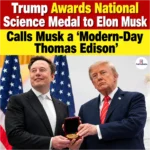
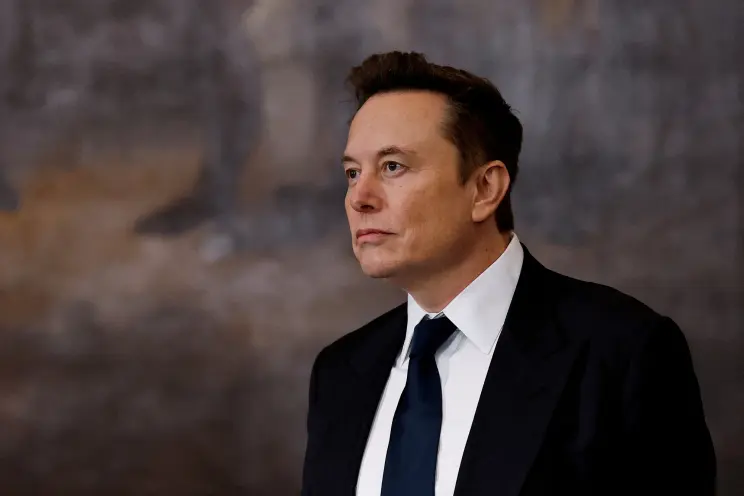
Recently, US President Donald Trump awarded Elon Musk the National Medal of Science (NMS), recognising his ambitious engineering contributions to space exploration, and intelligent systems.
What is the National Medal of Science (NMS)?
- About: The National Medal of Science (NMS) is the United States’ highest presidential recognition for outstanding contributions to scientific and engineering knowledge.
- It honours individuals whose discoveries, research, innovation or scientific leadership advance knowledge and benefit the nation.
- Applicable Fields: The medal covers six broad disciplinary areas: Biological Sciences, Chemistry, Engineering Sciences, Mathematical and Computer Sciences, Physical Sciences, and Behavioral and Social Sciences.
- These capture subfields like astronomy, geosciences, materials research, and STEM education research.
- History: The medal was established by the U.S. Congress on 25 August 1959, under Public Law 86-209.
- The award originally focused solely on physical, biological, mathematical, and engineering sciences. It was later expanded by legislation in 1980 to formally incorporate the behavioral and social sciences.
- The first medal was officially presented by President John F. Kennedy on February 18, 1963, to aerodynamicist and engineer Theodore von Kármán for his foundational contributions to aeronautical sciences.
- Eligibility Criteria: Nominees must be individual U.S. citizens, nationals, or permanent residents who have applied for citizenship.
- Self-nominations and family nominations are strictly prohibited.
- Deceased individuals remain eligible up to five years post-mortem, and existing Nobel laureates are fully qualified to apply.
- Selection Process: The National Science Foundation (NSF) administers the nomination process, where candidates require a peer nomination and three to five expert letters of support.
- The Committee on the National Medal of Science—a 14-member presidential advisory board comprising 12 scientists and 2 ex-officio members—evaluates candidates before delivering final recommendations to the President of the United States.
- Under the governing statute, no more than 20 individuals may receive it in a calendar year.
- Medal Design: The medal is made of gold and was sculpted by artist Donald De Lue, based on a design by Richard H. Bolt.
- Its central human figure contemplates nature, surrounded by Earth, sea and sky.
- A crystal represents universal order and the basic unit of living things, while a mathematical formula drawn in sand symbolises scientific abstraction.
- Significance: The award promotes scientific excellence, encourages future researchers and highlights the importance of research to economic development, national security, public welfare and international competitiveness.
- Major Awardees:
- Historically celebrated laureates include Barbara McClintock (the first female recipient), Richard Feynman, and Kurt Gödel.
- On 8 October 2026, President Donald Trump presented the medal to Elon Musk, Sergey Brin, Jensen Huang and Lisa Su.
| Note: The US National Medal of Technology and Innovation recognises exceptional technological achievement. Michael Dell and Satya Nadella received this award in 2026. |
Elon Musk’s Contributions to Science, Space and Technology
- Musk founded SpaceX in 2002. Through SpaceX, Musk pioneered reusable launch vehicles like the Falcon 9 and Falcon Heavy, fundamentally slashing orbital launch costs.
- He oversaw the development of the Starship system to enable human multiplanetary life.
- SpaceX’s Dragon spacecraft also supports crew and cargo transportation to the International Space Station (ISS) through NASA’s commercial programmes.
- Its long-term ambitions include lunar missions and eventually Mars exploration.
- Musk engineered the Starlink constellation, deploying thousands of low-Earth orbit satellites.
- This network established global satellite internet connectivity, offering vital high-speed access to remote regions and providing critical emergency communication channels during natural disasters.
- As the CEO of Tesla, Musk transformed the automotive landscape by proving the commercial viability of Electric Vehicles (EVs) via the Model S, 3, X, Y, and Cybertruck.
- He led the global deployment of Gigafactories and large-scale grid storage batteries like the Powerwall.
- Under his direction, Tesla advanced consumer artificial intelligence by introducing Full Self-Driving (FSD) v12.
- This milestone replaced hundreds of thousands of lines of traditional code with an end-to-end neural network trained purely on video.
- He is also driving the development of the Optimus humanoid robot.
- Co-founding Neuralink in 2016, Musk catalyzed advancements in Brain-Computer Interfaces (BCIs).
- The company successfully initiated human clinical trials of its fully implantable chip, enabling paralyzed individuals to control external digital interfaces and play chess using direct neural intent.
- After co-founding OpenAI, Musk established xAI to build Grok, a major large language model integrated into the X platform.
- He orchestrated the assembly of the Colossus Supercluster, a massive 230,000-GPU network built in record time to pioneer advanced superintelligence infrastructure.
- Musk conceptualized the high-speed Hyperloop transit system and founded The Boring Company to innovate underground tunnel boring technology.
- He co-created X.com, which merged to become PayPal, revolutionizing early global digital financial architecture.
Importance of Scientific Innovation in US Global Leadership
- Economic Growth: Scientific innovation serves as the primary engine for US economic growth, accounting for a massive share of productivity gains since World War II.
- By transitioning curiosity-driven basic research into marketable applications, the US creates entire high-tech industries, high-paying jobs, and pioneering startups.
- National Security: Superiority in research and development ensures that the US military maintains a decisive technological edge over global adversaries.
- Innovations engineered by agencies like DARPA directly fuel next-generation defense systems, including artificial intelligence, autonomous drones, quantum computing, and secure communications infrastructure.
- Supply Resilience: The historic passage of the CHIPS and Science Act underscores the role of local innovation in mitigating foreign threats.
- By investing billions into domestic semiconductor manufacturing, the US reduces its structural vulnerabilities to East Asian supply disruptions, safeguarding critical automotive, healthcare, and infrastructure industries.
- Geopolitical Influence: Scientific preeminence establishes the US as an indispensable partner in global techno-geopolitical alliances.
- Setting international benchmarks via the National Institute of Standards and Technology (NIST) allows America to dictate the governance, safety ethics, and trade parameters of emerging global breakthroughs.
- Talent Attraction: A world-class academic powerhouse backed by agencies like the National Science Foundation (NSF) acts as a global magnet for top-tier minds.
- Recruiting and retaining elite STEM workforce talent enables the US to counter aggressive investments by geopolitical competitors like China.
- Public Health: American breakthroughs in life sciences, particularly through the National Institutes of Health (NIH), shape global medical standards.
- Pioneer creations like mRNA platforms and diagnostic tools establish US leadership in biomedical diplomacy during international crises.
- Clean Energy: Advancing cutting-edge fields like fusion energy, efficient solar cells, and solid-state batteries ensures US dominance in the green economy transition.
- These innovations secure independent energy infrastructure while cementing global environmental leadership.
Frequently Asked Questions (FAQs):
1. Why was Elon Musk awarded the National Medal of Science?
He was recognised for engineering contributions to space exploration, intelligent systems, communications and manufacturing.
2. What is the National Medal of Science, and who presents it?
It is a prestigious US scientific honour presented by the President, recognising outstanding contributions to science and engineering.
3. When did Donald Trump award the National Science Medal to Elon Musk?
According to the reported information, Donald Trump presented it to Musk on 8 October 2026.
4. What are Elon Musk’s major contributions to science and technology?
His ventures advanced reusable rockets, electric vehicles, satellite internet, energy storage and brain–computer interface research.
5. What is the difference between the National Medal of Science and the National Medal of Technology and Innovation?
The former honours scientific contributions and discoveries; the latter recognises outstanding technological achievements and innovation.
Disclaimer: Information in this article is based on official announcements and public records. Details may evolve over time.