



New Covid Variant PJ.2.1: Symptoms, Risks, Global Spread & Vaccine
| General Studies Paper III: Health, Virus & Diseases |
Why in News?
A new COVID-19 variant PJ.2.1, first detected in Canada in May 2026, is spreading across several countries, raising questions about whether it could trigger another wave of infections.
What is COVID-19 Variant PJ.2.1?
- About: PJ.2.1 is a newly emerged lineage of the SARS-CoV-2 virus classified as a saltation variant.
- It developed an unusually high number of sudden genetic changes rather than accumulating mutations gradually over time.
- Origin: Scientists traced its direct ancestry to MC.10.1.7, which is a descendant of the older JN.1 family of coronaviruses that circulated through May 2025.
- Discovery: The very first documented sample of PJ.2.1 was identified in Ontario, Canada, on May 2, 2026, before swiftly spreading to other Canadian provinces including Alberta, British Columbia, and New Brunswick.
- Global Spread: The lineage breached international borders, with its first United States case recorded in New York City on June 30, followed by detections across California, Florida, Texas, and several other states.
- Globally, the variant has been tracked in at least eight countries across four continents, including France, Spain, Singapore, Australia, New Zealand, and Israel, with regions like Spain showing localized sustained transmission.
- According to the Public Health Ontario report, accounted for 25.2 per cent of the 523 COVID samples sequenced between September 20 and October 17, 2026.
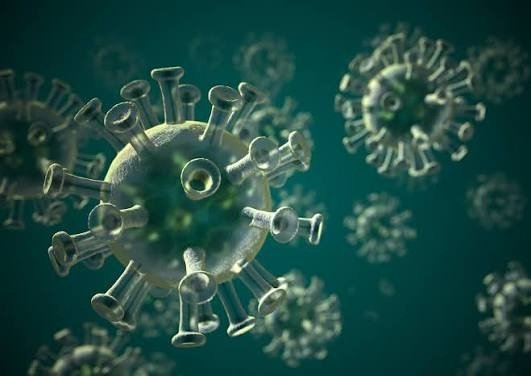
- Mutations & Characteristics: The hallmark of PJ.2.1 is its heavily mutated spike (S) protein, the primary molecular tool the coronavirus uses to attach to and enter human cells.
- Laboratory studies published in the Journal of Infection show that the spike protein of PJ.2.1 binds more efficiently to ACE2 receptors on human cells than earlier reference strains like LP.8.1.
- This enhanced binding gives the virus a strong physical advantage when trying to enter tissue.
- A new mutation has more than 25 unusual changes in the spike protein.
- The mutations do not translate into a substantial ability to evade antibodies generated by current vaccines.
- Transmission: Because its spike protein binds tightly to human cells, PJ.2.1 exhibits efficient cell-entry properties in laboratory models.
- Better cellular binding does not mean it spreads wildly faster among human populations.
- Symptoms: Clinical symptoms mirror those of standard upper respiratory infections: fever, sore or scratchy throat, runny or blocked nose, persistent cough, headache, muscle aches, and fatigue.
- Some preliminary observations note lingering throat discomfort and prolonged post-viral fatigue, though these manifestations are not clinically unique to PJ.2.1.
- Cases of its infection have been seen more in the elderly population (above 60 years).
- Health Risks: Current clinical data show no evidence that PJ.2.1 causes more severe disease, higher rates of hospitalization, or increased mortality compared to previous JN.1-derived sublineages.
- WHO Assessment: The World Health Organization (WHO) has incorporated PJ.2.1 into its ongoing scientific deliberations and data tracking networks—such as the WHO Coronavirus Network (CoViNet)—to evaluate its long-term trajectory and monitor potential shifts in growth.
- WHO has not formally designated PJ.2.1 as a “Variant of Concern” (VOC) or a “Variant of Interest” (VOI), as current public health metrics do not indicate an elevated global threat level.
- On an international scale, PJ.2.1 remains under active scientific surveillance as it co-circulates with other seasonal respiratory pathogens.
- WHO has not formally designated PJ.2.1 as a “Variant of Concern” (VOC) or a “Variant of Interest” (VOI), as current public health metrics do not indicate an elevated global threat level.
- Vaccine Effectiveness: Laboratory neutralization assays indicate that current COVID-19 vaccines and variant-adapted boosters retain robust recognition against PJ.2.1, showing no substantial antibody escape that would neutralize vaccine efficacy.
- Prophylactic vaccination continues to serve as the primary global defense mechanism.
- Treatment Strategies: Standard clinical treatment protocols and antiviralmedications used for COVID-19 remain effective for managing symptomatic cases.
- Exact therapeutic choices depend on individual patient risk factors and timely diagnostic confirmation through molecular or antigen testing.
Global Impact of COVID -19
- COVID-19 is an infectious respiratory illness caused by the SARS-CoV-2 virus.
- Doctors first identified the virus in Wuhan, China, in late 2019.
- It spreads through tiny respiratory droplets when infected people cough, sneeze, or talk. Common symptoms include fever, dry cough, fatigue, and loss of taste or smell.
- While most people experience mild symptoms, severe cases can lead to pneumonia and organ failure.
- The World Health Organization (WHO) declared COVID-19 a global pandemic on March 11, 2020.
- Worldwide, the virus infected over 779 million people and caused more than 7.1 million confirmed deaths.
- Global supply chains broke down, and international travel stopped.
- This triggered the worst global economic recession since the Great Depression, shrinking the world economy by roughly 3 percent in 2020.
- India reported its first COVID-19 case in Kerala on January 30, 2020.
- The country faced a massive crisis during the second wave in April and May 2021, driven by the Delta variant.
- Hospitals faced severe shortages of medical oxygen and beds. Officially, India recorded over 45 million confirmed cases and more than 533,800 deaths, making it one of the hardest-hit nations globally.
- To stop the virus, India imposed a strict nationwide lockdown in March 2020.
- Economic activity halted, causing India’s GDP to contract by nearly 24 percent in the first quarter of the 2020–21 financial year.
- Millions of daily-wage workers lost their jobs overnight. This triggered a massive reverse migration, where millions of workers walked or took special Shramik trains back to their rural villages.
- Schools and colleges across India closed for over a year, affecting millions of students.
- Education shifted to online classes, which exposed a deep digital divide between wealthy and poor families.
- Healthcare workers faced extreme burnout, and poverty rates rose sharply across informal sectors.
- India launched the world’s largest vaccination campaign on January 16, 2021, using the digital CoWIN platform.
- India administered over 2.2 billion vaccine doses, relying heavily on Covishield and the locally developed Covaxin.
- To revive the economy, the government introduced the Atmanirbhar Bharat relief package worth ₹20 lakh crore.
India’s Genomic Surveillance Network
- India’s genomic surveillance preparedness centers on the Indian SARS-CoV-2 Genomics Consortium (INSACOG).
- It is a pan-India network of 54+ laboratories jointly established in December 2020 by the Union Health Ministry, Department of Biotechnology (DBT), CSIR, and ICMR.
- It is operating through a three-tier hub-and-spoke model anchored by the National Centre for Disease Control (NCDC).
- It monitors viral mutations across sentinel sites and international entry points.
- By linking whole-genome sequencing outputs with clinical metadata from the Integrated Disease Surveillance Programme (IDSP), the network detects Variants of Concern (VOCs) and Variants of Interest (VOIs) early.
- To complement clinical testing, India has scaled Wastewater-Based Epidemiology (WBE) across major urban clusters, with ICMR expanding environmental surveillance to 50 cities to track 10 priority viruses, including SARS-CoV-2, polio, and avian influenza.
- Initiated in cities like Ahmedabad and Bengaluru and bolstered by consortia such as the Alliance for Pathogen Surveillance Innovations (APSI), sewage sequencing captures viral shedding from both symptomatic and asymptomatic populations.
- This non-invasive approach provides an 8-to-14-day early warning lead time before clinical cases surge.
- India has strengthened host-side preparedness through the Genome India Project, which completed whole-genome sequencing of 10,074 individuals across 99 distinct ethnic and linguistic communities.
- Archived at the Indian Biological Data Centre (IBDC) in Faridabad, this reference database mapped over 44 million novel genetic variants unique to Indian populations.
- Actionable public health response relies on rapid clinico-epidemiological correlation managed by IDSP’s Central Surveillance Unit and the Scientific and Clinical Advisory Group (SCAG).
- When regional laboratories flag high-risk mutations, viral isolates are cultured to assess vaccine efficacy and immune escape, directly informing targeted booster drives, travel advisories, and localized containment.
- India has integrated genomic surveillance into its One Health framework to monitor Antimicrobial Resistance (AMR), dengue, and tuberculosis, transforming emergency pandemic infrastructure into a permanent biosecurity shield.
Frequently Asked Questions (FAQs):
Q1. What is COVID-19 Variant PJ.2.1?
PJ.2.1 is an Omicron-descendant SARS-CoV-2 sublineage attracting attention because of its genetic mutations.
Q2. Where was COVID-19 Variant PJ.2.1 first detected?
It was first detected in Ontario, Canada, on 2 May 2026.
Q3. Which parent lineage does COVID-19 Variant PJ.2.1 belong to?
PJ.2.1 originated from MC.10.1.7 within the broader JN.1 evolutionary family.
Q4. What makes COVID-19 Variant PJ.2.1 scientifically significant?
Its spike-protein mutations may influence antibody recognition and immune escape.
Q5. How does COVID-19 Variant PJ.2.1 spread?
It spreads primarily through infectious respiratory particles, particularly in crowded, poorly ventilated indoor environments.
Q6. What are the common symptoms of COVID-19 Variant PJ.2.1?
Symptoms may include fever, cough, sore throat, fatigue, headache, congestion and muscle aches.
Q7. What is WHO’s classification of COVID-19 Variant PJ.2.1?
PJ.2.1 was not separately listed in WHO’s October 2026 global variant categories.
Disclaimer: Information in this article is based on official announcements and public records. Details may evolve over time.
| Also Read: Nipah Virus Case Reported in West Bengal |