


Cyclone Akvan: Formation, Naming, Landfall and India’s Cyclone Management
| General Studies Paper III: Physical Geography, Disaster Management |
Why in News?
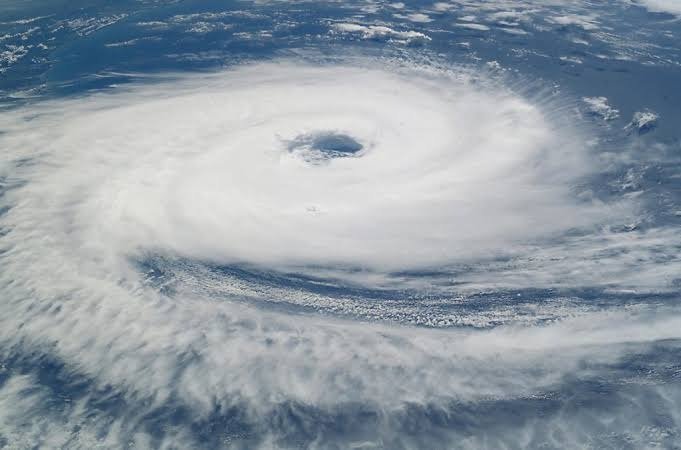
Recently, Cyclone Akvan intensified into a severe storm over the Bay of Bengal. India Meteorological Department (IMD) forecasts very severe intensity before November 20 landfall between Nellore and Visakhapatnam, Andhra Pradesh.
Highlights of Cyclone Akvan
- Formation: Cyclone Akvan originated as a low-pressure area over the southeast Bay of Bengal on November 13, 2026, strengthening into a depression on November 15 and a cyclonic storm on November 16 before intensifying into a Severe Cyclonic Storm.
- It represents the third consecutive Bay of Bengal cyclone within three weeks following Cyclones Arnab and Murasu.
- Meteorological Characteristics: Its formation was driven by warm post-monsoon sea surface temperatures (28°C–30°C), low vertical wind shear, high mid-tropospheric humidity, and heightened oceanic heat fueled by a strengthening El Niño.
- The system exhibited a slow forward translation speed of 3 to 8 kmph, prolonging moisture accumulation.
- Naming: It is named by Iran after a mythological figure from the Persian epic Shahnameh under the WMO/ESCAP naming protocol.
- Track: As per the IMD of November 18, 2026, the Severe Cyclonic Storm Akvan is centered over the westcentral Bay of Bengal at 13.1°N and 85.2°E. It is moving north-northwestwards at approximately 7 kmph.
- Expected Landfall: The north-northwestward moving system is expected to cross the North Andhra Pradesh, Yanam, and South Odisha coasts between Narsapur and Puri around noon on November 20, 2026, with revised maximum sustained winds of 90–100 kmph and gusts up to 110 kmph.
- Impact and Preparations:
- Heavy rainfall and winds will affect Andhra Pradesh, Yanam, Odisha, Tamil Nadu, Puducherry, Telangana, and Gangetic West Bengal, accompanied by a storm surge of 0.5 to 1.2 meters threatening low-lying districts.
- The system risks severe riverine flooding, soil salinization, power grid and infrastructure damage, destruction of kutcha houses, standing Kharif crop losses, and a total halt to marine fisheries.
- IMD issued a Red Message and a total fishermen ban through November 21.
- Under National Disaster Management Authority (NDMA) protocols, the Andhra Pradesh State Disaster Management Authority (APSDMA) launched over 1.08 lakh voice alerts and advised crop harvesting, while Odisha deployed 74 specialized rescue teams alongside pre-emptive evacuations, National Disaster Response Force (NDRF) units, and Doppler radars.
- Heavy rainfall and winds will affect Andhra Pradesh, Yanam, Odisha, Tamil Nadu, Puducherry, Telangana, and Gangetic West Bengal, accompanied by a storm surge of 0.5 to 1.2 meters threatening low-lying districts.
What Is a Cyclone?
- About: A cyclone is an intense, large-scale atmospheric system characterized by rapid inward air circulation around a strong low-pressure center.
- The word is coined by Henry Piddington from the Greek word cyclos (coils of a snake).
- Rotation: Its wind rotation is governed by the Coriolis force—spiraling anticlockwise in the Northern Hemisphere and clockwise in the Southern Hemisphere.
- Unlike anticyclones, which feature subsiding air and fair weather, cyclones involve converging, rising air that triggers violent storms.
- Classification and Genesis: Cyclones are broadly divided into Tropical and Extratropical (Temperate) systems.
- Tropical cyclones originate between 5° and 30° latitudes over warm oceans exceeding 26.5°C–27°C, acting as heat engines fueled by the latent heat of condensation.
- They require low vertical wind shear, upper tropospheric divergence, and a pre-existing low-pressure disturbance, featuring a calm eye, destructive eyewall, and spiral rainbands.
- Conversely, temperate cyclones form between 35° and 65° latitudes along polar fronts due to baroclinic instability and contrasting cold-warm air masses.
- Nomenclature: Regionally known as Hurricanes (Atlantic), Typhoons (Northwest Pacific), and Willy-willies (Australia), tropical cyclones in the North Indian Ocean are named by RSMC New Delhi across a 13-member WMO/ESCAP panel once sustained winds reach 62 km/h.
- The IMD classifies North Indian Ocean disturbances according to maximum sustained three-minute surface wind speeds:
| System | Wind speed |
| Depression | 31–49 kmph |
| Deep Depression | 50–61 kmph |
| Cyclonic Storm | 62–88 kmph |
| Severe Cyclonic Storm | 89–117 kmph |
| Very Severe Cyclonic Storm | 118–166 kmph |
| Extremely Severe Cyclonic Storm | 167–221 kmph |
| Super Cyclonic Storm | 222 kmph or above |
- Vulnerability: India’s Bay of Bengal experiences roughly four times more cyclones than the Arabian Sea.
- It happens due to higher sea surface temperatures, freshwater river influx creating thermal stratification, lower wind shear, and its funnel-shaped coastline.
- India’s re-assessed coastline is 11,098.81 km, while about 5,700 km of the coast across 13 coastal states and Union Territories is cyclone-prone.
- Impacts: Cyclones inflict severe socio-economic devastation through storm surges, torrential rainfall, gale-force winds, and coastal flooding, salinizing agricultural lands and crippling infrastructure.
- Temperate systems like Western Disturbances bring vital winter precipitation to Northwest India.
India’s Cyclone Management and Climate Resilience Framework
- Following the 1999 Odisha super cyclone, India shifted from reactive relief to proactive prevention, mitigation, and preparedness via the Disaster Management Act, 2005 and the National Disaster Management Plan (NDMP).
- Ministry of Home Affairs, coordinates national disaster-management administration and response arrangements.
- The National Disaster Management Authority (NDMA), chaired by the Prime Minister, lays down policies.
- It sets national policies and guidelines, working with State Disaster Management Authorities, District Disaster Management Authorities, and the National Disaster Response Force (NDRF) for rapid search, rescue, and evacuation.
- Odisha’s Zero Casualty Approach exemplifies mass evacuation before landfall.
- The India Meteorological Department (IMD) tracks storms using Doppler radars.
- It issues color-coded alerts (Green, Yellow, Orange/Amber, Red) and four-stage warnings.
- Early Warning Dissemination Systems (EWDS) use sirens, SMS, and satellite radios for last-mile alerts, aided by NDMA’s Web-DCRA & DSS risk-mapping tools.
- SACHET Portal integrated disaster-alert platform disseminates warnings through digital communication channels.
- The World Bank-assisted National Cyclone Risk Mitigation Project (NCRMP) builds multi-purpose cyclone shelters, saline embankments, approach roads, and underground power cabling across two phases in eight states.
- It also funds community capacity building and local maintenance committees.
- Coastal Regulation Zone (CRZ) rules, Integrated Coastal Zone Management (ICZM), and mangrove plantations buffer storm surges and erosion.
Frequently Asked Questions (FAQs):
Q1. What is Cyclone Akvan, and where did it originate?
Cyclone Akvan is a tropical cyclone originating over the Bay of Bengal.
Q2. Which country proposed the name Cyclone Akvan?
Iran proposed the name under the regional tropical cyclone naming system.
Q3. Which Indian states are likely to be affected by Cyclone Akvan?
Coastal Andhra Pradesh and Odisha are among the forecast-affected regions.
Q4. Which organisation monitors and forecasts Cyclone Akvan in India?
The India Meteorological Department (IMD) monitors and forecasts Cyclone Akvan.
Q5. What are the major threats associated with Cyclone Akvan?
Strong winds, heavy rainfall, storm surges and coastal flooding are major threats.
Disclaimer: Information in this article is based on official announcements and public records. Details may evolve over time.
| Also Read: Cyclone Murasu 2026 |