




India Extends Anti-Dumping Duty on Seamless Tubes & Pipes
| General Studies Paper III: Growth & Development, Government Policies & Interventions |
Why in News?
Recently, India extended the anti-dumping duty until 27 January 2027 on seamless tubes, pipes, and hollow steel profiles imported from China.
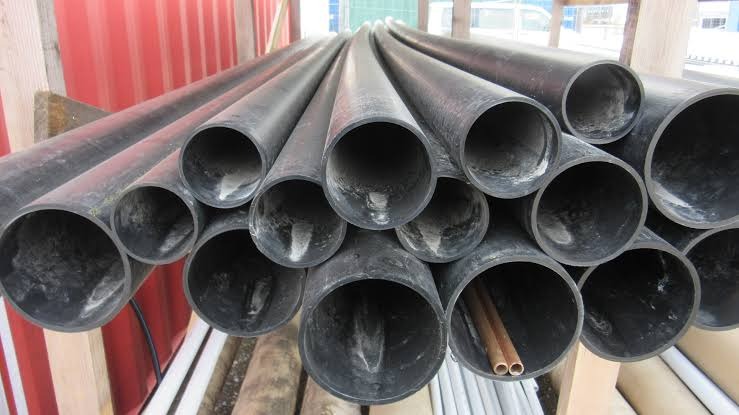
Highlights of Anti-Dumping Duty Extension
- Extension: The Central Board of Indirect Taxes and Customs (CBIC), extended the anti-dumping duty on imports of seamless tubes, pipes, and hollow steel profiles imported from China.
- The extension remains effective up to and inclusive of 27 January 2027, unless revoked, superseded, or amended earlier.
- The anti-dumping duty specifically applies to imports originating in or exported from China PR.
- Statutory Basis: The extension has been notified through Notification No. 16/2026-Customs (ADD) dated 6 July 2026, which amends Notification No. 64/2021-Customs (ADD).
- It has been issued under Section 9A(1) and 9A(5) of the Customs Tariff Act, 1975, read with Rules 18 and 23 of the Anti-Dumping Rules, 1995, providing a legally enforceable trade-remedy mechanism.
- Products Covered: The measure covers seamless tubes, seamless pipes, and hollow profiles made of iron, alloy steel, or non-alloy steel, excluding specified categories such as cast iron and stainless steel.
- The products fall under Customs Tariff Heading 7304 and include goods with an external diameter not exceeding 355.6 mm.
- These are widely used in oil & gas, power, petrochemicals, construction, boilers, engineering, and infrastructure sectors.
- The continuation of the duty followed applications from leading Indian manufacturers, including Jindal Saw, Kirloskar Ferrous, and Maharashtra Seamless.
- Duty Structure: The existing anti-dumping duty has been retained without alteration, with rates ranging from USD 961.33 to USD 1,610.67 per metric tonne, depending on the exporter and producer combination.
- Earlier Measures: India first imposed anti-dumping duty on these products in 2017 following an investigation that established dumping and material injury to the domestic industry.
- After the first sunset review, the duty was extended through Notification No. 64/2021-Customs (ADD).
- The Directorate General of Trade Remedies (DGTR) initiated a sunset review in March 2026 to determine whether removing the duty would likely lead to the continuation or recurrence.
- It was also extended in 2021 and earlier duty was scheduled to expire on 27 October 2026 before the latest extension.
- The latest extension is an interim continuation pending completion of the ongoing review.
- It is a temporary continuation intended to preserve the effectiveness of India’s trade-remedy framework during the pendency of statutory investigations.
- Impact: It strengthens domestic steel producers against unfair imports and supports manufacturing competitiveness.
What is Anti-Dumping Duty?
- About: Anti-Dumping Duty (ADD) is a trade-remedy measure imposed by an importing country when a foreign producer exports goods at a price lower than their normal value (generally the domestic selling price in the exporting country).
- It is not a protectionist tariff, but a corrective duty permitted under international trade law to restore fair competition.
- The duty cannot exceed the margin of dumping determined during investigation.
- Terminologies: Dumping occurs when the Export Price (EP) of a product is lower than its Normal Value (NV) in the exporting country.
- The difference between the two is called the Dumping Margin.
- Authorities also examine Material Injury, Threat of Material Injury, Domestic Industry, and Causal Link between dumped imports and injury.
- Anti-dumping action can be taken only when all these conditions are established through an evidence-based investigation.
- Objective: The primary objective is to eliminate unfair pricing practices and create a level playing field for domestic producers.
- It protects industries from predatory pricing, prevents market distortion, safeguard employment, encourages fair competition, maintains industrial capacity, and ensures long-term economic stability.
- Legal Framework: The global legal basis is Article VI of the General Agreement on Tariffs and Trade (GATT), 1994.
- It was implemented through the WTO Agreement on Implementation of Article VI of GATT 1994, commonly called the Anti-Dumping Agreement (ADA).
- The Agreement prescribes detailed rules on investigations, evidence, injury determination, calculation of dumping margin, imposition of provisional and final duties, sunset reviews, appeals, and transparency.
- Under Article 5.8 of the WTO Anti-Dumping Agreement, a minimum threshold of 2% of the export price is mandated.
- If the dumping margin falls below this limit, the investigation must be terminated immediately and no anti-dumping duties can be imposed.
- This 2% de minimis rule applies equally to exports originating from both developing and developed countries.
- All WTO members, including India, must follow these disciplines.
- Anti-dumping duties generally remain in force for five years, unless reviewed, extended, modified, or revoked through a sunset review.
- Conditions: Under WTO rules, an anti-dumping duty can be imposed only after a competent authority establishes three essential conditions: (i) existence of dumping, (ii) material injury or threat of injury to the domestic industry, and (iii) a direct causal relationship between dumped imports and that injury.
- Indian Framework: India’s anti-dumping regime is governed primarily by Section 9A of the Customs Tariff Act, 1975, along with the Customs Tariff (Identification, Assessment and Collection of Anti-Dumping Duty on Dumped Articles and for Determination of Injury) Rules, 1995.
- These provisions were framed to align India’s domestic law with its WTO obligations.
- The law empowers the Central Government to impose provisional or final anti-dumping duties, subject to statutory investigations and prescribed procedures.
- The Directorate General of Trade Remedies (DGTR) under the Ministry of Commerce & Industry acts as the investigating authority.
- It examines evidence, conducts hearings, verifies data, and recommends whether anti-dumping duty should be imposed.
- The Ministry of Finance, through the Central Board of Indirect Taxes and Customs (CBIC), takes the final decision and notifies the duty through the Official Gazette.
- Other Measures:Countervailing Duty (CVD) offsets foreign government subsidies benefiting exporters.
- Safeguard Measures are temporary emergency actions against surging imports, irrespective of whether dumping or subsidies exist.
FAQs:
Q. What is the anti-dumping duty on seamless tubes?
Customs duty on dumped Chinese seamless tubes to offset unfairly low-priced imports.
2. Why has India extended the anti-dumping duty until 2027?
To prevent continued dumping and protect domestic producers pending the sunset review.
3. Which countries are affected by the anti-dumping duty?
Imports originating in or exported from China PR are covered.
4. What are seamless tubes used for?
Used in oil, gas, power, petrochemical, engineering, and infrastructure industries.
5. How does anti-dumping duty protect domestic industries?
It offsets unfair pricing, ensuring fair competition and reducing injury to domestic manufacturers.
6. Which authority recommended the extension of the duty?
The Directorate General of Trade Remedies (DGTR) recommended the extension.
7. How will the decision impact India’s steel industry?
It strengthens domestic steel producers against unfair imports and supports manufacturing competitiveness.
Disclaimer: Information in this article is based on official announcements and public records. Regulations and implementation details may evolve over time.