Iranian Foreign Minister India Visit
|
General Studies Paper II: Effect of Policies & Politics of Countries on India’s Interests |
Why in News?
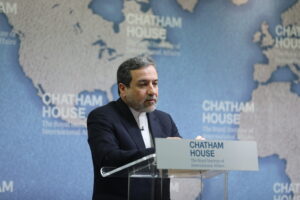
Recently, Iranian Foreign Minister Seyed Abbas Araghchi is expected to visit New Delhi for the 2026 BRICS Foreign Ministers’ meeting amid West Asian tensions.
Significance of Iranian Foreign Minister’s India Visit
- Strengthening BRICS Coordination: The visit of Iranian Foreign Minister Seyed Abbas Araghchi to New Delhi for the BRICS Foreign Ministers’ Meeting on May 14–15, 2026 reinforces India’s growing leadership within the expanded BRICS framework during a period of global geopolitical instability.
- West Asia Crisis Diplomacy: The visit gains importance amid escalating US-Iran-Israel tensions in West Asia.
- India seeks diplomatic engagement with all regional stakeholders to protect its strategic autonomy and maintain regional stability.
- Maritime and Energy Security: India and Iran are expected to discuss secure movement of Indian energy shipments through the Strait of Hormuz, through which a major share of India’s crude oil imports passes.
- The visit may accelerate discussions on the future of Chabahar Port, operated by India Ports Global Limited, and broader regional connectivity projects.
- India’s Balancing Foreign Policy: Hosting Iran alongside Gulf countries within BRICS demonstrates India’s policy of maintaining balanced relations with Iran, Saudi Arabia, UAE, Israel, and the United States simultaneously.
- Iran views India as an important partner in promoting a multipolar world order through BRICS and SCO platforms, especially amid Western sanctions and global power competition.
- Strategic Continuity in Bilateral Relations: The visit builds upon the 20th India-Iran Joint Commission Meeting held in 2025 and marks continued high-level diplomatic engagement during the 75th anniversary phase of the India-Iran Friendship Treaty.
|
BRICS 2026:
|
India-Iran Bilateral Relations
- Civilisational Linkage: India and Iran share over 2,000 years of civilisational interaction through Persian culture, language, trade, and Sufism.
- The 1950 Friendship Treaty institutionalised modern diplomatic relations after India’s independence.
- Geopolitical Importance: Iran occupies a critical location connecting the Middle East, Central Asia, and the Indian Ocean.
- For India, Iran acts as a strategic gateway to Afghanistan and Eurasia, bypassing Pakistan.
- The Chabahar Port remains the centrepiece of bilateral ties. India signed a long-term agreement to develop Shahid Beheshti terminal, enhancing regional trade and connectivity access.
- Chabahar provides India direct access to Afghanistan for trade and humanitarian aid, reducing dependence on Pakistan-controlled transit routes.
- Transport Corridor: India and Iran cooperate under the INSTC, linking India with Russia and Central Asia through multimodal transport corridors, reducing logistics costs and transit time significantly.
- India is a founding member of the International North-South Transport Corridor (INSTC), a multimodal route aimed at reducing freight time to Russia and Europe by 40% compared to the Suez Canal.
- Energy Security: Before US sanctions, Iran was among India’s top crude oil suppliers. India still considers Iranian hydrocarbons strategically important for long-term energy diversification and security.
- Although Iran holds the world’s second-largest gas reserves, India halted crude oil imports in May 2019 due to U.S. sanctions (CAATSA).
- Beyond the port, Indian companies have explored investing up to $20 billion in Iran’s energy and petrochemical sectors, pending the easing of sanctions.
- Economic Relation: Bilateral trade includes rice, tea, pharmaceuticals, chemicals, and engineering goods. India’s exports dominate current trade due to restrictions on Iranian oil imports.
- Total bilateral trade reached approximately $1.68 billion in FY 2024–25. India maintains a trade surplus, with exports at $1.24 billion and imports at $440 million.
- American sanctions on Iran have constrained banking channels, energy imports, and infrastructure investments, creating uncertainty around India’s economic engagement.
- Security Cooperation: India and Iran maintain dialogue on maritime security, regional stability, and counterterrorism. NSA-level discussions intensified amid West Asian geopolitical tensions.
- Both nations recently celebrated the 75th anniversary of diplomatic ties (established March 1950), marked by high-level interactions like the 2024 meeting at the BRICS Summit.
- Multilateral Cooperation: Both countries coordinate in forums like BRICS, SCO, and the United Nations, supporting multipolarity and regional stability.
- Joint Consultative Mechanisms: Robust institutional frameworks exist, including the Joint Committee Meeting (JCM) and Foreign Office Consultations, with the next round scheduled for 2026 in New Delhi.
- Humanitarian & Medical Aid: During the pandemic, India provided 1.1 million vaccine doses to Iran and regularly supplies pharmaceuticals and bio-insecticides for locust control.
- Cultural & Educational Ties: The Swami Vivekananda Cultural Centre in Tehran promotes Persian studies. Around 10,000 Indian expatriates reside in Iran, contributing to people-to-people links.
Challenges in India-Iran Strategic Partnership
- US Secondary Sanctions: The biggest challenge in India-Iran relations remains US secondary sanctions on Tehran.
- India stopped importing Iranian crude in 2019 to avoid American financial penalties, sharply reducing bilateral energy cooperation and banking connectivity.
- Trade levels remain far below pre-sanctions levels despite recent diplomatic engagement and connectivity initiatives.
- Balancing Strategy in West Asia: India’s growing strategic partnerships with Israel, Saudi Arabia, UAE, and the United States sometimes create diplomatic sensitivities with Iran, especially during regional conflicts and security crises.
- Conflicts in the Persian Gulf, Red Sea, and West Asia threaten maritime trade routes and increase risks for Indian energy imports, shipping, and overseas workers connected with Iran-linked corridors.
- China’s Expanding Presence: China’s long-term strategic investments and infrastructure partnerships with Iran under the Belt and Road Initiative (BRI) increase competition for India’s regional influence and connectivity ambitions.
- Project Disruptions: Critical infrastructure initiatives, such as the Farzad-B Gas Field and the Chabahar-Zahedan Railway, have faced long-standing delays.
- These setbacks undermine India’s Eurasian trade ambitions and its goal of bypassing land restrictions imposed by Pakistan.
- Israel-Iran Conflict: India has to perform a delicate balancing act due to escalating hostilities between Israel and Iran.
- This volatility threatens the safety of the 9 million-strong Indian diaspora in the Gulf and risks disrupting maritime trade through the Strait of Hormuz.
Way Forward
- Trade Mechanism: India and Iran should expand local currency settlement systems to bypass financial disruptions caused by sanctions.
- Strengthening rupee-rial trade can improve stability in pharmaceuticals, agriculture, and engineering exports.
- Technology Cooperation: Both countries can deepen collaboration in digital infrastructure, cybersecurity, telemedicine, and startup ecosystems under emerging BRICS technology platforms, creating new non-oil economic opportunities.
- Fertiliser and Food Security: Iran’s vast natural gas reserves can support fertiliser production partnerships with India.
- Long-term agreements in urea, petrochemicals, and food supply chains can strengthen India’s agricultural security.
- Maritime Connectivity: India should integrate Iranian ports with emerging initiatives like the India-Middle East-Europe Economic Corridor (IMEC) and regional shipping networks to improve trade diversification and strategic connectivity.
- Dialogue Platforms: Regular collaboration among universities, think tanks, and policy institutions can improve mutual understanding on energy transition, regional security, and Eurasian geopolitics, supporting long-term strategic trust between both nations.
|
Also Read: Persia To Iran |