



MSP Hikes for Rabi Crops 2027–28, Safflower MSP Raised Highest
| General Studies Paper II: Agriculture, Government Policies |
Why in News?
Recently, the Cabinet Committee on Economic Affairs (CCEA) raised the Minimum Support Price (MSP) for six rabi crops for 2027–28, prioritizing oilseeds and pulses diversification.
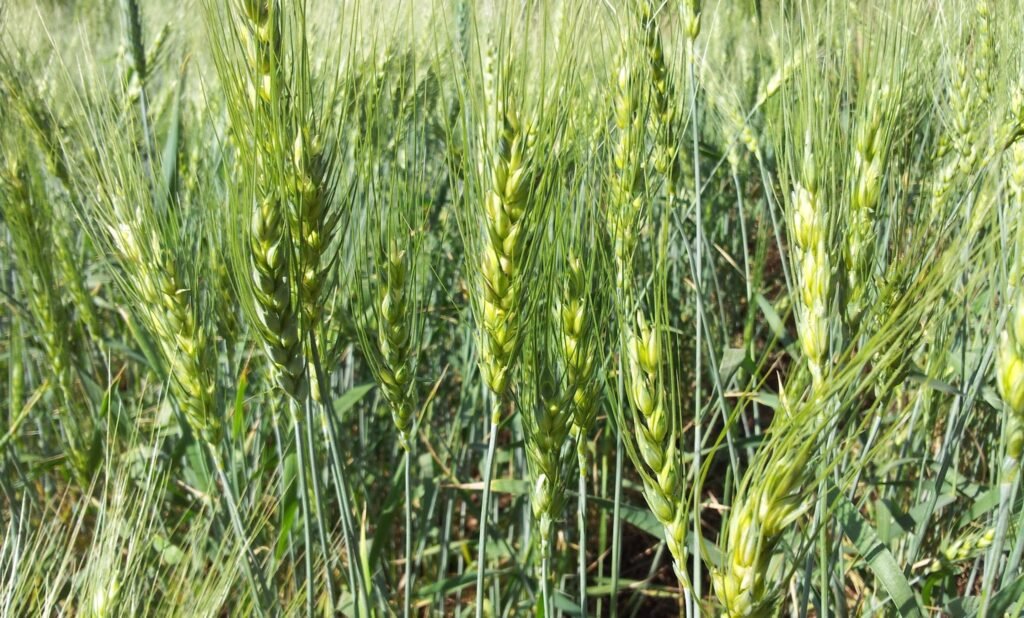
Highlights of MSP Hike for Rabi Crops 2027–28
- Announcement: The Cabinet Committee on Economic Affairs (CCEA) approved higher Minimum Support Prices (MSPs) for all six mandated Rabi crops for Marketing Season 2027–28.
- The decision was announced on 30 September 2026.
- New MSP Rates: The new MSPs are wheat ₹2,610, barley ₹2,286, gram ₹5,958, lentil ₹7,390, rapeseed and mustard ₹6,613, and safflower ₹7,215 per quintal.
- The corresponding increases are ₹25, ₹136, ₹83, ₹390, ₹413 and ₹675, respectively.
- Safflower received the highest absolute increase of ₹675 per quintal, followed by rapeseed and mustard at ₹413 and lentil at ₹390.
- This pattern gives relatively stronger price incentives to oilseeds and pulses, which are strategically important for agricultural diversification.
- Margin over Production Cost: The announced MSPs provide margins above the All-India weighted average cost of production ranging from 50% for safflower to 106% for wheat.
- Wheat has a 106% margin, rapeseed-mustard 96%, lentil 92%, gram 59%, barley 58%, and safflower 50%.
- Rationale: The policy follows the 2018–19 Union Budget principle of fixing MSPs at least 1.5 times the All-India weighted average cost of production.
- Significance: Higher MSP can improve the price incentive for farmers when procurement and market access are effective.
- It is intended to make these crops more attractive, potentially supporting crop diversification.
- MSP operates alongside procurement, buffer stocks and public distribution, supporting food availability and farmer price stability.
- Greater support for pulses and oilseeds aligns with efforts to strengthen domestic production and reduce import dependence.
- The central government expects an aggregate procurement payout of ₹90,962 crore directly to farmers, targeting an intake of 324 lakh metric tons of agricultural produce.
What is MSP?
- About: Minimum Support Price (MSP) is a pre-announced price at which the government provides price support for specified agricultural commodities.
- If the market price drops below this threshold during bumper harvest years, government agencies step in to purchase the crop at this rate.
- MSP is therefore an important instrument of India’s agricultural price policy.
- Objective: Its primary goal is to safeguard farmers against sudden, sharp drops in crop prices.
- It prevents distress sales by ensuring a secure profit margin. It incentivizes the cultivation of essential food items to enhance the overall food security of the nation.
- Institutional Background: The system was introduced by the Government of India during the 1966-67 sowing season. It was launched as a core pillar of the Green Revolution.
- The Agricultural Prices Commission (APC) was established in January 1965 to advise the government on agricultural prices.
- It was renamed the Commission for Agricultural Costs and Prices (CACP) in 1985.
- Determination Authority: The baseline pricing is recommended annually by the Commission for Agricultural Costs and Prices (CACP).
- After evaluating state-level feedback, the final mandate is approved by the Cabinet Committee on Economic Affairs (CCEA), chaired by the Prime Minister.
- Criteria for Fixing Price: The price evaluation depends on seven broad pillars. The CACP evaluates the cost of production, changes in input prices, and overall demand-supply dynamics.
- It also considers inter-crop price parity, domestic and international market trends, and the consumer’s purchasing power.
- Crops Covered: MSP currently covers 22 mandated crops: 14 Kharif crops, six Rabi crops and two commercial crops.
- Rabi crops are wheat, barley, gram, lentil, rapeseed-mustard and safflower.
- Commercial crops are jute and copra.
- MSP is also derived for toria and de-husked coconut from rapeseed-mustard and copra respectively.
- Fair and Remunerative Price (FRP) for sugarcane.
- MSP Calculation: Since 2018–19, the government has followed the principle of MSP being at least 150% of the All-India weighted average cost of production.
- The calculation rests on three primary formulas:
- A2 covers paid-out cash costs like seeds, fertilizers, and hired labor.
- A2+FL adds the imputed value of unpaid family labor.
- C2 is a comprehensive benchmark including land rent and asset interest. The government guarantees the price at a minimum 1.5 times the A2+FL cost.
- The calculation rests on three primary formulas:
- Procurement Framework: The Food Corporation of India (FCI) acts as the main agency for buying cereals like wheat and rice.
- Pulses and oilseeds are procured via NAFED (National Agricultural Cooperative Marketing Federation of India) and NCCF (National Cooperative Consumers’ Federation of India) under the PM-AASHA umbrella scheme.
- Backed by a ₹60,000 crore allocation, it strengthens oilseed and pulse procurement.
- The policy targets 100% procurement for key pulses like tur, urad, and masoor by 2028-29.
- The Cotton Corporation of India (CCI) manages commercial cotton acquisition.
- Pulses and oilseeds are procured via NAFED (National Agricultural Cooperative Marketing Federation of India) and NCCF (National Cooperative Consumers’ Federation of India) under the PM-AASHA umbrella scheme.
- Procurement Scale: Total foodgrain acquisition grew from 761 lakh metric tonnes in 2014-15 to over 1,175 lakh metric tonnes.
- Corresponding financial outlays rose from ₹1.06 lakh crore to ₹3.33 lakh crore, benefiting 1.84 crore farmers.
- Digital Integration: State agencies like the FCI route payments through transparent systems.
- Portals like e-Samriddhi and e-Samyukti digitize registrations. These platforms bypass middlemen via Direct Benefit Transfers (DBT) into bank accounts.
Challenges Related to MSP in India & Measures to Tackle Them
- Challenges:
- Limited Farmers Coverage: The benefits of MSP are highly unequal across the country. According to reports like the Shanta Kumar Committee, only about 6% to 15% of all Indian farmers actually benefit from the procurement system, leaving the vast majority of smallholders vulnerable to open market fluctuations.
- Skewed Crop Dominance: The government actively procures only a few crops, mainly wheat and paddy. This narrow focus causes severe market distortions and discourages farmers from growing highly nutritious crops like pulses, millets, and oilseeds.
- Ecological Degradation: Because paddy and sugarcane receive strong price assurances, farmers heavily grow these water-intensive crops. This practice has triggered massive environmental issues, including severe groundwater depletion and soil degradation in states like Punjab and Haryana.
- Inadequate Storage Facilities: Massive state procurement leads to structural inefficiencies at the Food Corporation of India (FCI). A severe lack of modern cold chain and warehousing infrastructure causes tons of surplus food grains to rot every year.
- Measures to Reform:
- Enforce Swaminathan Formula: The government should calculate MSP using the comprehensive C2 cost formula plus a 50% profit margin, as strongly recommended by the MS Swaminathan Committee. This adjustment will accurately cover actual farming expenses, assets, and family labor.
- Promote Crop Diversification: Procurement machinery must expand to support eco-friendly, non-cereal crops. Offering equal price incentives for pulses and oilseeds will naturally restore soil health, secure dietary diversity, and reduce India’s import bills.
- Implement Price Deficiency Payments: Instead of physically buying huge surpluses, the state can utilize Direct Benefit Transfers (DBT) under the PM-AASHA framework.
- By compensating farmers for the exact gap between market rates and the MSP, the government can easily support incomes without distorting the free market.
- Upgrade Rural Infrastructure: Public investment must pivot toward strengthening local value chains, rural roads, and digital trading networks like e-NAM. Empowering Farmer Producer Organisations (FPOs) will enhance local bargaining power and drastically reduce reliance on exploitative middlemen.
Frequently Asked Questions (FAQs):
1. What is the MSP for Rabi Crops 2027–28?
Wheat ₹2,610; barley ₹2,286; gram ₹5,958; lentil ₹7,390; rapeseed-mustard ₹6,613; safflower ₹7,215 per quintal.
2. Which Rabi crop received the highest MSP hike?
Safflower received the highest absolute MSP increase of ₹675 per quintal for 2027–28.
3. What is the new Safflower MSP for 2027–28?
The new safflower MSP is ₹7,215 per quintal, up ₹675 from ₹6,540.
4. Why was the MSP for Rabi crops increased?
The increase aims to ensure remunerative farmer returns, support production incentives, and encourage crop diversification towards pulses and oilseeds.
5. How is MSP decided in India?
CACP recommends MSP using production costs, demand-supply, prices, inter-crop parity and other economic factors; the government takes the final decision.
Disclaimer: Information in this article is based on official announcements and public records. Details may evolve over time.