




Tamil Nadu Farmers Incentives Raised For Paddy & Sugarcane
| General Studies Paper III: Food Security, Growth & Development, Government Policies & Interventions |
Why in News?
Recently, Tamil Nadu raised paddy and sugarcane incentives, lifting procurement prices to ₹2,750/quintal and ₹4,000/tonne, boosting farmer incomes.
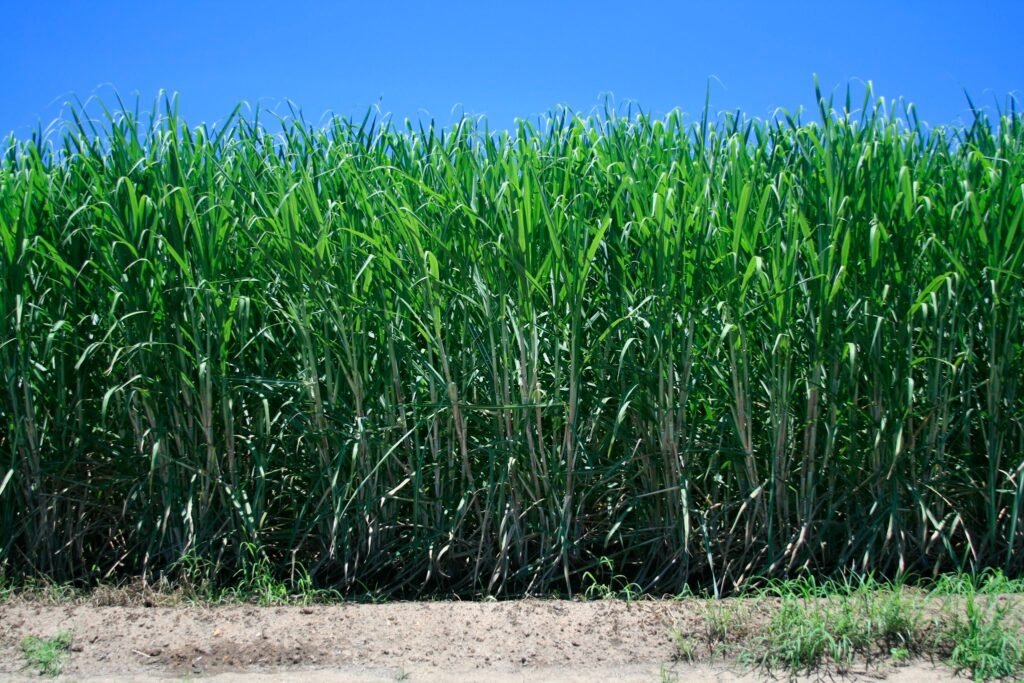
Tamil Nadu’s Revised Paddy and Sugarcane Incentive Structure
- Announcement: Tamil Nadu announced revised incentives on 10 August 2026 in the Assembly under Rule 110.
- The new rates take effect from 1 September 2026, coinciding with the upcoming paddy procurement season.
- Revised Paddy Rates:
- Fine Grade (Grade-A): State incentive increased to ₹289 per quintal, bringing the total effective price to ₹2,750 per quintal.
- Common Grade: State incentive fixed at ₹159 per quintal, bringing the total effective price to ₹2,600 per quintal.
- The incentive amounts differ, including ₹159 and₹156 per quintal.
- This is the first time the paddy subsidy rose by more than ₹156 in a single year despite tight state finances.
- Revised Sugarcane Rates:
- Special State Incentive: Raised by ₹360.50 to ₹709.50 per tonne.
- Combined Payout: Added to the Union Government’s Fair and Remunerative Price (FRP) of ₹3,290.50 per tonne, delivering a total payout of ₹4,000 per tonne for registered farmers.
- For 2026-27, the Union Government fixed FRP at ₹365/quintal at 10.25% recovery.
- The 2026-27 FRP provides a ₹3.56/quintal premium for every 0.1% increase in sugar recovery above 10.25%, with an equivalent reduction below it.
- This marks the first time the total sugarcane procurement price in the state has crossed the ₹4,000 threshold.
Impacts of Tamil Nadu’s Farm Incentive Hike
- Production Incentive: Higher assured returns of ₹2,750/quintal for fine paddy and ₹4,000/tonne for sugarcane can encourage farmers to retain these crops, potentially supporting output and reducing income uncertainty.
- Food-Security Support: Greater paddy procurement can strengthen State foodgrain availability and procurement-based distribution.
- However, the food-security gain depends on actual procurement, storage capacity and efficient movement into the PDS.
- Rural Economy Multiplier: Higher farm receipts can increase rural purchasing power, benefiting agricultural labour, transport, input suppliers, machinery services and local businesses.
- The policy therefore extends beyond direct farmer income.
- Recurring Fiscal Commitment: The State-funded incentive creates an additional budgetary obligation for every eligible quantity procured.
- As procurement expands, expenditure can rise, requiring careful balancing between farmer support and other development priorities.
- Price & Cropping Distortions: Persistent price support may encourage farmers to remain with paddy and sugarcane, even where alternative crops could offer better water or resource efficiency.
- This can weaken incentives for crop diversification toward pulses, oilseeds and millets.
- Higher sugarcane procurement costs can pressure sugar-mill margins, particularly when sugar realisations remain weak.
- Inter-State Competitive Pressure: Tamil Nadu’s enhanced State incentives may encourage competitive agricultural federalism, with other States potentially increasing their own support packages.
- Such competition can increase fiscal pressures and complicate nationally coordinated agricultural-market reforms.
Food Grain Procurement in India
- About: Food grain procurement is the system through which government-backed agencies purchase staple crops (paddy/rice, wheat and eligible coarse grains) directly from farmers at a guaranteed price.
- This mechanism prevents market distress sales, and guarantees income to farmers.
- It creates assured markets, maintains public stocks and supplies grain for NFSA and other welfare schemes.
- Framework: It functions through a coordinated network of specific legislative bodies and executive agencies:
- It is managed by the Department of Food & Public Distribution (DFPD) under the Ministry of Consumer Affairs frames the procurement policy.
- The Commission for Agricultural Costs and Prices (CACP) calculates agricultural production costs and recommends pricing guidelines.
- The Cabinet Committee on Economic Affairs (CCEA), chaired by the Prime Minister, officially approves and declares these floor prices.
- Established under the Food Corporations Act of 1964, the Food Corporation of India (FCI) is the principal agency overseeing the national logistics of buying, testing, storing, and transporting crops across state borders.
- State Government Agencies (SGAs), local state cooperatives and food corporations manage the ground-level network of physical collection booths and purchase centers.
- Process: The process cycle operates continuously across two major seasons: the Kharif marketing season (monsoon crops like rice) and the Rabi marketing season (winter crops like wheat).
- Setting the Price: Before planting begins, the government announces the Minimum Support Price (MSP) for 22 mandated crops.
- The price is formulaically fixed at a minimum 50% profit margin over the estimated production cost (A2+FL or C2 benchmarks) to incentivize production.
- The Fair and Remunerative Price (FRP) is the minimum legal price that sugar mills must pay sugarcane farmers for their crop.
- Quality Inspection and Testing: Farmers take their freshly harvested produce to designated grain markets (Agricultural Produce Market Committees or APMCs) and rural collection booths.
- Quality assurance professionals visually map and mechanically analyze samples to ensure the grains comply with Fair Average Quality (FAQ) norms.
- This tests strict limits on moisture content, organic impurities, and damaged kernels.
- Transaction and Direct Payouts: The open-ended policy guarantees that agencies must purchase all grain offered by farmers that meets FAQ criteria.
- Grains are electronically weighed. Payments are bypass-routed directly into the farmer’s validated bank account within 48 hours via Direct Benefit Transfer (DBT).
- Storage, Distribution, and Milling: Once bought, the grain takes one of two primary operational paths:
- Setting the Price: Before planting begins, the government announces the Minimum Support Price (MSP) for 22 mandated crops.
- Centralised Procurement (Non-DCP): Under Non-DCP, FCI directly procures foodgrains or State agencies procure them and subsequently hand stocks to FCI. FCI then undertakes storage, movement and allocation from the Central Pool.
- Decentralised Procurement (DCP): Introduced in 1997-98, DCP enables States to procure, store and distribute paddy/rice and wheat themselves. It promotes local procurement.
- They only surrender surplus yields to the FCI for national redistribution.
- Paddy is also routinely directed to local millers to convert it into raw or parboiled Custom Milled Rice (CMR).
- Public Distribution: Procurement ultimately feeds the Public Distribution System (PDS).
- The Centre handles procurement, storage, transportation and bulk allocation; States/UTs manage intra-State distribution and Fair Price Shops (FPSs), connecting public stocks with beneficiaries.
Frequently Asked Questions (FAQs):
1. Why has Tamil Nadu increased paddy procurement incentives?
To raise farmer incomes, offset rising cultivation costs, and strengthen agricultural livelihoods.
2. How much has Tamil Nadu increased the procurement incentive for paddy?
Fine-grade incentive is ₹289/quintal; common-grade incentive is ₹159/quintal, raising totals to ₹2,750 and ₹2,600.
3. What is the new procurement incentive for sugarcane farmers in Tamil Nadu?
The State incentive is ₹709.50/tonne, taking the combined sugarcane price to ₹4,000/tonne.
4. Who will benefit from the higher paddy and sugarcane procurement incentives?
Eligible Tamil Nadu paddy and sugarcane farmers supplying produce through the State’s procurement arrangements will benefit.
Disclaimer: Information in this article is based on official announcements and public records. Regulations and implementation details may evolve over time.