




NEET Computer Based Exam 2027, NTA is Preparing to Move Soon
| General Studies Paper II: Education, Government Policies and Interventions |
Why in News?
Recently, National Testing Agency (NTA) chief Abhishek Singh said that NTA is preparing NEET UG 2027’s shift from OMR to Computer Based Test (CBT); the Nandan Nilekani-led high-powered task force is “working on it.”
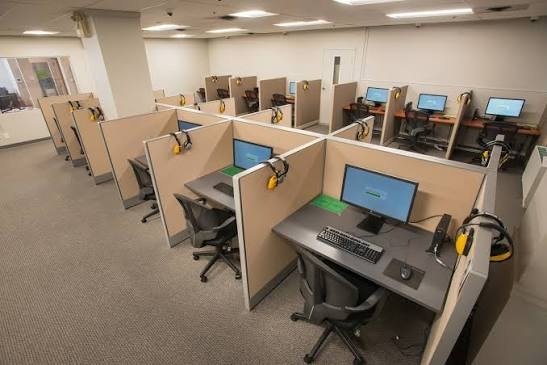
NEET UG 2027: Shift from OMR to CBT
- NTA is preparing NEET UG 2027’s shift from OMR-based pen-and-paper testing to Computer-Based Testing (CBT).
- NTA Director General Abhishek Singh has indicated that the transition is being prepared and could come soon, making NEET-UG 2027 a key potential transition year.
- Under CBT, candidates will answer questions directly on a computer terminal rather than marking answers on an OMR sheet.
- Candidates will be able to edit and change responses before submitting.
- The new system may include a “Mark for Review” tool. Students can flag difficult physics or chemistry questions to solve later.
- NEET is a mass examination, so a CBT model may require multiple sessions or days depending on available infrastructure.
- The reform exercise is examining a multi-day CBT model, although the final pattern has not yet been officially notified.
- If multiple sessions are used, maintaining equivalent difficulty levels becomes essential.
- This could require calibrated question banks, statistical analysis and robust psychometric procedures to ensure fairness between candidates.
- A shift to CBT does not automatically mean changes in syllabus, eligibility, reservation, marking scheme or medical-admission rules.
- Physical sheets for calculations will still be provided at the center.
- The exam will continue to focus heavily on the NCERT Class 11 and 12 curriculum for Physics, Chemistry, and Biology.
- The test will preserve the 720-mark layout containing 180 questions to be solved.
Why Shift NEET from OMR to CBT?
- Massive Examination Scale: NEET-UG is one of India’s largest entrance examinations. Such scale creates complex challenges involving question-paper transportation, centre management, and result processing.
- Digital delivery is being examined partly to address these systemic vulnerabilities.
- Paper-Based Security Risks: The 2024 examination controversy highlighted vulnerabilities in question-paper security and examination administration.
- The 2026 NEET scandal involved a widespread question paper leak that forced the cancellation and re-examination of India’s national medical entrance test.
- Over 2.2 million students were affected by this. NEET-UG 2026 controversy led widespread student protests.
- Secure electronic transmission and controlled digital release can potentially narrow the period during which examination material is physically exposed.
- The 2026 NEET scandal involved a widespread question paper leak that forced the cancellation and re-examination of India’s national medical entrance test.
- Reducing OMR-Related Errors: OMR examinations involve physical marking and scanning. Incorrect bubbling, multiple markings or physical damage can create complications.
- CBT eliminates bubble-filling and OMR scanning from the candidate-response process.
- Recommendation for Systemic Reform: The K. Radhakrishnan-led High-Level Committee, constituted after the 2024 examination controversy, examined the examination system from end to end.
- Its reform approach focused on question-paper security, technology, data protection, examination centres, NTA restructuring and governance.
What is the Nandan Nilekani Panel?
- About: The Union Government constituted a High-Powered Task Force on examination reforms in July 2026 under the leadership of Nandan Nilekani.
- This high-powered task force was created to overhaul India’s examination ecosystem and secure NTA against paper leaks and security breaches.
- It was formed in response to student protests and examination security concerns like the NEET-UG 2026 controversies.
- Prime Minister Narendra Modi announced its formation on 26 July 2026.
- Members:
- Nandan Nilekani (Chairman): Nilekani is co-founder of Infosys and was the founding Chairman of UIDAI. His experience with large-scale digital public infrastructure makes technology and digital identity central to his relevance to examination reform.
- S. Somanath: Former ISRO Chairman S. Somanath is a member. His experience in complex, high-reliability technological systems brings expertise in large-scale system design, precision and operational reliability.
- Tapan Deka: Former Intelligence Bureau Director Tapan Deka brings national-security and intelligence experience. His role is particularly relevant to examination security, threat assessment and protection against organised malpractice.
- V. Kamakoti: V. Kamakoti, Director of IIT Madras, is part of the panel. His expertise includes computer architecture, artificial intelligence and cybersecurity, areas directly relevant to technology-driven examinations.
- Anita Karwal: Former Education Secretary Anita Karwal brings extensive experience in school and education administration. She was also formerly associated with CBSE, giving the panel an important education-policy perspective.
- Amrit Lal Meena: Former Bihar Chief Secretary Amrit Lal Meena is the logistics expert on the task force. His administrative experience is relevant to large-scale examination infrastructure, centre management and logistical coordination.
- Mandates:
- Propose technology-driven, end-to-end structural changes to make national entrance exams completely leak-proof, secure, and transparent.
- Formulate a time-bound roadmap to shift major public exams from pen-and-paper models to highly secure Computer-Based Testing (CBT) ecosystems.
- Recommend next-generation digital safeguards including Artificial Intelligence (AI) surveillance, advanced candidate biometric verification, encrypted question-paper transmission, and secure cloud networks.
- Advise on administrative restructuring, vendor oversight, and strict enforcement mechanisms under the Public Examinations (Prevention of Unfair Means) Act, 2024.
NTA’s NEET Examination Reforms
- Digital Application Process: NTA has progressively strengthened online application systems, making registration and candidate-data management digitally administered.
- Candidate Authentication: Candidate verification has become increasingly technology-driven.
- Aadhaar-based authentication and biometric approaches are among the measures being incorporated into the broader public-examination ecosystem.
- Face Authentication Pilot: During NEET-UG 2025, UIDAI, NIC and NTA conducted a Proof of Concept for Aadhaar-based face authentication at selected centres in Delhi.
- It was designed to test identity verification using biometric technology.
- CCTV Surveillance: CCTV surveillance has become an important component of examination security. NTA’s current procurement documents specifically include NEET-UG CCTV requirements.
- Examination Monitoring: The government has strengthened monitoring and coordination mechanisms around examinations.
- The 2026 review of NEET-UG security specifically examined surveillance arrangements and their further augmentation.
- Grievance Redressal: Strengthening grievance redressal mechanisms has been part of the wider examination-reform programme. The government has specifically identified grievance handling as an area requiring institutional improvement.
What Did the NTA Reform Committee Recommend?
- About: The National Testing Agency (NTA) is an autonomous, specialist and self-sustained testing organisation under the Department of Higher Education, Ministry of Education.
- The Union Cabinet approved the establishment of NTA in 2017, and it was subsequently registered as a society in 2018.
- Its objective was to bring greater standardisation, efficiency, transparency and reliability to national-level examinations.
- It conducts entrance and eligibility examinations for higher education.
- Reform Committee: Following concerns surrounding NEET-UG 2024 and other examination irregularities, the Ministry of Education constituted a High-Level Committee on 22 June 2024 under former ISRO Chairman K. Radhakrishnan.
- The seven-member committee included K. Radhakrishnan, Randeep Guleria, B.J. Rao, Ramamurthy K., Pankaj Bansal, Aditya Mittal and Govind Jaiswal as Member Secretary.
- Its original mandate covered examination-process reform, data-security improvement, and NTA’s structure and functioning.
- The Supreme Court subsequently expanded the remit to include examination security, technology, stakeholder engagement, collaboration and student support.
- The committee recommended reviewing the entire examination lifecycle, from question preparation and printing/digital handling to centre management, candidate verification, evaluation and results.
- It recommended stronger question-paper setting, vetting and security protocols.
- It suggested implementing secure hybrid digital delivery models, encrypted question paper transmission, and the DIGI-EXAM framework utilizing Aadhaar-based biometrics.
- The committee recommended stronger coordination between NTA and state/district authorities for examination administration.
- The committee recommended restructuring and strengthening NTA, including greater use of domain-specific manpower and stronger institutional partnerships.
- It also proposed clearer allocation of responsibilities across the examination ecosystem.
- Established 10 specialized functional verticals, including dedicated divisions for Information Security, Vigilance and Forensics, and Research and Development.
Frequently Asked Questions (FAQs):
1. When will NEET become a Computer-Based Test?
NEET-UG is planned to shift to CBT from 2027, with NTA preparing infrastructure and security safeguards for the transition.
2. Is NEET UG 2027 a Computer-Based Exam?
Yes, NEET-UG 2027 is planned as a CBT, following the Education Minister’s announcement and NTA’s preparations.
3. Will NEET 2027 be conducted online?
Yes, NEET-UG 2027 is expected to be conducted online through CBT, replacing the traditional OMR-based pen-and-paper format.
4. Why is NTA changing NEET to CBT mode?
CBT aims to strengthen security, reduce physical paper handling, improve efficiency and address vulnerabilities exposed by examination controversies.
5. Will NEET 2026 be computer based?
No. NEET-UG 2026 was conducted in pen-and-paper OMR mode; its re-examination also remained offline.
6. What will change in the NEET 2027 exam pattern?
The principal confirmed change is OMR-to-CBT; details on shifts, duration, questions and marking require NTA’s official 2027 notification.
Disclaimer: Information in this article is based on official announcements and public records. Regulations and implementation details may evolve over time.
| Also Read: Major Changes For Upcoming NEET UG 2027 Exam |