




Norovirus Outbreak on Ruby Princess Cruise Ship
| General Studies Paper II: Health, Diseases |
Why in News?
Recently, a norovirus outbreak aboard the Ruby Princess cruise infected 102 passengers and 23 crew during an Alaska–Canada voyage.
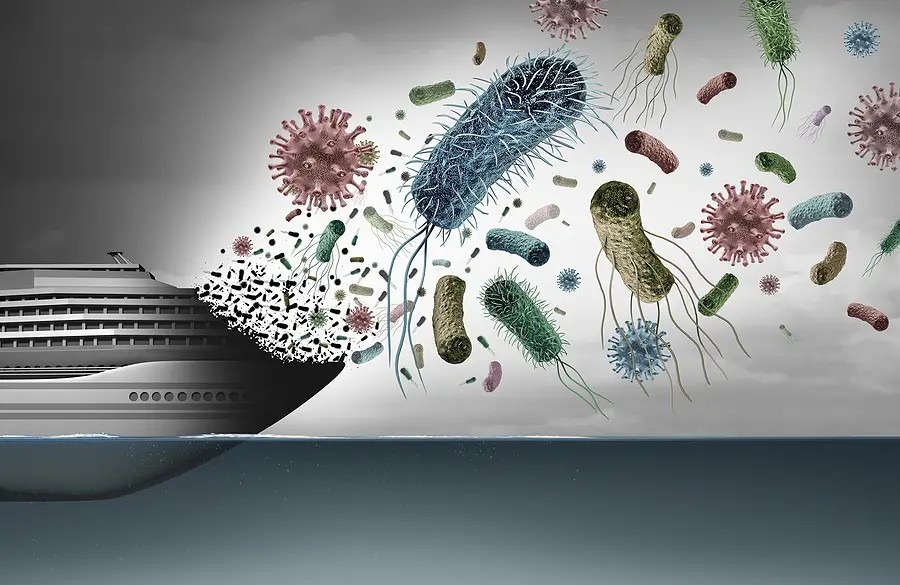
What is Norovirus?
- About: It is a group of highly contagious, single-stranded RNA viruses that cause acute gastroenteritis (inflammation of the stomach and intestines).
- It is often miscalled the “stomach flu,” but it is unrelated to influenza viruses.
- Characteristics: Norovirus belongs to the Caliciviridae family and consists of several genogroups and genotypes.
- Norovirus is resistant to many disinfectants and can heat up to 60°C.
- Human noroviruses are classified into multiple genogroups (predominantly GI, GII, and GIV).
- Among these, the GII.4 strain is historically responsible for the majority of outbreaks worldwide.
- Immunity after infection is short-lived and strain-specific, making reinfection common even after previous illness.
- It can also survive many common hand sanitisers.
- Transmission: The virus spreads primarily through the fecal–oral route via contaminated food, water, surfaces, or direct contact with infected individuals.
- Tiny particles from vomit can also contaminate nearby surfaces, enabling rapid transmission.
- Outbreaks frequently occur in cruise ships, hospitals, nursing homes, schools, childcare centres, camps, hotels, and military barracks, where close contact accelerates person-to-person transmission.
- High Infectivity: Norovirus is extremely infectious because only a few viral particles are sufficient to cause disease.
- Infected individuals may shed billions of virus particles, facilitating explosive outbreaks in communities and institutions.
- Symptoms generally appear 12–48 hours after exposure.
- Clinical Symptoms: Typical symptoms include vomiting, watery diarrhea, nausea, abdominal pain, with some patients experiencing fever, headache, and body aches. Illness usually lasts 1–3 days in healthy individuals.
- High-Risk Groups: Although everyone is susceptible, severe illness mainly affects children under five, older adults, and immunocompromised individuals, primarily due to the risk of dehydration requiring medical care.
- Global Cause: It is a major global cause of foodborne disease and diarrhoeal illness.
- In the United States alone, it causes 19–21 million illnesses, around 109,000 hospitalizations, nearly 900 deaths, and approximately 2,500 reported outbreaks annually.
- In India, it causes sporadic outbreaks and accounts for 1.4% to 44% of diarrheal cases.
- Notable community clusters have been confirmed in states like Kerala (such as in Alappuzha and Wayanad).
- Diagnosis and Treatment: Diagnosis relies on laboratory detection of viral RNA or antigens.
- There is no specific antiviral treatment or vaccine in routine use.
- Management focuses on oral rehydration, fluid replacement, and preventing dehydration; antibiotics are ineffective.
- Prevention: Effective prevention includes handwashing with soap and water, proper food hygiene, thorough surface disinfection, safe water, isolation of infected persons, and staying home for 48 hours after symptoms stop.
Ruby Princess Cruise Outbreak: Facts and Developments
- Outbreak: The Ruby Princess experienced a confirmed norovirus outbreak during its 20-day voyage from San Francisco to Alaska and Canada.
- The outbreak was officially reported to the U.S. Centers for Disease Control and Prevention (CDC) under its Vessel Sanitation Program (VSP) after gastrointestinal illness exceeded the reporting threshold.
- Timeline: The voyage departed on 12 June 2026. The outbreak was reported to the CDC on 28 June, while the vessel returned to San Francisco on 2 July 2026.
- Scale: The ship carried 3,032 passengers and 1,144 crew members. A total of 102 passengers and 23 crew members developed gastrointestinal illness.
- It represents about 3% of those onboard, triggering mandatory CDC notification.
- Affected individuals mainly experienced vomiting, diarrhea, nausea, and abdominal cramps.
- Isolation: Princess Cruises isolated symptomatic passengers and crew in their cabins to interrupt person-to-person transmission and reduce exposure in common areas.
- The crew implemented intensive cleaning and disinfection, especially of high-touch surfaces following CDC outbreak-response protocols.
- Surveillance: Medical teams collected stool specimens for laboratory confirmation and maintained continuous surveillance.
- The CDC Vessel Sanitation Program remotely monitored the outbreak response, reviewed sanitation procedures.
- The ship underwent comprehensive deep cleaning and disinfection before beginning its next scheduled voyage to minimize residual contamination.
- Continutine: This was the third norovirus outbreak on a cruise vessel in 2026.
- Earlier this Caribbean Princess (April 28 – May 11) outbreak on a voyage originating in Florida sickened 145 passengers and 15 crew members.
- Star Princess (March 2026) norovirus outbreak affected roughly 153 people during a Caribbean cruise.
Global Efforts to Prevent Norovirus Outbreaks
- The World Health Organization (WHO) recognizes norovirus as the leading global cause of acute gastroenteritis.
- WHO promotes infection prevention, and accelerated vaccine research.
- WHO encourages countries to strengthen laboratory-based surveillance, rapid outbreak detection, and international information sharing.
- WHO promotes hand hygiene, and Water, Sanitation and Hygiene (WASH) measures to interrupt norovirus transmission.
- Under the International Health Regulations (2005), countries strengthen capacities for early detection, reporting, and response to outbreaks, including international travel settings.
- The Global Pediatric Norovirus Surveillance Network, supported by the CDC Foundation and partners, includes India to monitor circulating strains.
- India monitors outbreaks through the Integrated Disease Surveillance Programme (IDSP) and the National Centre for Disease Control (NCDC), enabling rapid detection, and coordinated outbreak response.
- The Ministry of Health and Family Welfare and WHO India strengthen Infection Prevention and Control (IPC) through national guidelines, healthcare-worker training, and hospital infection-control systems.
- India has expanded public health laboratories, Field Epidemiology Training Programmes (FETP), and Public Health Emergency Operations Centres to improve outbreak investigation.
FAQs:
- What is norovirus?
Norovirus is a highly contagious virus causing acute gastroenteritis with vomiting, diarrhea, nausea, and stomach cramps. - What caused the norovirus outbreak on the cruise ship?
The outbreak resulted from norovirus transmission through infected individuals, contaminated surfaces, food, or person-to-person contact. - How many passengers and crew members were affected?
102 passengers and 23 crew members reported gastrointestinal illness aboard the Ruby Princess. - What are the symptoms of norovirus infection?
Symptoms include vomiting, diarrhea, nausea, stomach cramps, and sometimes fever, headache, and body aches. - How does norovirus spread?
It spreads through contaminated food, water, surfaces, vomit particles, and close contact with infected people. - How can people protect themselves from norovirus?
Wash hands with soap and water, disinfect surfaces, and avoid contaminated food and sick individuals. - Is norovirus a serious illness?
Usually mild, but it can cause severe dehydration, especially in young children, elderly, and immunocompromised people. - What treatment is available for norovirus infection?
No specific antiviral exists; treatment focuses on rehydration, rest, and electrolyte replacement.
Disclaimer: Information in this article is based on official announcements and public records. Regulations and implementation details may evolve over time.
| Also Read: Nipah Virus Case Reported in West Bengal |