



India Groundwater Levels Remain Stable Amid Rain Deficit
| General Studies Paper III: Issues Relating to Development, Water Security, Government Policies & Interventions |
Why in News?
According to the Agriculture Ministry’s Crop Weather Watch Group (CWWG) report, despite monsoon rainfall deficit, 88% of India’s groundwater levels remain normal, ensuring short-term irrigation resilience.
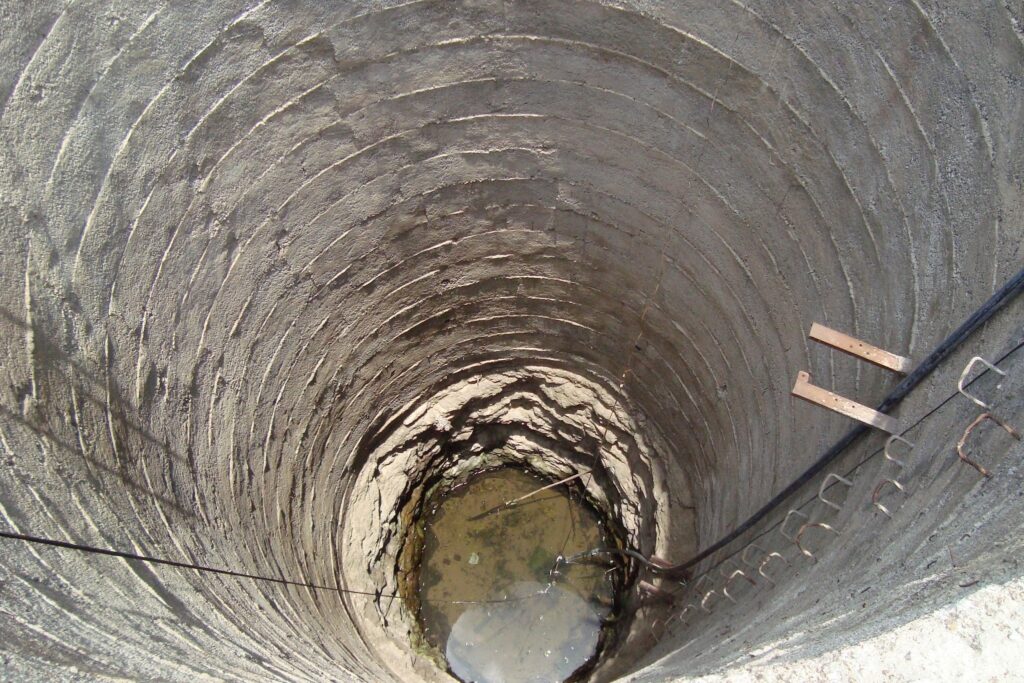
Findings of Agriculture Ministry’s Crop Weather Watch Group (CWWG) Latest Report
- Groundwater Status: The CWWG reported that India’s groundwater reserves remain largely stable despite a 19% cumulative southwest monsoon rainfall deficit.
- This indicates adequate water availability for the ongoing Kharif 2026 season in most irrigated regions.
- The highest deficits occurred in East & Northeast India (-32%), followed by the Southern Peninsula (-26%), Northwest (-13%), and Central India (-9%).
- Well Assessment: The assessment covered 9,085 groundwater monitoring wells nationwide.
- Of these, 7,977 wells (88%) recorded normal groundwater levels, while only 12.2% experienced varying degrees of groundwater drought.
- Depth Distribution: Around 69% of monitored wells have groundwater within 10 metres below ground level, ensuring easy access for irrigation.
- Only 4% of wells recorded water levels deeper than 40 metres, indicating sufficient groundwater availability across most regions.
- Normal groundwater reserves provide a crucial irrigation buffer where tube-well irrigation is available.
- Soil Moisture: The report highlighted below-average soil moisture in parts of Chhattisgarh, Jharkhand, Bihar, Punjab, Haryana, Gujarat, Marathwada, Karnataka, Andhra Pradesh, Telangana, eastern West Bengal, and parts of the Northeast.
- Sustainability Challenge: Despite present stability, Punjab (156.36%), Rajasthan (147.11%), and Haryana (136.75%) continue extracting groundwater far beyond annual recharge.
Reasons Behind Stable Groundwater Despite Rainfall Deficit
- Slow Response of Aquifers: Groundwater responds gradually to rainfall variations because recharge takes time. Impact of a weak monsoon on groundwater generally becomes visible only after 5–6 months, not immediately during the same season.
- Extensive Irrigation Infrastructure: India possesses over 20 million tube wells, making groundwater the backbone of irrigation. Stored groundwater supplies crop water requirements during dry spells.
- Water Conservation: Check dams, farm ponds, percolation tanks, recharge wells, watershed development, and rainwater harvesting have improved groundwater recharge in many regions. These conservation measures strengthen aquifer resilience.
- Limited Groundwater Stress: The Groundwater Drought Index indicates groundwater stress is confined to limited pockets rather than widespread across India. Most aquifers continue to provide reliable irrigation and drinking water supplies.
India’s Groundwater Status & Initiatives
- About: Groundwater is India’s most dependable freshwater resource and forms the backbone of water, food and livelihood security.
- India is the largest user of groundwater in the world, extracting more groundwater annually than China and the United States combined.
- It supplies around 62% of irrigation, 85% of rural drinking water, and nearly 50% of urban water demand.
- Groundwater also supports industries, ecosystems and climate resilience.
- Governance: In India, water is primarily a State subject, while the Union Government provides policy, technical and financial support.
- The Model Groundwater Bill, 2017 establishes a legal framework. It enables Indian States to regulate and control indiscriminate water extraction.
- Inter-ministerial and Center-State coordination is strategically driven by the National Interdepartmental Steering Committee (NISC) on Groundwater, which operates under the Department of Water Resources.
- The Ministry of Jal Shakti combines the legislative power of the Model Bill with several structural, scientific, and community-led initiatives.
- National Status: India’s Annual Groundwater Recharge is estimated at 448.52 BCM, while Annual Extractable Groundwater Resources are 407.75 BCM.
- Annual extraction stands at 247.22 BCM, resulting in a national Stage of Groundwater Extraction (SoE) of 60.63%.
- Although the national average remains within replenishable limits, regional disparities are severe.
- State-wise Status: Groundwater availability differs widely across India due to geology, rainfall, aquifer characteristics and extraction patterns.
- The Indo-Gangetic alluvial plains possess highly productive aquifers, while hard-rock regions of peninsular India have limited storage.
- Punjab, Haryana, and Rajasthan are the most critical conditions, with extraction exceeding 100% of annual recharge.
- Delhi faces extreme stress with extraction levels well past safe limits.
- Tamil Nadu and Karnataka, high stress and limited crystalline aquifer capacity create regional vulnerability.
- Uttar Pradesh, highest absolute groundwater available for future use at 20.53 BCM, alongside high overall annual recharge.
- Andhra Pradesh and Assam, substantial remaining reserves reported at 17.37 BCM and 17.23 BCM respectively.
- Maharashtra and Bihar, healthy annual replenishment rates providing 15.81 BCM and 15.76 BCM available for future allocation.
- Groundwater Depletion: India depends on groundwater more than any other country. This drives groundwater depletion in India:
- The principal cause is excessive agricultural pumping, which accounts for the majority of groundwater use. Agriculture uses nearly 89%-90% of extracted groundwater.
- Free or heavily subsidized electricity for farmers removes financial limits on pumping, leading to continuous and unregulated extraction via deep borewells.
- Minimum Support Prices (MSP) encourage growing crops like paddy (rice) and sugarcane in low-rainfall, semi-arid regions (such as Punjab and Haryana).
- Traditional flood irrigation remains widespread, showing a low water-use efficiency of only 35% to 40%.
- Rapid city growth covers natural soil and recharge zones with concrete, stopping rainwater from soaking back into the earth.
- Erratic monsoons, prolonged dry spells, rising temperatures, and increasing evapotranspiration reduce groundwater recharge while increasing irrigation demand.
- Reports from the Central Ground Water Board indicate that roughly 26% of India’s assessed groundwater blocks are categorized as over-exploited, critical, or semi-critical.
- Challenges: Groundwater challenges extend beyond quantity. Arsenic, fluoride, nitrate, uranium, salinity, iron and heavy metals contaminate aquifers in several regions.
- Industrial discharge, excessive fertiliser use, sewage infiltration and geogenic contamination threaten drinking water safety and public health.
- Excessive groundwater withdrawal causes falling water tables, reduced river baseflow, wetland degradation, land subsidence in vulnerable regions.
- Fragmented institutional responsibilities, poor groundwater regulation and legacy of groundwater being linked to land ownership (Indian Easements Act, 1882) further complicates regulation.
- The Water (Prevention and Control of Pollution) Act, 1974 has insufficient groundwater provisions and regulatory loopholes that encourage pollution.
- Initiatives: The Central Ground Water Board (CGWB) undertakes annual Dynamic Groundwater Resource Assessment with State Governments.
- India also maintains over 43,000 groundwater monitoring stations.
- The National Aquifer Mapping and Management Programme (NAQUIM & NAQUIM 2.0) delivers high-resolution, decentralized data at the Panchayat level to map and manage underground water resources scientifically.
- The Atal Bhujal Yojana (Atal Jal) targets seven water-stressed states, directly tying financial incentives to measurable community-driven water budgeting and conservation outcomes.
- The “Jal Shakti Abhiyan: Catch the Rain” (JSA: CTR) campaign mobilizes nationwide conservation efforts by geo-tagging local water bodies, building rainwater harvesting structures, and reviving defunct borewells.
- The Master Plan for Artificial Recharge to Groundwater outlines terrain-specific engineering structures to feed an additional 185 billion cubic meters (BCM) of water back into vulnerable aquifers.
- Jal Sanchay Jan Bhagidari (JSJB), a public-participation initiative focused on building low-cost, locally suited artificial recharge structures.
- Mission Amrit Sarovar (Community Scale) was launched on April 24, 2022, as part of the Azadi Ka Amrit Mahotsav. This mission addresses local water scarcity by building structural conservation buffers.
- Jal Jeevan Mission (Household Scale) was launched in 2019, the Jal Jeevan Mission (or Har Ghar Jal) handles drinking water infrastructure directly at the household level.
FAQs:
1. Why have groundwater levels remained stable despite a rainfall deficit?
Stable aquifer storage, previous monsoon recharge, and delayed aquifer response kept 88% of monitoring wells at normal levels despite the 19% rainfall deficit.
2. Which agency released the latest groundwater report?
The Agriculture Ministry’s Crop Weather Watch Group (CWWG) released the latest report assessing groundwater status alongside monsoon, soil moisture and crop conditions.
3. Which states recorded the biggest changes in groundwater levels?
The report highlighted persistent groundwater stress in Punjab, Haryana and Rajasthan, while below-average soil moisture affected several other states.
4. What is groundwater recharge?
Groundwater recharge is the natural or artificial process by which rainwater and surface water infiltrate the soil to replenish underground aquifers.
5. How does a monsoon deficit affect groundwater?
A monsoon deficit reduces aquifer recharge, but groundwater declines usually appear 5–6 months later because aquifers respond slowly to rainfall changes.
Disclaimer: Information in this article is based on official announcements and public records. Regulations and implementation details may evolve over time.
| Also Read: India’s Big Cities Facing Water Crisis |