




DRDO Conducts Long-Duration Scramjet Combustor Test
|
General Studies Paper III: Defence Technology |
Why in News?
Recently, India’s Defence Research and Development Organisation (DRDO) successfully conducted a long-duration scramjet combustor test in Hyderabad, significantly advancing indigenous hypersonic missile capabilities.
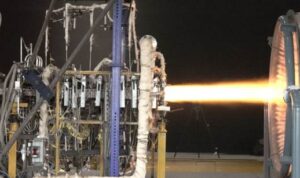
Highlights of DRDO’s Long-Duration Scramjet Combustor Test
- On May 9, 2026, India’s DRDO successfully tested a full-scale actively cooled scramjet combustor for over 1,200 seconds (20 minutes) at the Scramjet Connect Pipe Test (SCPT) Facility in Hyderabad.
- This milestone advances development of hypersonic cruise missiles exceeding Mach 5 using indigenous liquid hydrocarbon endothermic fuel.
- The test sustained supersonic combustion for over 1,200 seconds (20 minutes) on May 9, 2026, surpassing the previous 700-second record.
- This demonstrates the engine’s capacity to handle extreme thermal loads, ensuring endurance for operational hypersonic flight.
- This test utilized a full-scale, actively cooled design rather than a subscale model. Fuel is circulated through the engine structure to manage intense heat generated at Mach 5+ speeds.
- The engine employs indigenously developed liquid hydrocarbon endothermic fuel, acting as both propellant and coolant. The fuel undergoes a chemical cracking process, increasing its energy content before combustion.
- The combustor uses a specialized ceramic Thermal Barrier Coating (TBC) to withstand operational temperatures potentially exceeding 2000°C.
- This protects structural integrity during long-duration hypersonic flight.
- This success marks a rapid progression from a 120-second test in early 2025 to a 1,000-second test in April 2025, and two 700+ and 1,200-second tests in early 2026, indicating stable performance improvement.
- This test validates the scramjet technology needed for the Hypersonic Cruise Missile Development Programme.
- Such technology enables missiles to travel over 6,100 km/h, challenging existing air defense systems.
- With this achievement, India places itself among a select few nations, including the USA and China, that have demonstrated successful, long-duration actively cooled scramjet technology.
What is a Scramjet Engine?
- About: A Scramjet (Supersonic Combustion Ramjet) is a revolutionary air-breathing engine variant of the ramjet, where combustion occurs in supersonic airflow.
- It has no moving parts such as compressors or turbines, relying on the vehicle’s extreme forward velocity to compress air.
- A scramjet is an advanced propulsion system designed for hypersonic speeds (Mach 5+).
- Its unique characteristic is maintaining supersonic airflow throughout the engine, preventing the massive pressure and heat losses.
- Principle: It functions on the Brayton cycle, involving compression, combustion, and expansion.
- It captures high-velocity air, injects fuel, and ignites the mixture without mechanical aid, converting kinetic energy into pressure energy to generate thrust.
- Velocity Thresholds: Scramjets typically ignite at Mach 4-5. Below this, they cannot compress air sufficiently.
- Their theoretical upper limit reaches Mach 15 to Mach 24, far surpassing the Mach 6 ceiling of standard ramjets.
- Air-Breathing Advantage: Unlike rockets, scramjets do not carry onboard oxidisers. They ingest atmospheric oxygen, reducing weight by nearly 70% compared to traditional launch vehicles.
- Supersonic Combustion: Combustion happens in a millisecond window. Managing a stable flame in air moving at 1.5 km/s is described as “lighting a match in a hurricane.”
- It requires advanced flame stabilisation techniques to maintain thrust.
- Critical Components: The engine consists of three primary stages: a converging inlet (compression), a supersonic combustor (heat addition), and a diverging nozzle (expansion).
- Fuel Specifications: Liquid Hydrogen is the preferred fuel due to its rapid ignition and high energy density.
- However, research into hydrocarbon fuels continues for tactical missiles, despite their longer ignition delays.
- Structural Complexity: The shockwave interactions within the inlet must be precisely tuned to prevent engine “unstart,” where the shockwave is pushed out of the intake.
- Thermal Management: At Mach 6+, skin temperatures exceed 2,000°C. Development requires actively cooled structures and exotic materials to prevent the engine from melting under intense aerodynamic heating.
- Launch Requirements: Scramjets produce zero static thrust; they cannot start from a standstill. They require a booster (usually a solid rocket) to reach the “takeover” speed where the scramjet becomes operational.
- Strategic Applications: They are the core of Hypersonic Cruise Missiles (HCMs). Their ability to fly at low altitudes with extreme speed and manoeuvrability makes them nearly impossible for current air-defence systems to intercept.
Global Hypersonic Race
- Russia: Russia is currently the only nation to have extensively deployed hypersonic weapons in active combat.
- As of 2025, its arsenal includes the Zircon sea-launched cruise missile (Mach 9), the Avangard glide vehicle (Mach 27), and the Kinzhal (Mach 10).
- In early 2026, Russia claimed its systems could strike any target globally within 30 minutes.
- Reports indicate production has scaled to approximately 10–15 Kinzhal missiles per month, aiming for a stockpile of 1,000 hypersonic weapons by late 2025.
- China: China possesses the world’s most mature hypersonic infrastructure, focusing on regional “Anti-Access/Area Denial” (A2/AD).
- The DF-17, operational since 2019, carries the DF-ZF glide vehicle with a range of 1,800–2,500 km.
- Its experimental Xingkong-2 (Starry Sky) uses “waverider” technology to maintain lift via its own shockwaves at Mach 6.
- China’s primary goal is neutralizing U.S. carrier strike groups in the Pacific.
- USA: The U.S. has pivoted from research to urgent fielding, requesting $3.9 billion for R&D in FY2026.
- A significant milestone occurred in May 2026, as U.S. CENTCOM requested the first-ever combat deployment of the Dark Eagle (Long-Range Hypersonic Weapon) to counter targets in West Asia.
- The system has a range of 2,775 km and costs roughly $15 million per missile, though consistent operational readiness remains a challenge.
- India; India officially entered the “elite club” in November 2024 by successfully testing its first indigenously developed long-range hypersonic missile.
- Developed by DRDO, the HSTDV (Hypersonic Technology Demonstrator Vehicle) reached Mach 6 using a scramjet engine.
- Future development includes BrahMos-II, a hypersonic cruise missile co-developed with Russia, designed to travel at Mach 7–8 with a range exceeding 1,000 km.