



Kevin Warsh to Become Next US Federal Reserve Chair
|
General Studies Paper II: Effect of Policies & Politics of Countries on India’s Interests |
Why in News?
Recently, the US Senate confirmed Kevin Warsh as the next chair of the Federal Reserve, succeeding Jerome Powell amid rising inflation.
Who is Kevin Warsh?
- Early Life: Kevin Warsh was born on April 13, 1970, in Albany, New York.
- He studied Public Policy at Stanford University and earned a law degree from Harvard Law School in 1995.
- He also studied economics and financial markets at MIT and Harvard Business School.
- Career: Warsh joined Morgan Stanley in 1995 and specialized in mergers and acquisitions.
- He later became executive director in investment banking, gaining deep exposure to Wall Street finance and global capital markets.
- In 2002, Warsh entered public service under President George W. Bush as Special Assistant for Economic Policy and Executive Secretary of the National Economic Council. He worked on corporate regulation and post-accounting scandal reforms.
- At age 35, Warsh became one of the youngest governors in the history of the Federal Reserve in 2006. His nomination initially faced criticism over limited central banking experience.
- Warsh is a member of the Group of Thirty, an elite international economic policy body, and serves on the Panel of Economic Advisers of the Congressional Budget Office.
- Role: Warsh played a major role during the 2008 global financial crisis alongside Ben Bernanke.
- He acted as a bridge between the Federal Reserve and Wall Street institutions during the collapse of Lehman Brothers and bailout negotiations.
- He is widely regarded as an “inflation hawk,” favoring strict inflation control and cautious monetary expansion.
- Warsh criticized excessive quantitative easing and warned about long-term inflationary risks.
- Warsh also represented the Federal Reserve to the Group of Twenty (G20) and served as the Board’s emissary to advanced and emerging economies across Asia.
- Resignation: Warsh resigned from the Federal Reserve in 2011 after disagreements over large-scale bond purchases and ultra-loose monetary policy measures adopted after the crisis.
- After leaving the Fed, he became associated with Stanford’s Hoover Institution and taught at Stanford Graduate School of Business. He remained influential in conservative economic policy circles.
- Warsh served on corporate boards including UPS and investment firms linked to billionaire investor Stanley Druckenmiller.
- Support: Donald Trump strongly supported Warsh for Federal Reserve leadership due to his market credibility and support for economic reforms.
- In May 2026, the US Senate confirmed Warsh as the next Federal Reserve Chair after a closely contested 54–45 vote, replacing Jerome Powell.
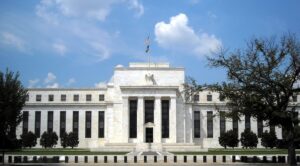
US Federal Reserve & Its System
- Meaning: The Federal Reserve, commonly called the “Fed,” is the central banking system of the United States.
- It manages monetary policy, regulates banks, controls inflation, and maintains financial stability in the world’s largest economy.
- Establishment: The Federal Reserve System was established through the Federal Reserve Act of 1913 after repeated banking crises, especially the Panic of 1907.
- Objective: The Fed operates under a “dual mandate” given by the US Congress: achieving maximum employment and maintaining stable prices.
- It also seeks moderate long-term interest rates and financial stability.
- Structure: The system has three major parts: the Board of Governors in Washington DC, 12 regional Federal Reserve Banks, and the Federal Open Market Committee (FOMC), which sets monetary policy.
- The Board consists of seven governors appointed by the US President and confirmed by the Senate for 14-year terms. The Chairperson leads US monetary policy and financial regulation.
- The Fed has 12 regional banks located in cities including New York, Chicago, and San Francisco. These banks supervise local financial institutions and implement central bank policies.
- The FOMC is the key monetary policy body. It includes seven governors and five regional bank presidents.
- Powers: The Fed mainly uses interest rates, reserve requirements, and open market operations.
- It buys or sells government securities to influence money supply and borrowing costs.
- The Federal Reserve targets inflation near 2%. During high inflation, it raises interest rates to reduce spending and borrowing; during recessions, it cuts rates to stimulate growth.
- The Fed supervises major US banks, ensures liquidity, conducts stress tests, and protects financial stability. It became more powerful after the 2008 global financial crisis reforms.
Impact of US Federal Reserve Leadership
- Influence on the Global Economy: The US Federal Reserve is the world’s most influential central bank because the US economy contributes nearly 25% of global GDP and the US dollar dominates international finance.
- Changes in Federal Reserve leadership directly affect global growth, inflation trends, borrowing costs, and investor confidence across developed and developing economies.
- Impact on Capital Flows: Federal Reserve interest-rate decisions strongly influence the US dollar index, global bond yields, and international capital movements.
- Higher US interest rates attract global investments toward American treasury securities, causing capital outflows from emerging economies and increasing currency depreciation pressures worldwide.
- Effects on Emerging Nations: Emerging economies such as Brazil, South Africa, Indonesia are highly sensitive to Federal Reserve policy shifts.
- Aggressive US monetary tightening increases external debt burdens because many developing countries borrow in US dollars.
- This raises repayment costs, weakens exchange rates, and increases imported inflation risks.
- Implications for India: Federal Reserve actions significantly affect India’s monetary and financial environment.
- When the Fed raises interest rates, the Reserve Bank of India often faces pressure to maintain higher domestic rates to protect the rupee and prevent capital outflows.
- It also impacts India’s stock markets, forex reserves, and government borrowing costs.
- Trade, Energy and Commodity: A stronger US dollar generally increases global prices of crude oil, fertilizers, and imported commodities because international trade is largely dollar-denominated.
- For India, which imports over 85% of its crude oil requirement, Federal Reserve policy indirectly affects inflation, fiscal deficits, and trade balances.
- Geopolitical and Financial: Federal Reserve leadership shapes broader geopolitical and financial power structures.
- US monetary policy influences sanctions effectiveness, global banking liquidity, sovereign debt markets, and international institutions like the IMF and World Bank.
- The appointment of leaders may alter future approaches toward inflation control, global liquidity, and strategic economic competition with China.
|
Also Read: Trump Names Kevin Warsh as New Federal Reserve Chief |