Centre Approves Foreign Loans for Young India Schools
|
General Studies Paper II: Government Policies & Interventions Fundamental Rights, Education |
Why in News?
Recently, the Centre approved ₹4,049 crore ADB funding for Telangana’s Young India Integrated Residential Schools (YIIRS), strengthening education infrastructure.
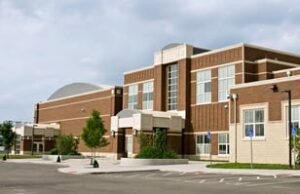
What are Young India Integrated Residential Schools (YIIRS)?
- About: Young India Integrated Residential Schools (YIIRS) are Telangana government’s flagship residential education institutions designed to provide high-quality, free, inclusive, and technology-driven education for disadvantaged children.
- The model combines academics, hostel facilities, nutrition, sports, and skill development under one campus system.
- Objective: The primary objective is to reduce educational inequality by offering “corporate-style education” to students from SC, ST, BC, minority, and economically weaker communities.
- The programme also promotes social integration by bringing children from different social groups into common campuses.
- Development Agencies: Major implementing and financing agencies include the Asian Development Bank (ADB), NABARD, and the Telangana government’s Telangana Government Educational Welfare Infrastructure Development Corporation (TGEWIDC).
- The ADB acts as the primary international financing partner alongside NABARD. Architectural execution is managed through specialized firms like OCI Architects.
- Target Coverage: The Telangana government plans to establish 105 YIIRS campuses, ideally one in every Assembly constituency.
- Each campus is expected to accommodate nearly 2,560 students, creating capacity for around 2.7 lakh students statewide.
- Budget Scale: The total estimated project expenditure has expanded significantly. Initial announcements mentioned ₹11,000–11,600 crore.
- Later estimates increased to nearly ₹21,000 crore for school infrastructure and around ₹30,000 crore including broader education investments.
- The Centre approved ₹4,049 crore foreign loan assistance linked with the Asian Development Bank (ADB) for the YIIRS programme.
- Infrastructure Features: Each campus is planned across nearly 25 acres with digital classrooms, STEM labs, AI-enabled learning systems, libraries, sports complexes, hostels, healthcare units, and counselling centres.
- Girls Education Focus: The Telangana government recently prioritised girls’ residential schools in the first implementation phase to improve female educational participation.
- Human Capital Strategy: The programme is viewed as a long-term human capital investment aligned with SDG-4, aiming to strengthen literacy, employability, nutrition, and future workforce productivity for Telangana’s youth population.
Significance of Young India Residential Schools
- Social Impact: The schools are designed to reduce social segregation in education by bringing students from minority and economically weaker groups into one common learning system.
- This integrated model can weaken long-standing caste barriers and promote constitutional values of equality.
- Constitutional Vision: The initiative reflects the constitutional principles of Article 21A, social justice, and inclusive education envisioned under the Right to Education framework.
- Shared educational spaces can reduce caste-based segregation and improve social mobility.
- Human Capital: The programme is viewed as a long-term investment in human capital formation rather than routine welfare expenditure.
- Telangana identified that nearly 662 of 1,023 residential schools lacked proper infrastructure. YIIRS seeks to standardize and indirectly support around 4 lakh learners through resource-sharing with nearby government schools.
- NEP Alignment: The model strongly supports the goals of the National Education Policy (NEP) 2020). It promotes holistic learning, multidisciplinary education, digital literacy, critical thinking, and skill-oriented education instead of rote learning methods.
- Competitive Access: The schools aim to improve representation of disadvantaged students in national-level competitive examinations through structured preparation systems.
- Dedicated coaching for IIT-JEE, NEET, and other entrance tests can improve upward social mobility among poor households.
- Official policy documents connect YIIRS with the state’s target of building a future-ready talent ecosystem and strengthening the demographic dividend between 2025–2036.
- Holistic Growth: Unlike conventional schooling models focused mainly on academics, YIIRS integrates sports, arts, mental wellness, leadership training, and personality development.
- Such multidimensional education can improve cognitive skills, confidence, and employability.
- Technology Expansion: The initiative promotes modern learning through AI-enabled classrooms, digital education systems, STEM laboratories, and smart infrastructure. This can narrow the digital divide affecting rural and economically weaker students.
- Sustainable Model: The campuses are planned with solar energy systems, rainwater harvesting, water recycling, and waste-management facilities.
- This aligns the project with sustainable development principles and environmentally responsible public infrastructure.
|
India’s Other Educational Models:
|
|
Also Read: No Detention Policy |